Faculty of Biology, Medicine and Health, The University of Manchester, Manchester, M13 9PT, UK.
Lydia Becker Institute of Immunology, The University of Manchester, Manchester, M13 9PT, UK.
Nat Commun. 2023 Sep 26;14(1):5983. doi: 10.1038/s41467-023-41737-1.
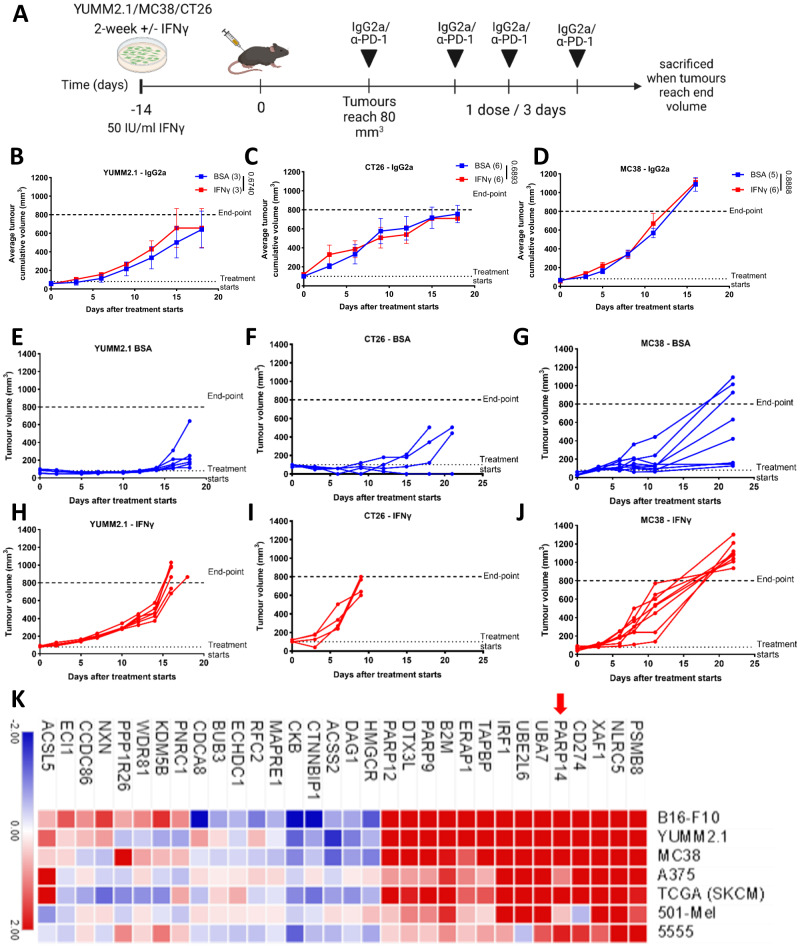
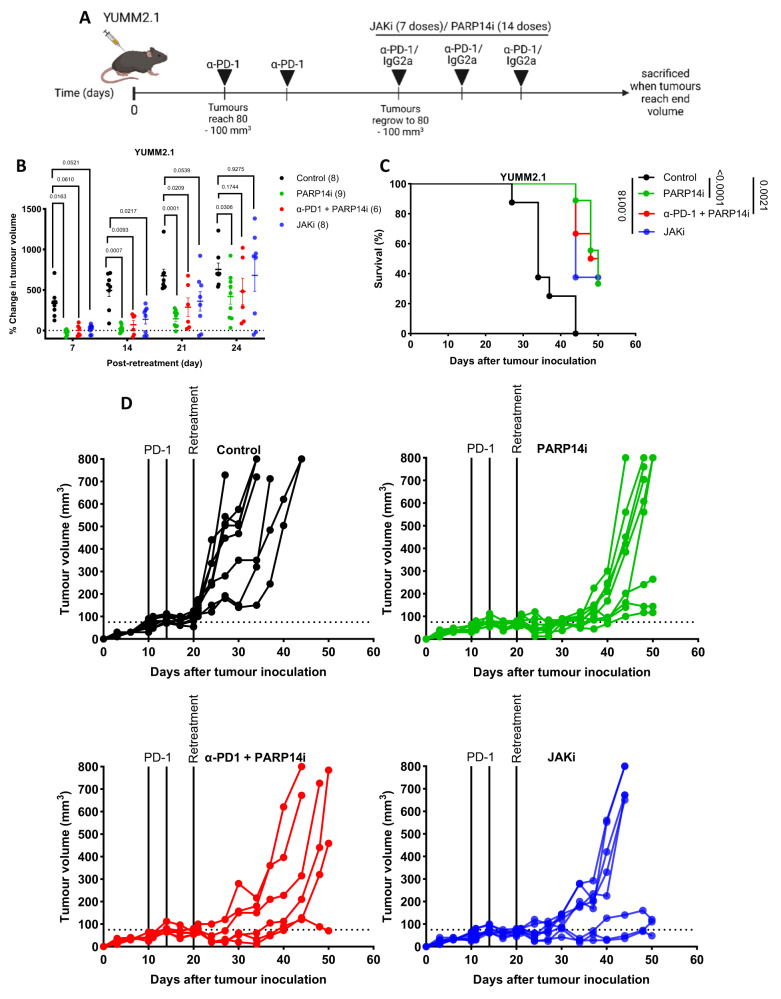
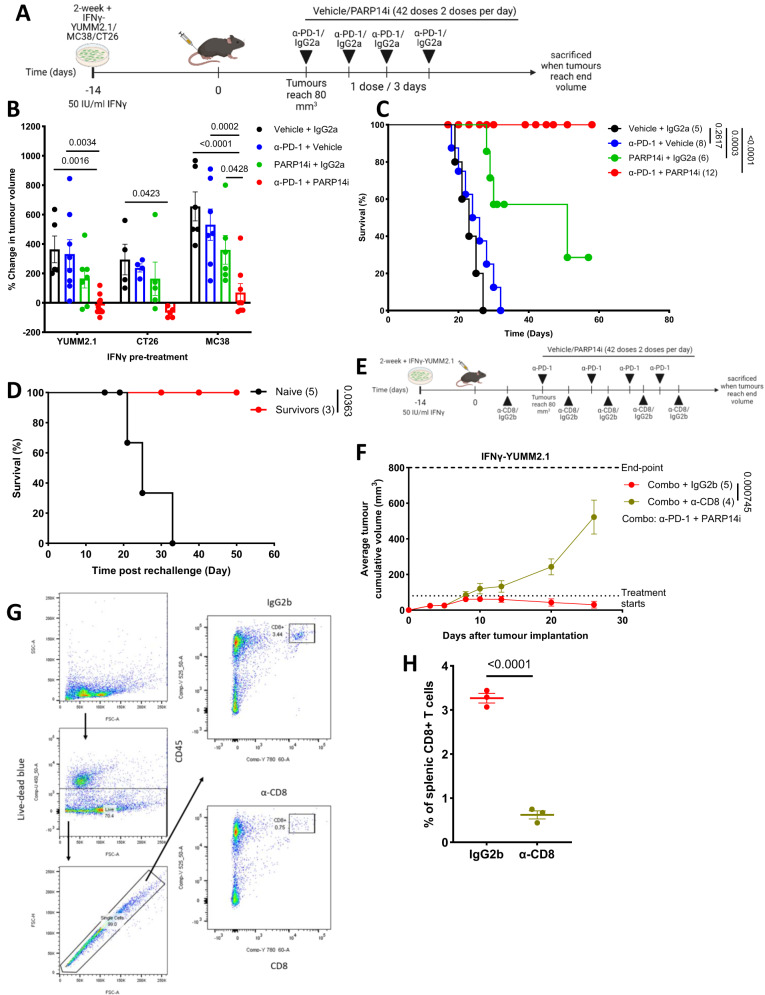
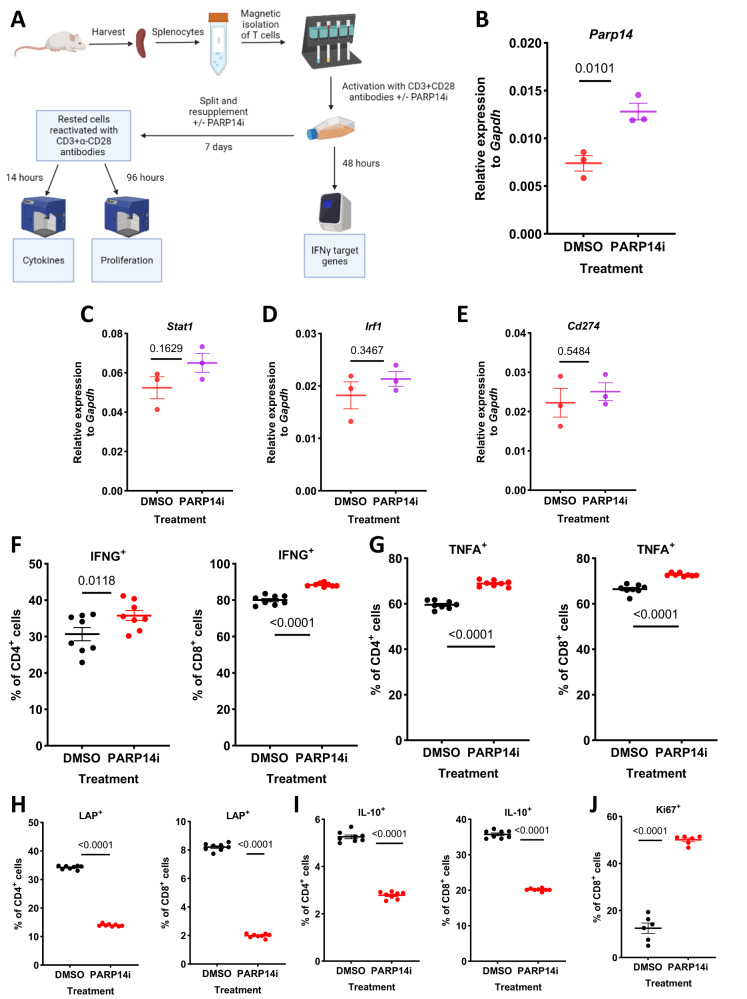
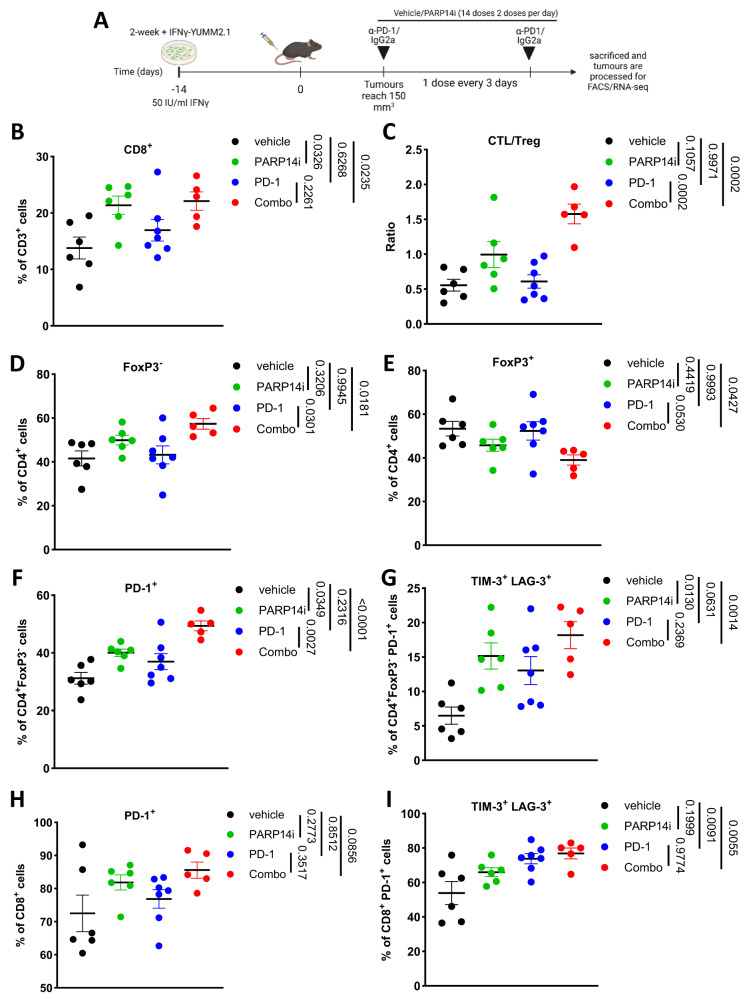
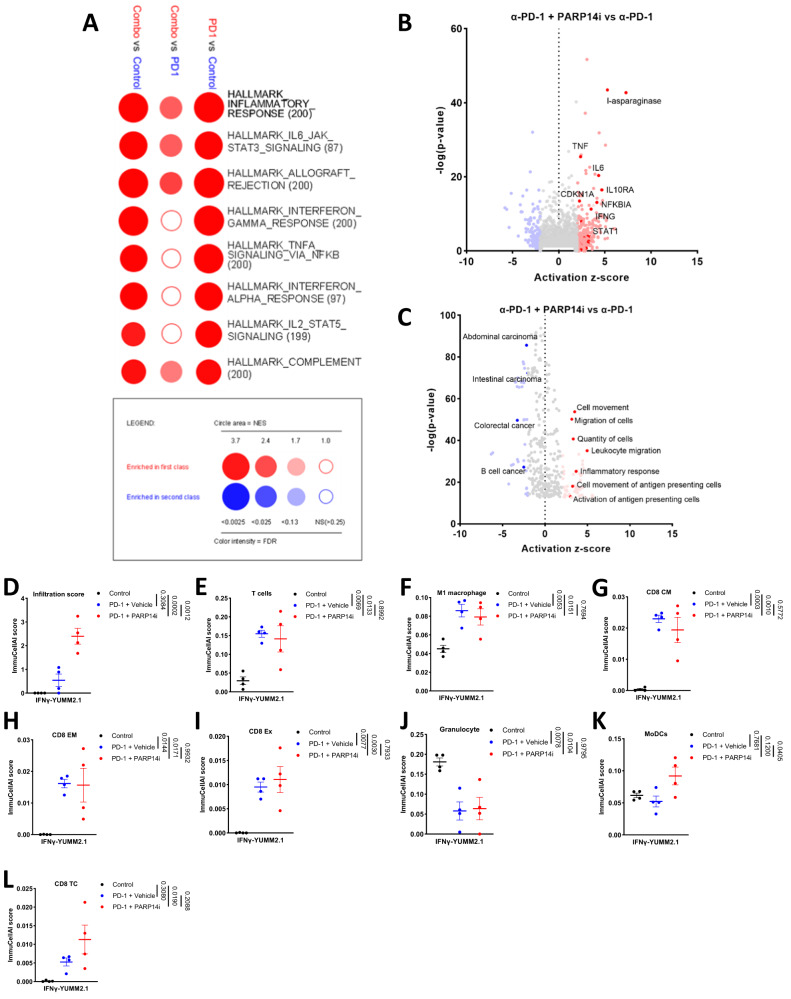
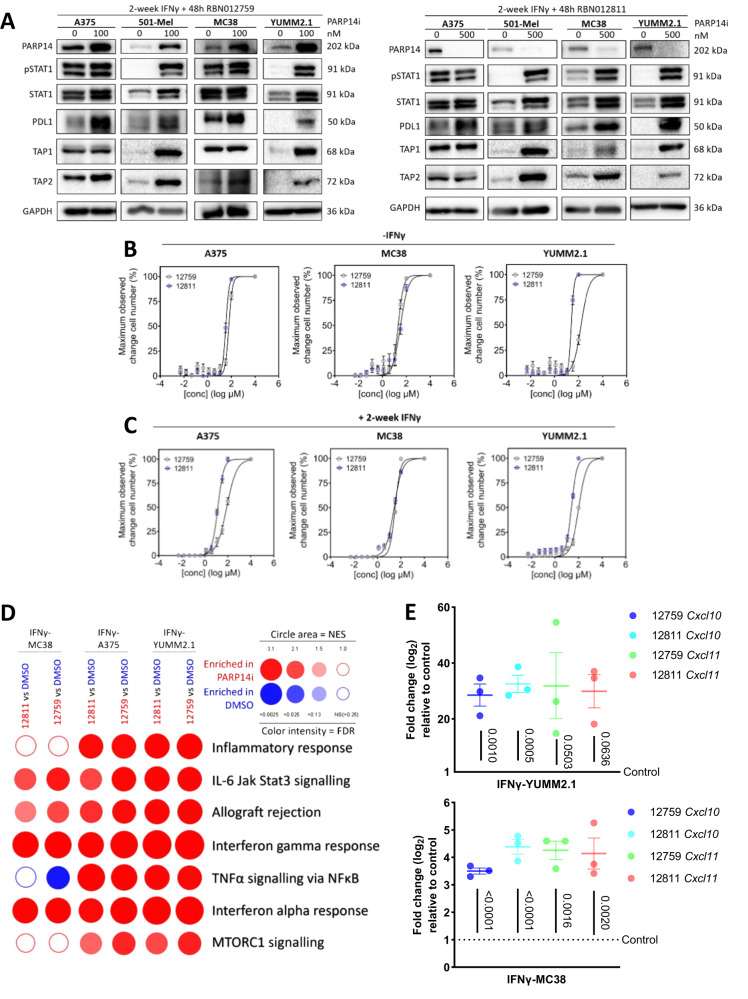
Resistance mechanisms to immune checkpoint blockade therapy (ICBT) limit its response duration and magnitude. Paradoxically, Interferon γ (IFNγ), a key cytokine for cellular immunity, can promote ICBT resistance. Using syngeneic mouse tumour models, we confirm that chronic IFNγ exposure confers resistance to immunotherapy targeting PD-1 (α-PD-1) in immunocompetent female mice. We observe upregulation of poly-ADP ribosyl polymerase 14 (PARP14) in chronic IFNγ-treated cancer cell models, in patient melanoma with elevated IFNG expression, and in melanoma cell cultures from ICBT-progressing lesions characterised by elevated IFNγ signalling. Effector T cell infiltration is enhanced in tumours derived from cells pre-treated with IFNγ in immunocompetent female mice when PARP14 is pharmacologically inhibited or knocked down, while the presence of regulatory T cells is decreased, leading to restoration of α-PD-1 sensitivity. Finally, we determine that tumours which spontaneously relapse in immunocompetent female mice following α-PD-1 therapy upregulate IFNγ signalling and can also be re-sensitised upon receiving PARP14 inhibitor treatment, establishing PARP14 as an actionable target to reverse IFNγ-driven ICBT resistance.
免疫检查点阻断治疗 (ICBT) 的耐药机制限制了其反应的持续时间和程度。具有讽刺意味的是,干扰素 γ (IFNγ),一种细胞免疫的关键细胞因子,可促进 ICBT 耐药。使用同基因小鼠肿瘤模型,我们证实慢性 IFNγ 暴露可使免疫功能正常的雌性小鼠对靶向 PD-1 (α-PD-1) 的免疫疗法产生耐药性。我们观察到慢性 IFNγ 处理的癌细胞模型中多聚 ADP 核糖聚合酶 14 (PARP14) 的上调,在 IFNG 表达升高的患者黑色素瘤中以及在由 IFNγ 信号转导升高的 ICBT 进展病变的黑色素瘤细胞培养物中观察到。当 PARP14 被药理抑制或敲低时,在免疫功能正常的雌性小鼠中,预先用 IFNγ 处理的细胞来源的肿瘤中效应 T 细胞浸润增强,而调节性 T 细胞的存在减少,导致 α-PD-1 敏感性恢复。最后,我们确定在接受 α-PD-1 治疗后免疫功能正常的雌性小鼠中自发复发的肿瘤上调 IFNγ 信号,并且在接受 PARP14 抑制剂治疗后也可以重新敏感,从而确立 PARP14 作为逆转 IFNγ 驱动的 ICBT 耐药性的可行靶点。