Department of Neurosurgical Engineering and Translational Neuroscience, Graduate School of Biomedical Engineering, Tohoku University, Sendai, Japan.
Department of Neurosurgery, Tohoku University Graduate School of Medicine, Sendai, Japan.
J Cereb Blood Flow Metab. 2023 Dec;43(12):2029-2039. doi: 10.1177/0271678X231202594. Epub 2023 Sep 27.
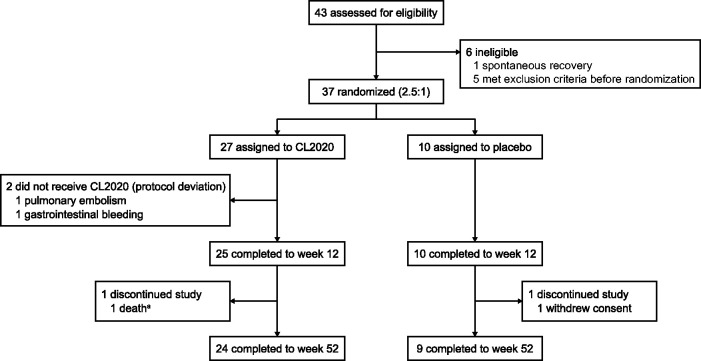
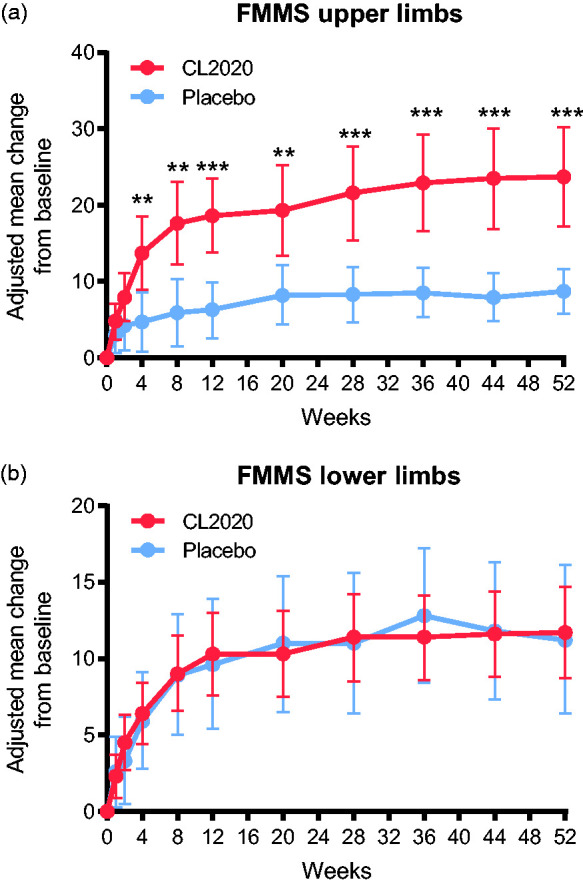
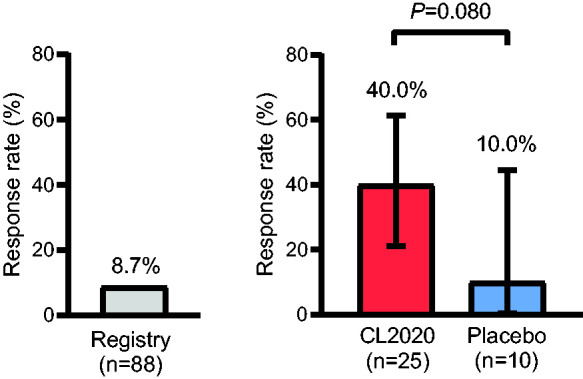
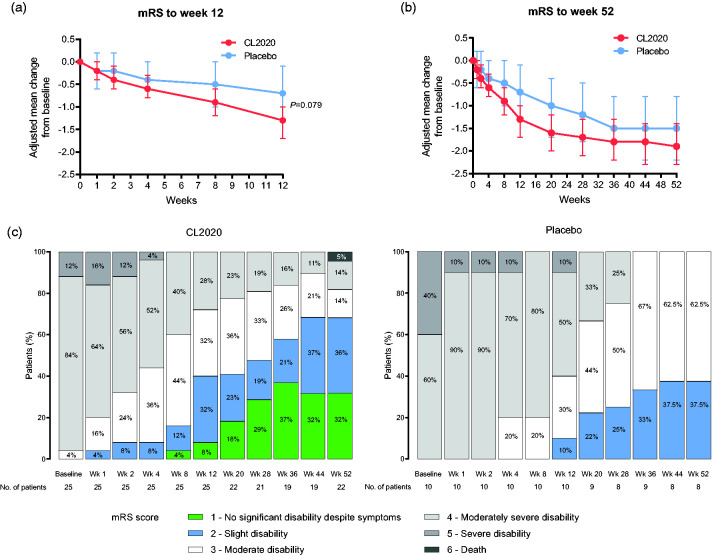
Effective treatments for stroke after the acute phase remain elusive. Muse cells are endogenous, pluripotent, immune-privileged stem cells capable of selectively homing to damaged tissue after intravenous injection and replacing damaged/lost cells via differentiation. This randomized, double-blind, placebo-controlled trial enrolled ischemic stroke patients with modified Rankin Scale (mRS) ≥3. Randomized patients received a single intravenous injection of an allogenic Muse cell-based product, CL2020 (n = 25), or placebo (n = 10), without immunosuppressant, 14-28 days after stroke onset. Safety (primary endpoint: week 12) and efficacy (mRS, other stroke-specific measures) were assessed up to 52 weeks. Key efficacy endpoint was response rate (percentage of patients with mRS ≤2 at week 12). To week 12, 96% of patients in the CL2020 group experienced adverse events and 28% experienced adverse reactions (including one Grade 4 status epilepticus), compared with 100% and 10%, respectively, in the placebo group. Response rate was 40.0% (95% CI, 21.1-61.3) in the CL2020 group and 10.0% (0.3-44.5) in the placebo group; the lower CI in the CL2020 group exceeded the preset efficacy threshold (8.7% from registry data). This randomized placebo-controlled trial demonstrated CL2020 is a possible effective treatment for subacute ischemic stroke.Registry information: JAPIC Clinical Trials Information site (JapicCTI-184103, URL: https://www.clinicaltrials.jp/cti-user/trial/ShowDirect.jsp?japicId=JapicCTI-184103).
对于急性后期的中风,有效的治疗方法仍难以捉摸。Muse 细胞是内源性的、多能的、免疫特权的干细胞,能够在静脉注射后选择性地归巢到受损组织,并通过分化替代受损/丢失的细胞。这项随机、双盲、安慰剂对照试验招募了改良 Rankin 量表(mRS)≥3 的缺血性中风患者。随机分组的患者在中风发作后 14-28 天内接受单次静脉注射同种异体 Muse 细胞产品 CL2020(n=25)或安慰剂(n=10),不使用免疫抑制剂。安全性(主要终点:第 12 周)和疗效(mRS,其他中风特异性措施)评估持续 52 周。主要疗效终点是反应率(第 12 周 mRS≤2 的患者比例)。到第 12 周,CL2020 组 96%的患者发生不良事件,28%的患者发生不良反应(包括 1 例 4 级癫痫持续状态),而安慰剂组分别为 100%和 10%。CL2020 组的反应率为 40.0%(95%CI,21.1-61.3),安慰剂组为 10.0%(0.3-44.5);CL2020 组的下限置信区间超过了预设的疗效阈值(8.7%来自登记数据)。这项随机安慰剂对照试验表明,CL2020 可能是一种有效的治疗亚急性缺血性中风的方法。注册信息:日本医药信息中心临床试验信息网站(JAPICCTI-184103,网址:https://www.clinicaltrials.jp/cti-user/trial/ShowDirect.jsp?japicId=JAPICCTI-184103)。