Potokar Maja, Zorec Robert, Jorgačevski Jernej
Laboratory of Neuroendocrinology-Molecular Cell Physiology, Institute of Pathophysiology, Faculty of Medicine, University of Ljubljana, Zaloška 4, 1000 Ljubljana, Slovenia.
Celica Biomedical, Tehnološki Park 24, 1000 Ljubljana, Slovenia.
Cells. 2023 Sep 19;12(18):2307. doi: 10.3390/cells12182307.
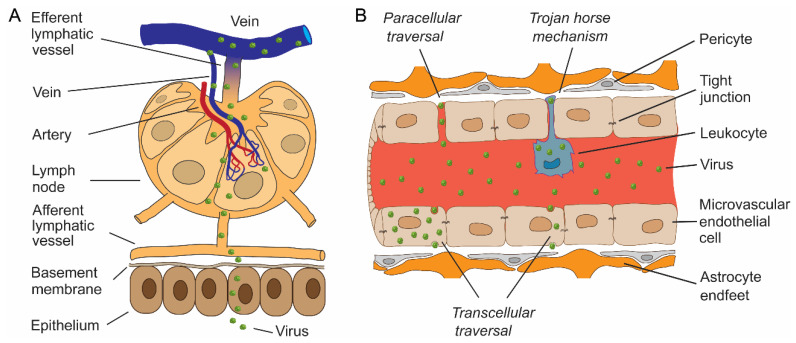
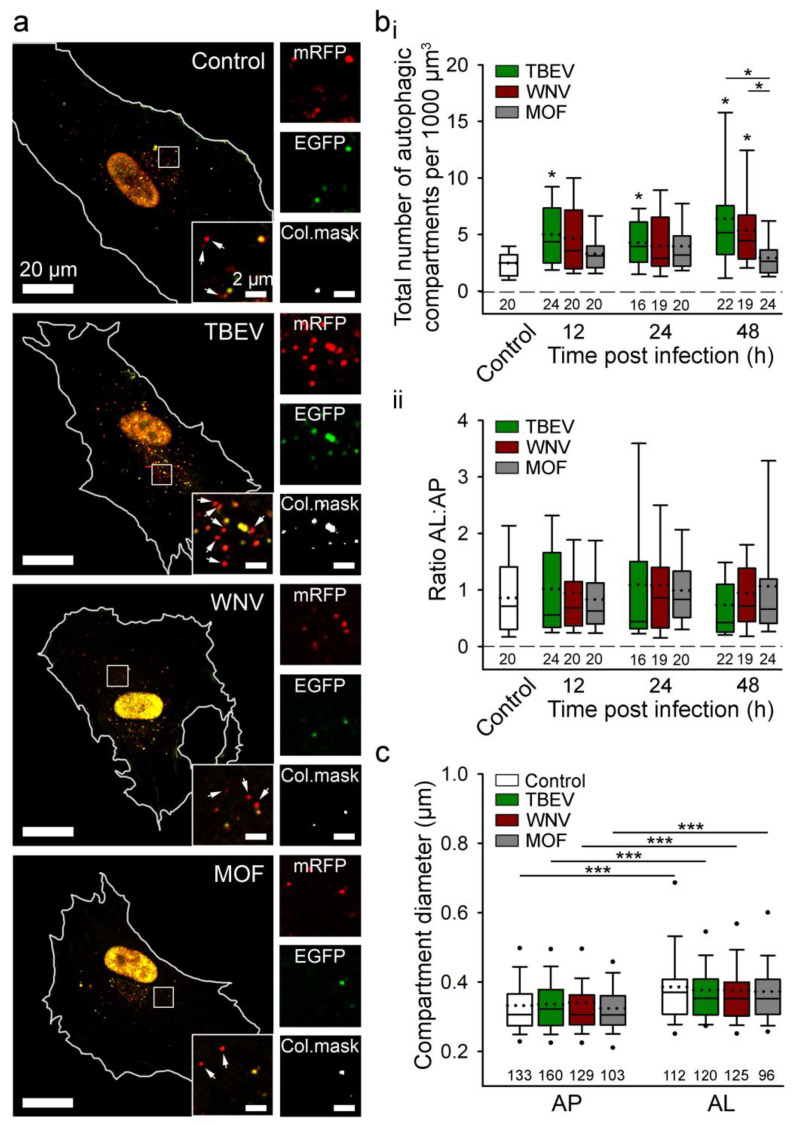
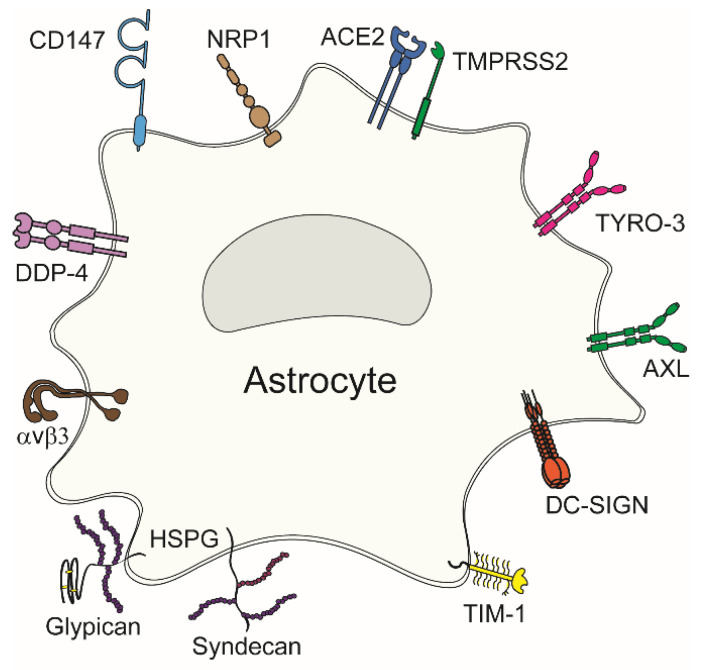
Astrocytes are increasingly recognized as important viral host cells in the central nervous system. These cells can produce relatively high quantities of new virions. In part, this can be attributed to the characteristics of astrocyte metabolism and its abundant and dynamic cytoskeleton network. Astrocytes are anatomically localized adjacent to interfaces between blood capillaries and brain parenchyma and between blood capillaries and brain ventricles. Moreover, astrocytes exhibit a larger membrane interface with the extracellular space than neurons. These properties, together with the expression of various and numerous viral entry receptors, a relatively high rate of endocytosis, and morphological plasticity of intracellular organelles, render astrocytes important target cells in neurotropic infections. In this review, we describe factors that mediate the high susceptibility of astrocytes to viral infection and replication, including the anatomic localization of astrocytes, morphology, expression of viral entry receptors, and various forms of autophagy.
星形胶质细胞越来越被认为是中枢神经系统中重要的病毒宿主细胞。这些细胞能够产生相对大量的新病毒粒子。部分原因可归因于星形胶质细胞代谢的特征及其丰富且动态的细胞骨架网络。星形胶质细胞在解剖学上定位于毛细血管与脑实质之间以及毛细血管与脑室之间的界面附近。此外,与神经元相比,星形胶质细胞与细胞外空间的膜界面更大。这些特性,连同各种众多病毒进入受体的表达、相对较高的内吞率以及细胞内细胞器的形态可塑性,使星形胶质细胞成为嗜神经病毒感染中的重要靶细胞。在本综述中,我们描述了介导星形胶质细胞对病毒感染和复制高度易感性的因素,包括星形胶质细胞的解剖定位、形态、病毒进入受体的表达以及各种形式的自噬。