Department of Chemistry, Drew University, Madison, NJ 07940, USA.
Biomolecules. 2023 Sep 18;13(9):1404. doi: 10.3390/biom13091404.
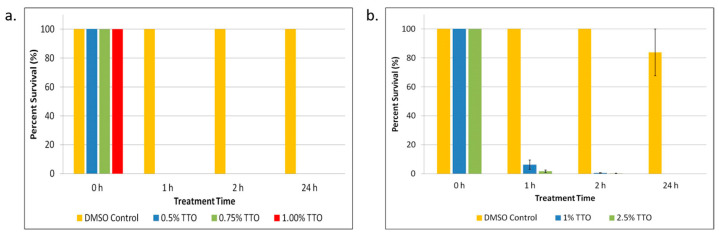
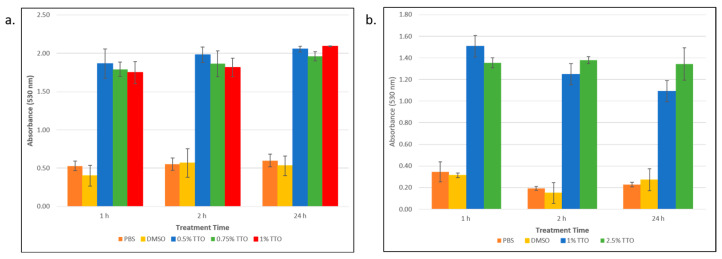
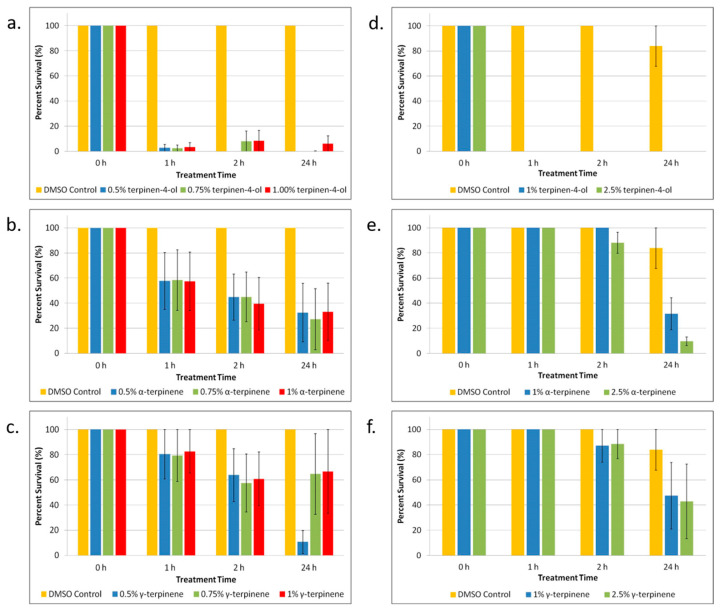
Persister cells are a small subpopulation of non-growing bacteria within a population that can survive long exposures to antibiotic treatment. Following antibiotic removal, persister cells can regrow and populate, playing a key role in the chronic reoccurrence of bacterial infections. The development of new molecules and methods to kill bacterial persisters is critical. Essential oils and other natural products have long been studied for their antimicrobial effects. Here, we studied the effectiveness of tea tree essential oil (TTO), a common component in many commercial care products, against and persister cells. Using biphasic kill curve assays, we found that concentrations of 0.5% and 1.0% TTO for and , respectively, completely eradicated persister cells over a period of 24 h, with the component terpinen-4-ol responsible for most of the killing. Using a colorimetric assay, it was determined that the TTO exhibited its anti-persister effects through a membrane disruption mechanism.
持留细胞是群体中处于非生长状态的细菌的一小部分亚群,它们能够在长时间接触抗生素治疗的情况下存活。在抗生素去除后,持留细胞可以重新生长并繁殖,在细菌感染的慢性复发中起着关键作用。开发新的杀死细菌持留细胞的分子和方法至关重要。精油和其他天然产品因其抗菌作用而长期受到研究。在这里,我们研究了茶树精油(TTO)作为许多商业护理产品的常见成分对 和 持留细胞的有效性。使用双相杀伤曲线测定法,我们发现浓度为 0.5%和 1.0%的 TTO 分别在 24 小时内完全消除了 和 的持留细胞,其中主要成分萜品烯-4-醇负责大部分杀伤。通过比色测定法确定 TTO 通过破坏细胞膜的机制发挥其抗持留作用。