Faculty of Biomedical Sciences, Panevėžys University of Applied Sciences, 35200 Panevėžys, Lithuania.
Institute of Health Sciences, Faculty of Medicine, Department of Public Health, Vilnius University, 01513 Vilnius, Lithuania.
Nutrients. 2023 Sep 15;15(18):4003. doi: 10.3390/nu15184003.
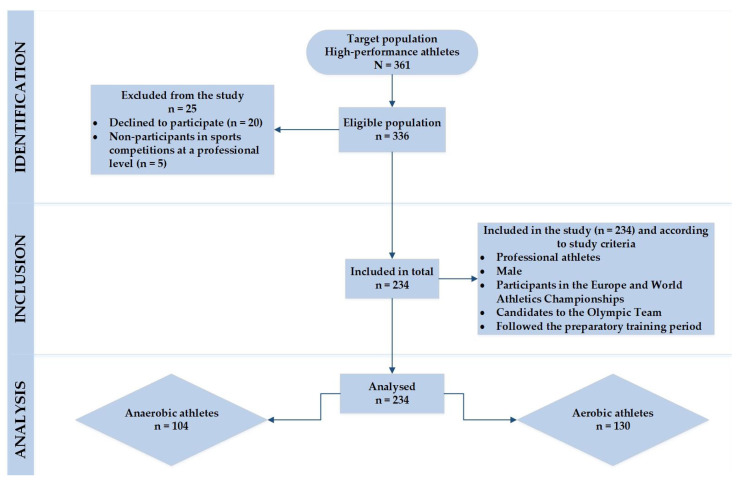
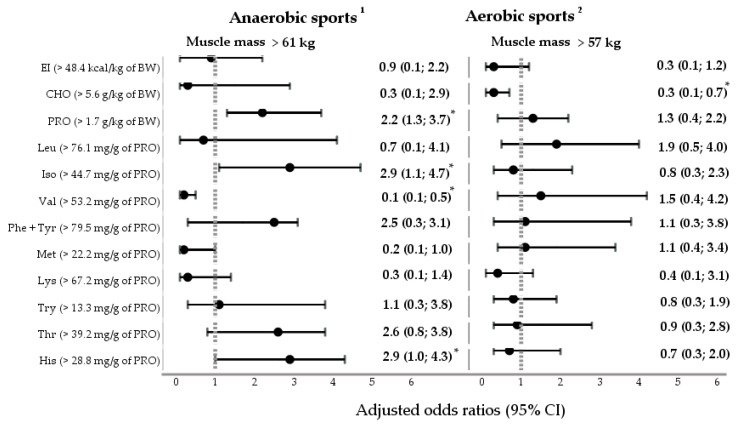
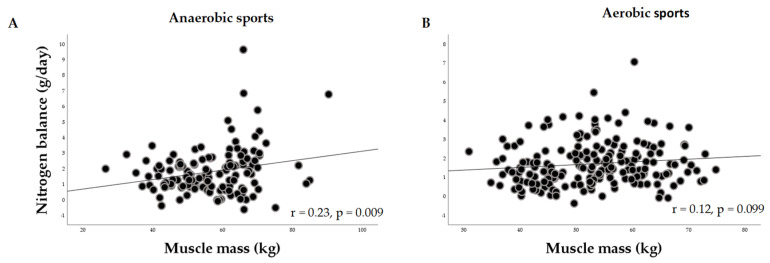
Athletes need to develop a relatively high muscle mass and low body adipose tissue for the sake of better athletic performance. A full range of nine essential amino acids and eleven non-essential amino acids have to attend in appropriate amounts for protein biosynthesis. The aim of the observational comparative cross-sectional study was to assess the association between the diet quality profile and training-induced muscle mass estimated by bioelectrical impedance among elite male athletes. The research sample comprised 18.1 ± 3.1 year-old Lithuanian professional male athletes (n = 234). The study participants were enrolled to complete 24-h dietary recalls of three non-consecutive days. The body composition was assessed using the bioelectrical impedance analysis (BIA) method. The present study showed a significant insufficiency of the mean carbohydrate intake of 5.7 g/kg/day in a group of aerobic male athletes. The lower muscle mass of aerobic male athletes was related to the lower-carbohydrate diet (adjusted odd ratio (OR) 0.3; 95% confidence interval (CI): 0.1-0.7). The mean protein intake of 1.8 g/kg/day was optimal for anabolism in the samples of both anaerobic and aerobic male athletes. The protein intake in appropriate doses was potentially associated with an increase in muscle mass only in anaerobic male athletes (OR 2.2; 95% CI: 1.3-3.7). The positive relationship was revealed between the possible muscle mass gain and the increased intakes of amino acids such as isoleucine and histidine among anaerobic athletes (OR 2.9; 95% CI: 1.1-4.7 and OR 2.9; 95% CI: 1.0-4.3, respectively). An inverse feasible association was indicated between a higher intake of valine and lower muscle mass quantities among anaerobic male athletes (OR 0.1; 95% CI: 0.1-0.5). The recommendations for sports nutritionists should emphasize the necessity of advising professional athletes on dietary strategies on how to manipulate dietary amino acid composition with respect to achieving long-term body composition goals.
运动员需要发展相对较高的肌肉质量和较低的身体脂肪组织,以提高运动表现。蛋白质生物合成需要摄入适量的九种必需氨基酸和十一种非必需氨基酸。本观察性比较横断面研究的目的是评估优质饮食模式与通过生物电阻抗估计的精英男性运动员训练引起的肌肉质量之间的相关性。研究样本包括 18.1±3.1 岁的立陶宛职业男性运动员(n=234)。研究参与者被招募来完成三天不连续的 24 小时饮食回忆。使用生物电阻抗分析(BIA)方法评估身体成分。本研究显示,一组有氧运动男性运动员的平均碳水化合物摄入量每天 5.7 克/公斤,存在显著不足。有氧运动男性运动员较低的肌肉质量与较低的碳水化合物饮食有关(调整后的比值比(OR)0.3;95%置信区间(CI):0.1-0.7)。对于无氧和有氧男性运动员的样本,平均 1.8 克/公斤/天的蛋白质摄入量是合成代谢的最佳选择。只有在无氧男性运动员中,适量摄入蛋白质可能与肌肉质量增加有关(OR 2.2;95% CI:1.3-3.7)。在无氧运动员中,发现可能的肌肉质量增加与异亮氨酸和组氨酸等氨基酸摄入量增加之间存在正相关(OR 2.9;95% CI:1.1-4.7 和 OR 2.9;95% CI:1.0-4.3)。在无氧男性运动员中,较高的缬氨酸摄入量与较低的肌肉质量呈负相关(OR 0.1;95% CI:0.1-0.5)。运动营养学家的建议应强调有必要就如何根据长期身体成分目标来操纵饮食氨基酸组成,向专业运动员提供饮食策略方面的建议。