Sritharan Aarthiga, Kozhuharov Nikola, Masson Nicolas, Bakelants Elise, Valiton Valérian, Burri Haran
Cardiac Pacing Unit, Department of Cardiology, University Hospital of Geneva, Rue Gabrielle-Perret-Gentil 4, CH-1211 Genève, Switzerland.
Europace. 2023 Oct 5;25(10). doi: 10.1093/europace/euad295.
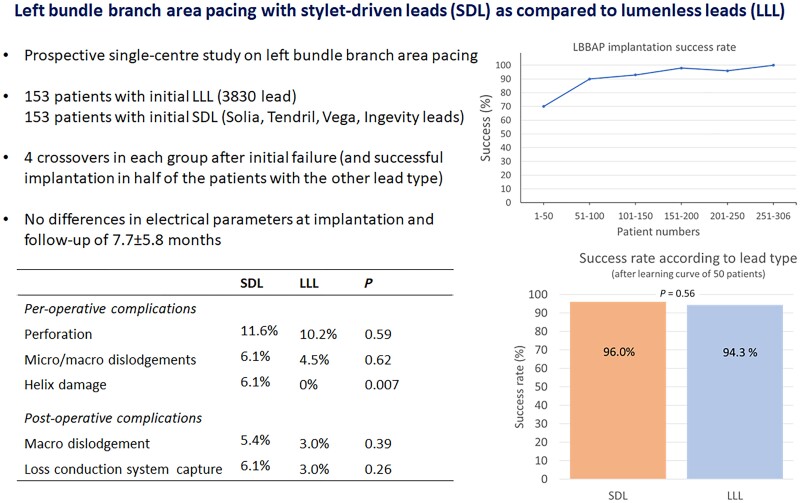
Left bundle branch area pacing (LBBAP) is most often delivered using lumenless leads (LLLs), but may also be performed using stylet-driven leads (SDLs). There are limited reports on the comparison of these tools, mainly limited to reports describing initial operator experience or without detailed procedural data. Our aim was to perform an in-depth comparison of SDLs and LLLs for LBBAP at implantation and follow-up in a larger cohort of patients with experience that extends beyond that of the initial learning curve.
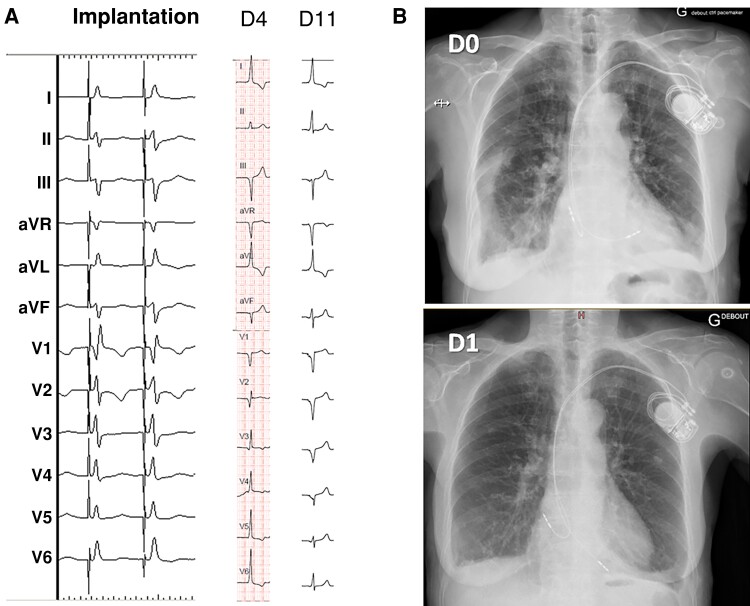
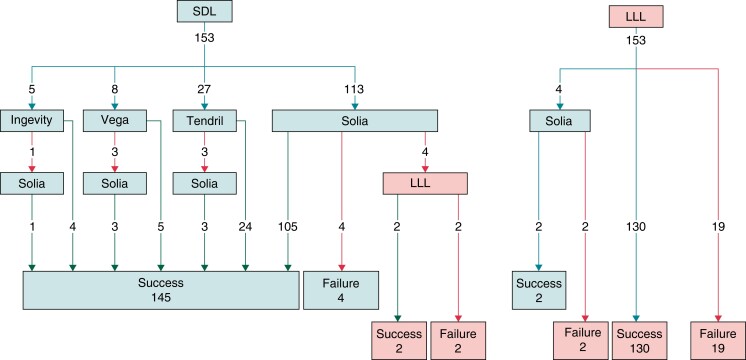
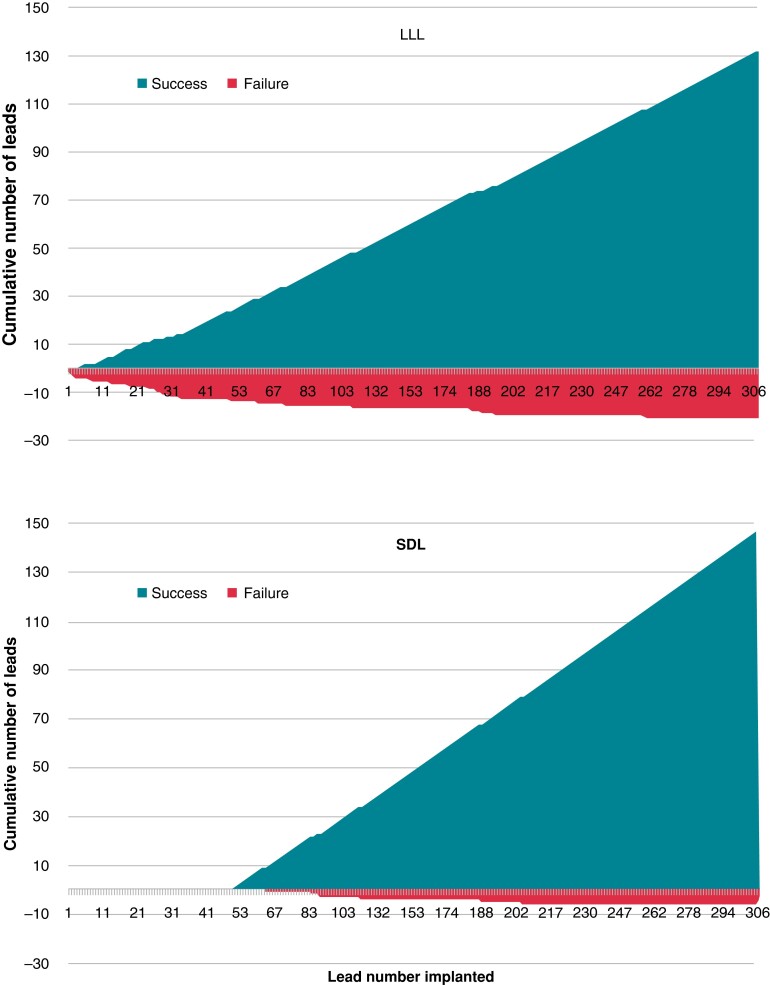
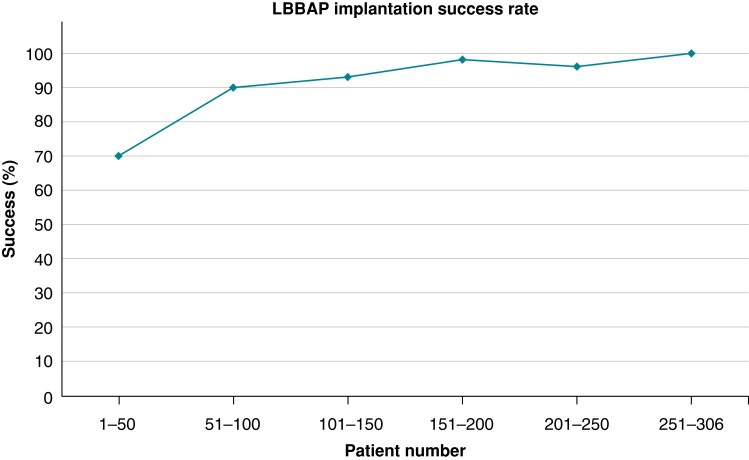
A total of 306 consecutive patients (age 77 ± 11 years, 183 males) undergoing LBBAP implantation at a single centre were prospectively included. The population was split into two groups of 153 patients based on the initial use of an SDL (from 4 manufacturers) or an LLL. After having discounted the initial learning curve of 50 patients, there was no difference in the success rate between the initial use of lead type (96.0% with SDL vs. 94.3% with LLL, P = 0.56). There were no significant differences in success between lead models. Electrocardiogram and electrical parameters were comparable between the groups. Post-operative macro-dislodgement occurred in 4.3% of patients (essentially within the first day following implantation) and presumed micro-dislodgement with loss of conduction system capture or rise in threshold (occurring mostly during the first month) was observed in 4.7% of patients, without differences between groups.
Left bundle branch area pacing may be safely and effectively performed using either LLLs or SDLs, which provides implanters with alternatives for delivering this therapy.
左束支区域起搏(LBBAP)大多采用无腔导线(LLL)进行,但也可使用探条驱动导线(SDL)来完成。关于这两种工具的比较报告有限,主要局限于描述术者初始经验的报告或缺乏详细操作数据的报告。我们的目的是在更大的患者队列中,对SDL和LLL用于LBBAP植入及随访进行深入比较,这些患者的经验超出了初始学习曲线阶段。
前瞻性纳入了在单一中心接受LBBAP植入的306例连续患者(年龄77±11岁,男性183例)。根据最初使用的是SDL(来自4家制造商)还是LLL,将患者分为两组,每组153例。在排除50例患者的初始学习曲线后,初始使用的导线类型之间成功率无差异(SDL为96.0%,LLL为94.3%,P = 0.56)。导线型号之间的成功率无显著差异。两组间心电图和电学参数具有可比性。4.3%的患者术后发生宏观移位(主要在植入后第一天内),4.7%的患者观察到推测的微观移位,伴有传导系统捕获丧失或阈值升高(大多发生在第一个月),两组间无差异。
使用LLL或SDL均可安全有效地进行左束支区域起搏,这为实施该治疗的术者提供了多种选择。