Population Health Sciences Institute, Newcastle University, Newcastle upon Tyne, United Kingdom.
PLoS One. 2023 Sep 29;18(9):e0292178. doi: 10.1371/journal.pone.0292178. eCollection 2023.
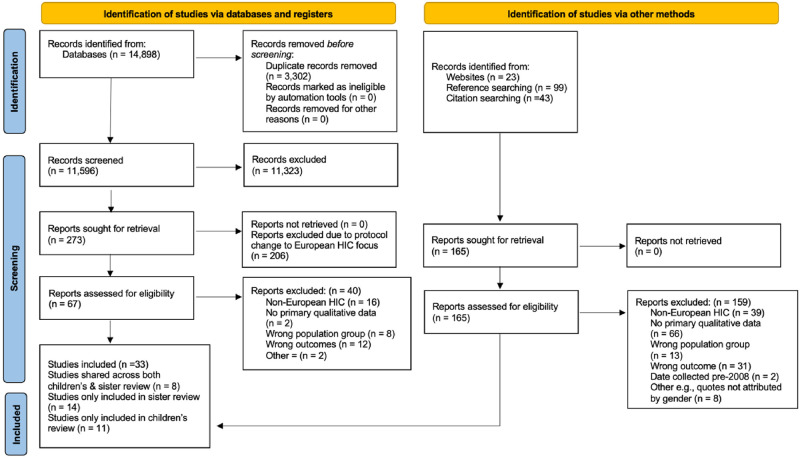
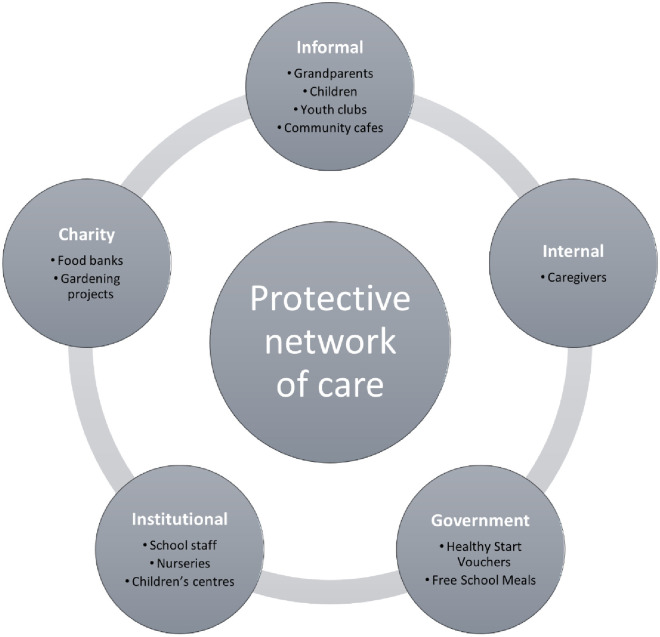
Since the 2008 global financial crisis, there has been a rise in the number of people experiencing food insecurity. Particularly vulnerable are households with children. This systematic review and meta-ethnography of qualitative studies focuses on families' perceptions of food insecurity and how it affects children's nutritional health and wellbeing. Six electronic databases (Medline, Scopus, Web of Science, EMBASE, CINAHL and ASSIA), were searched for studies from European high-income countries between January 2008-July 2021, and supplemented by searches of grey literature databases, relevant websites, examination of reference lists and citation searches. We adhered to PRISMA and eMERGe guidelines to improve the completeness and clarity of meta-ethnographic reporting. Methodological quality of the studies were assessed using the Critical Appraisal Skills Programme qualitative checklist. We identified 11,596 records; we included 19 publications involving 813 participants in total. Data were synthesised according to Noblit & Hare's seven phases of meta-ethnography. We identified four key themes-food and eating practices, awareness, fragility, and networks of care-comprising five sub-themes. Our meta-ethnography provides a progressive 'storyline' of the children's experiences of food insecurity from both caregivers and children's perspectives. We found that children are aware of their family's limited resources and are often active in trying to help their families cope, and that food insecurity adversely impacts children's physical, psychological, and social experiences. Our analysis highlights gaps in knowledge about how food insecurity impacts children's nutritional health and wellbeing. It suggests that future research should prioritise minoritised ethnic communities, children living in temporary accommodation and caregivers of very young children.
自 2008 年全球金融危机以来,经历粮食不安全的人数有所增加。儿童家庭尤其脆弱。本系统评价和元-民族志的重点是家庭对粮食不安全的看法,以及粮食不安全如何影响儿童的营养健康和幸福感。在 2008 年 1 月至 2021 年 7 月期间,我们在 6 个电子数据库(Medline、Scopus、Web of Science、EMBASE、CINAHL 和 ASSIA)中搜索了来自欧洲高收入国家的研究,并补充了灰色文献数据库、相关网站、参考文献列表检查和引文搜索。我们坚持 PRISMA 和 eMERGe 指南,以提高元-民族志报告的完整性和清晰度。使用批判性评价技能方案定性清单评估研究的方法学质量。我们确定了 11596 条记录;共纳入了 19 篇出版物,共涉及 813 名参与者。根据 Noblit 和 Hare 的元-民族学七个阶段对数据进行综合。我们确定了四个关键主题——食物和饮食实践、意识、脆弱性和关怀网络——包括五个子主题。我们的元-民族学从照顾者和儿童的角度提供了儿童粮食不安全经历的一个渐进的“故事情节”。我们发现,儿童意识到自己家庭资源有限,经常积极帮助家人应对,粮食不安全对儿童的身体、心理和社会经历产生不利影响。我们的分析强调了关于粮食不安全如何影响儿童营养健康和幸福感的知识差距。它表明,未来的研究应该优先考虑少数民族社区、居住在临时住所的儿童和非常年幼儿童的照顾者。