
成年期经历强奸和性侵犯的幸存者的心理社会干预。
Psychosocial interventions for survivors of rape and sexual assault experienced during adulthood.
机构信息
Institute for Health and Wellbeing, Coventry University, Coventry, UK.
Department of General Practice, The University of Melbourne, Melbourne, Australia.
出版信息
Cochrane Database Syst Rev. 2023 Oct 5;10(10):CD013456. doi: 10.1002/14651858.CD013456.pub2.
BACKGROUND
Exposure to rape, sexual assault and sexual abuse has lifelong impacts for mental health and well-being. Prolonged Exposure (PE), Cognitive Processing Therapy (CPT) and Eye Movement Desensitisation and Reprocessing (EMDR) are among the most common interventions offered to survivors to alleviate post-traumatic stress disorder (PTSD) and other psychological impacts. Beyond such trauma-focused cognitive and behavioural approaches, there is a range of low-intensity interventions along with new and emerging non-exposure based approaches (trauma-sensitive yoga, Reconsolidation of Traumatic Memories and Lifespan Integration). This review presents a timely assessment of international evidence on any type of psychosocial intervention offered to individuals who experienced rape, sexual assault or sexual abuse as adults.
OBJECTIVES
To assess the effects of psychosocial interventions on mental health and well-being for survivors of rape, sexual assault or sexual abuse experienced during adulthood.
SEARCH METHODS
In January 2022, we searched CENTRAL, MEDLINE, Embase, 12 other databases and three trials registers. We also checked reference lists of included studies, contacted authors and experts, and ran forward citation searches.
SELECTION CRITERIA
Any study that allocated individuals or clusters of individuals by a random or quasi-random method to a psychosocial intervention that promoted recovery and healing following exposure to rape, sexual assault or sexual abuse in those aged 18 years and above compared with no or minimal intervention, usual care, wait-list, pharmacological only or active comparison(s). We classified psychosocial interventions according to Cochrane Common Mental Disorders Group's psychological therapies list.
DATA COLLECTION AND ANALYSIS
We used the standard methodological procedures expected by Cochrane.
MAIN RESULTS
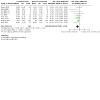
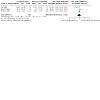
We included 36 studies (1991 to 2021) with 3992 participants randomly assigned to 60 experimental groups (3014; 76%) and 23 inactive comparator conditions (978, 24%). The experimental groups consisted of: 32 Cognitive Behavioural Therapy (CBT); 10 behavioural interventions; three integrative therapies; three humanist; five other psychologically oriented interventions; and seven other psychosocial interventions. Delivery involved 1 to 20 (median 11) sessions of traditional face-to-face (41) or other individual formats (four); groups (nine); or involved computer-only interaction (six). Most studies were conducted in the USA (n = 26); two were from South Africa; two from the Democratic Republic of the Congo; with single studies from Australia, Canada, the Netherlands, Spain, Sweden and the UK. Five studies did not disclose a funding source, and all disclosed sources were public funding. Participants were invited from a range of settings: from the community, through the media, from universities and in places where people might seek help for their mental health (e.g. war veterans), in the aftermath of sexual trauma (sexual assault centres and emergency departments) or for problems that accompany the experience of sexual violence (e.g. sexual health/primary care clinics). Participants randomised were 99% women (3965 participants) with just 27 men. Half were Black, African or African-American (1889 participants); 40% White/Caucasian (1530 participants); and 10% represented a range of other ethnic backgrounds (396 participants). The weighted mean age was 35.9 years (standard deviation (SD) 9.6). Eighty-two per cent had experienced rape or sexual assault in adulthood (3260/3992). Twenty-two studies (61%) required fulfilling a measured PTSD diagnostic threshold for inclusion; however, 94% of participants (2239/2370) were reported as having clinically relevant PTSD symptoms at entry. The comparison of psychosocial interventions with inactive controls detected that there may be a beneficial effect at post-treatment favouring psychosocial interventions in reducing PTSD (standardised mean difference (SMD) -0.83, 95% confidence interval (CI) -1.22 to -0.44; 16 studies, 1130 participants; low-certainty evidence; large effect size based on Cohen's D); and depression (SMD -0.82, 95% CI -1.17 to -0.48; 12 studies, 901 participants; low-certainty evidence; large effect size). Psychosocial interventions, however, may not increase the risk of dropout from treatment compared to controls, with a risk ratio of 0.85 (95% CI 0.51 to 1.44; 5 studies, 242 participants; low-certainty evidence). Seven of the 23 studies (with 801 participants) comparing a psychosocial intervention to an inactive control reported on adverse events, with 21 events indicated. Psychosocial interventions may not increase the risk of adverse events compared to controls, with a risk ratio of 1.92 (95% CI 0.30 to 12.41; 6 studies; 622 participants; very low-certainty evidence). We conducted an assessment of risk of bias using the RoB 2 tool on a total of 49 reported results. A high risk of bias affected 43% of PTSD results; 59% for depression symptoms; 40% for treatment dropout; and one-third for adverse events. The greatest sources of bias were problems with randomisation and missing outcome data. Heterogeneity was also high, ranging from I = 30% (adverse events) to I = 87% (PTSD).
AUTHORS' CONCLUSIONS: Our review suggests that survivors of rape, sexual violence and sexual abuse during adulthood may experience a large reduction in post-treatment PTSD symptoms and depressive symptoms after experiencing a psychosocial intervention, relative to comparison groups. Psychosocial interventions do not seem to increase dropout from treatment or adverse events/effects compared to controls. However, the number of dropouts and study attrition were generally high, potentially missing harms of exposure to interventions and/or research participation. Also, the differential effects of specific intervention types needs further investigation. We conclude that a range of behavioural and CBT-based interventions may improve the mental health of survivors of rape, sexual assault and sexual abuse in the short term. Therefore, the needs and preferences of individuals must be considered in selecting suitable approaches to therapy and support. The primary outcome in this review focused on the post-treatment period and the question about whether benefits are sustained over time persists. However, attaining such evidence from studies that lack an active comparison may be impractical and even unethical. Thus, we suggest that studies undertake head-to-head comparisons of different intervention types; in particular, of novel, emerging therapies, with one-year plus follow-up periods. Additionally, researchers should focus on the therapeutic benefits and costs for subpopulations such as male survivors and those living with complex PTSD.
背景
遭受强奸、性侵犯和性虐待会对心理健康和幸福感产生终身影响。延长暴露疗法(PE)、认知加工疗法(CPT)和眼动脱敏再加工疗法(EMDR)是为缓解创伤后应激障碍(PTSD)和其他心理影响而向幸存者提供的最常见干预措施之一。除了这些以创伤为中心的认知和行为方法外,还有一系列低强度干预措施以及新出现的非暴露基础方法(创伤敏感瑜伽、创伤记忆再巩固和生命整合)。本综述及时评估了国际上对任何类型的针对成年期经历强奸、性侵犯或性虐待的幸存者提供的心理社会干预措施的证据。
目的
评估心理社会干预措施对性暴力幸存者心理健康和幸福感的影响。
检索方法
2022 年 1 月,我们检索了 CENTRAL、MEDLINE、Embase 等 12 个数据库和 3 个试验登记处。我们还检查了纳入研究的参考文献列表、联系了作者和专家,并进行了前瞻性引文搜索。
入选标准
任何将个体或个体群随机或准随机分配到心理社会干预组的研究,该干预组旨在促进遭受强奸、性侵犯或性虐待的成年人的康复和康复,与无干预、常规护理、等待名单、仅药物治疗或活性比较(对照)相比。我们根据 Cochrane 常见精神障碍组的心理治疗列表对心理社会干预措施进行了分类。
数据收集和分析
我们使用了 Cochrane 预期的标准方法学程序。
主要结果
我们纳入了 36 项研究(1991 年至 2021 年),其中 3992 名参与者被随机分配到 60 个实验组(3014 人;76%)和 23 个非活性对照组(2378 人,24%)。实验组包括:32 项认知行为疗法(CBT);10 项行为干预;三种整合疗法;三种人文主义疗法;五种其他心理导向干预;和七种其他心理社会干预。共进行了 1 到 20 次(中位数 11 次)传统面对面(41 次)或其他个体形式(4 次)的治疗;小组(9 次);或涉及计算机交互(6 次)。大多数研究在美国进行(n=26);两项来自南非;两项来自刚果民主共和国;另有一项来自澳大利亚、加拿大、荷兰、西班牙、瑞典和英国。五项研究未披露资金来源,所有披露的来源均为公共资金。参与者来自各种环境:社区、媒体、大学以及人们可能寻求心理健康帮助的地方(例如退伍军人)、性创伤发生后(性侵犯中心和急诊部门)或性暴力伴随的问题(例如性健康/初级保健诊所)。随机分配的参与者 99%是女性(3965 名参与者),只有 27 名男性。一半是黑人、非洲人或非裔美国人(1889 名参与者);40%是白人/高加索人(1530 名参与者);10%代表其他多种族背景(396 名参与者)。加权平均年龄为 35.9 岁(标准差(SD)9.6)。82%的人在成年期经历过强奸或性侵犯(3260/3992)。22 项研究(61%)需要满足测量的创伤后应激障碍诊断阈值才能纳入;然而,94%(2239/2370)的参与者在入组时报告有临床相关的创伤后应激障碍症状。与非活性对照相比,心理社会干预与 PTSD 症状的改善相关,在治疗后更有利于心理社会干预降低 PTSD(标准化均数差(SMD)-0.83,95%置信区间(CI)-1.22 至-0.44;16 项研究,1130 名参与者;低确定性证据;基于 Cohen's D 的大效应量)和抑郁(SMD-0.82,95%CI-1.17 至-0.48;12 项研究,901 名参与者;低确定性证据;大效应量)。然而,与对照组相比,心理社会干预可能不会增加治疗脱落的风险,风险比为 0.85(95%CI 0.51 至 1.44;5 项研究,242 名参与者;低确定性证据)。23 项研究中的 7 项(801 名参与者)将心理社会干预与非活性对照进行了比较,报告了 21 项不良事件。与对照组相比,心理社会干预可能不会增加不良事件的风险,风险比为 1.92(95%CI 0.30 至 12.41;6 项研究;622 名参与者;非常低确定性证据)。我们使用 RoB 2 工具对总共 49 个报告的结果进行了风险偏倚评估。43%的 PTSD 结果存在高风险偏倚;59%的抑郁症状;40%的治疗脱落;三分之一的不良事件。最大的偏倚来源是随机化问题和缺失的结局数据。异质性也很高,范围从 I=30%(不良事件)到 I=87%(PTSD)。
作者结论
我们的综述表明,成年期遭受强奸、性暴力和性虐待的幸存者在经历心理社会干预后,相对于对照组,可能会经历 PTSD 症状和抑郁症状的大幅度降低。与对照组相比,心理社会干预似乎不会增加治疗脱落或不良事件/效应的风险。然而,总体上脱落和研究退出率较高,可能会错过暴露于干预措施和/或研究参与的危害。此外,特定干预类型的具体效果还需要进一步研究。我们得出的结论是,一系列行为和基于 CBT 的干预措施可能会在短期内改善幸存者的心理健康。因此,必须考虑个人的需求和偏好,以选择合适的治疗和支持方法。本综述的主要结局关注治疗后时期,关于益处是否持续的问题仍然存在。然而,从缺乏活性对照的研究中获得此类证据可能不切实际甚至不道德。因此,我们建议研究人员进行不同干预类型之间的头对头比较;特别是新出现的、新兴的疗法,随访时间超过 1 年。此外,研究人员应关注男性幸存者和伴有复杂 PTSD 的幸存者等亚群的治疗益处和成本。






 Zotero 插件