School of Information Sciences and Technology, Northwest University, Xi'an, 710127, Shaanxi Province, People's Republic of China.
Department of Ultrasound, The Third Affiliated Hospital of Sun Yat-sen University, Guangzhou, 510080, Province Guangdong, People's Republic of China.
Radiol Med. 2023 Dec;128(12):1508-1520. doi: 10.1007/s11547-023-01719-1. Epub 2023 Oct 6.
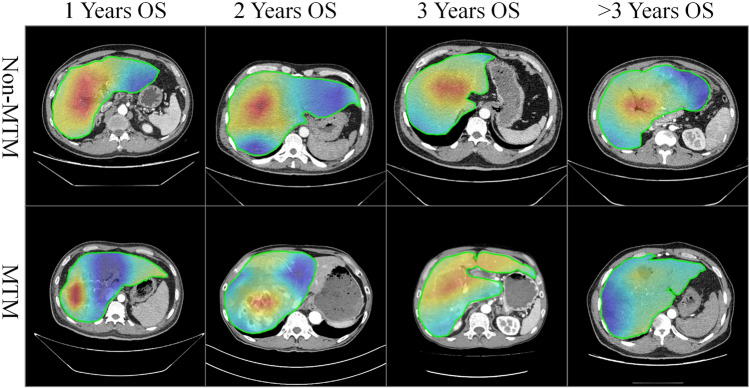
The macrotrabecular-massive (MTM) is a special subtype of hepatocellular carcinoma (HCC), which has commonly a dismal prognosis. This study aimed to develop a multitask deep learning radiomics (MDLR) model for predicting MTM and HCC patients' prognosis after hepatic arterial infusion chemotherapy (HAIC).
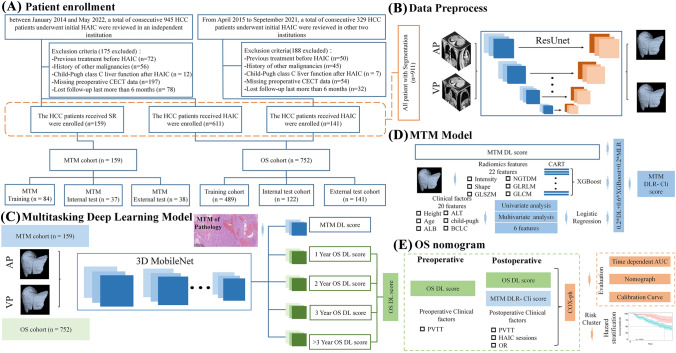
From June 2018 to March 2020, 158 eligible patients with HCC who underwent surgery were retrospectively enrolled in MTM related cohorts, and 752 HCC patients who underwent HAIC were included in HAIC related cohorts during the same period. DLR features were extracted from dual-phase (arterial phase and venous phase) contrast-enhanced computed tomography (CECT) of the entire liver region. Then, an MDLR model was used for the simultaneous prediction of the MTM subtype and patient prognosis after HAIC. The MDLR model for prognostic risk stratification incorporated DLR signatures, clinical variables and MTM subtype.
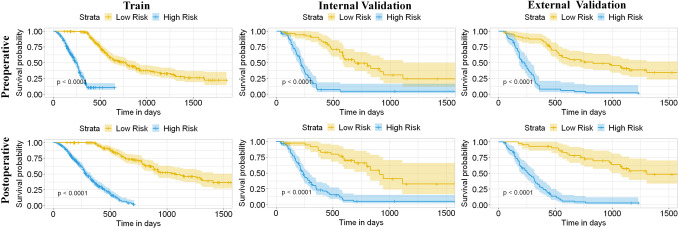
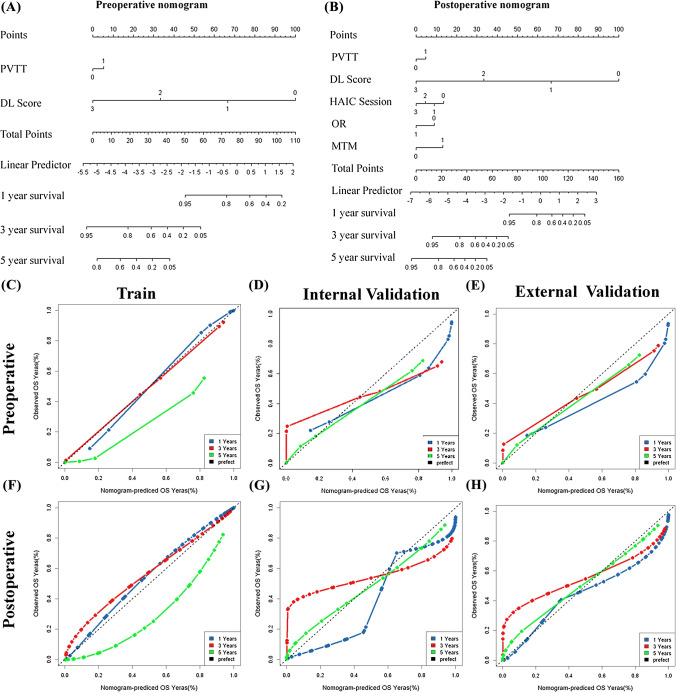
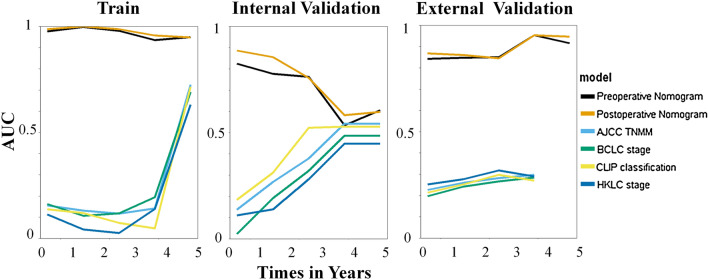
The predictive performance of the DLR model for the MTM subtype was 0.968 in the training cohort [TC], 0.912 in the internal test cohort [ITC] and 0.773 in the external test cohort [ETC], respectively. Multivariable analysis identified portal vein tumor thrombus (PVTT) (p = 0.012), HAIC response (p < 0.001), HAIC sessions (p < 0.001) and MTM subtype (p < 0.001) as indicators of poor prognosis. After incorporating DLR signatures, the MDLR model yielded the best performance among all models (AUC, 0.855 in the TC, 0.805 in the ITC and 0.792 in the ETC). With these variables, the MDLR model provided two risk strata for overall survival (OS) in the TC: low risk (5-year OS, 44.9%) and high risk (5-year OS, 4.9%).
A tool based on MDLR was developed to consider that the MTM is an important prognosis factor for HCC patients. MDLR showed outstanding performance for the prognostic risk stratification of HCC patients who underwent HAIC and may help physicians with therapeutic decision making and surveillance strategy selection in clinical practice.
巨梁型-块状(MTM)是肝细胞癌(HCC)的一种特殊亚型,通常预后较差。本研究旨在开发一种多任务深度学习放射组学(MDLR)模型,用于预测接受肝动脉灌注化疗(HAIC)后的 MTM 和 HCC 患者的预后。
回顾性纳入 2018 年 6 月至 2020 年 3 月期间接受手术治疗的符合 MTM 相关标准的 158 例 HCC 患者作为 MTM 相关队列,同期纳入接受 HAIC 治疗的 752 例 HCC 患者作为 HAIC 相关队列。从全肝双期(动脉期和静脉期)增强 CT 中提取 DLR 特征。然后,使用 MDLR 模型同时预测 MTM 亚型和 HAIC 后患者的预后。预后风险分层的 MDLR 模型纳入了 DLR 特征、临床变量和 MTM 亚型。
在训练队列(TC)中,DLR 模型对 MTM 亚型的预测性能分别为 0.968、0.912 和 0.773;在内部测试队列(ITC)中,分别为 0.922、0.872 和 0.745;在外部测试队列(ETC)中,分别为 0.894、0.845 和 0.714。多变量分析确定门静脉癌栓(PVTT)(p=0.012)、HAIC 反应(p<0.001)、HAIC 疗程(p<0.001)和 MTM 亚型(p<0.001)为不良预后的指标。在纳入 DLR 特征后,MDLR 模型在所有模型中的表现最佳(TC 中的 AUC 为 0.855、ITC 中的 AUC 为 0.805 和 ETC 中的 AUC 为 0.792)。利用这些变量,MDLR 模型在 TC 中为总生存期(OS)提供了两个风险分层:低风险(5 年 OS,44.9%)和高风险(5 年 OS,4.9%)。
开发了一种基于 MDLR 的工具,用于考虑 MTM 是 HCC 患者重要的预后因素。MDLR 对接受 HAIC 治疗的 HCC 患者的预后风险分层具有出色的表现,可能有助于医生在临床实践中进行治疗决策和监测策略选择。