Sanders-Brown Center On Aging, University of Kentucky, Lexington, KY, USA.
Department of Pharmaceutical Sciences, College of Pharmacy, University of Kentucky, Lexington, KY, USA.
Fluids Barriers CNS. 2023 Oct 6;20(1):70. doi: 10.1186/s12987-023-00470-z.
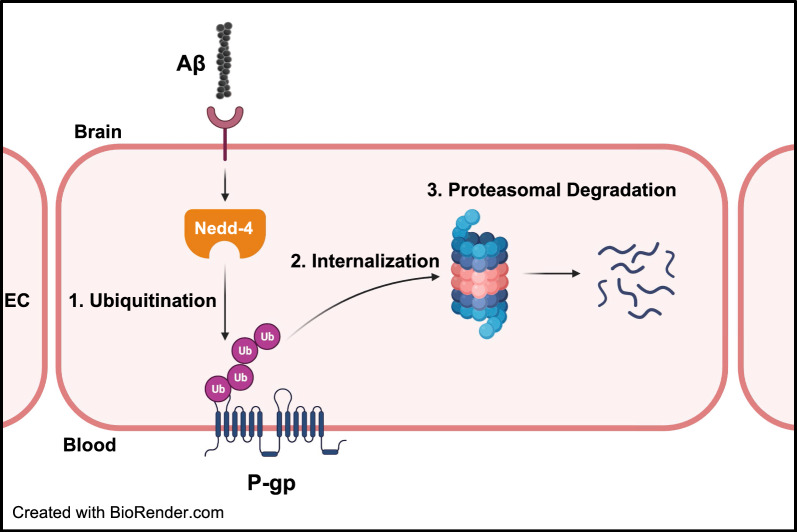
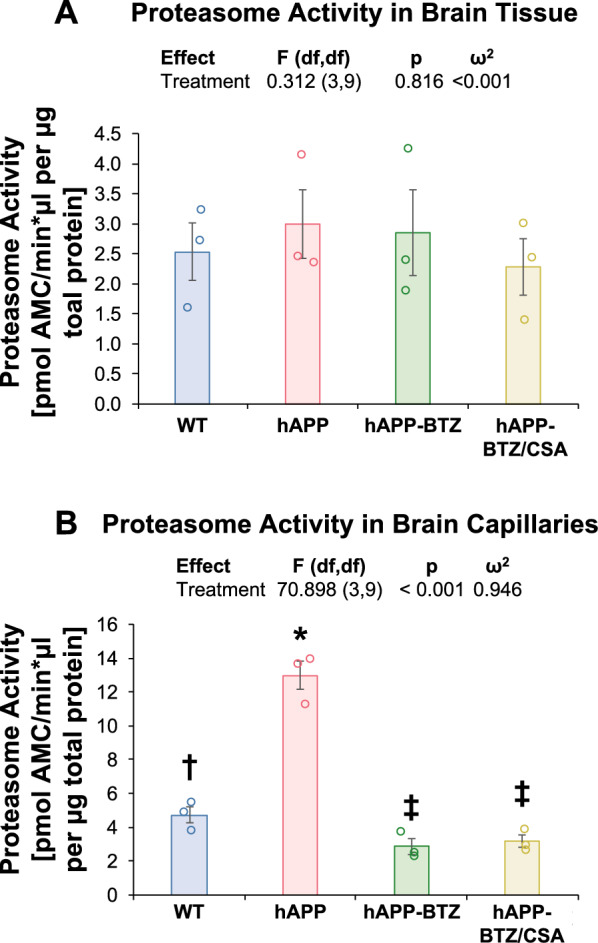
Loss of P-glycoprotein (P-gp) at the blood-brain barrier contributes to amyloid-β (Aβ) brain accumulation in Alzheimer's disease (AD). Using transgenic human amyloid precursor protein (hAPP)-overexpressing mice (Tg2576), we previously showed that Aβ triggers P-gp loss by activating the ubiquitin-proteasome pathway, which leads to P-gp degradation. Furthermore, we showed that inhibiting the ubiquitin-activating enzyme (E1) prevents P-gp loss and lowers Aβ accumulation in the brain of hAPP mice. Based on these data, we hypothesized that repurposing the FDA-approved proteasome inhibitor, bortezomib (Velcade; BTZ), protects blood-brain barrier P-gp from degradation in hAPP mice in vivo.
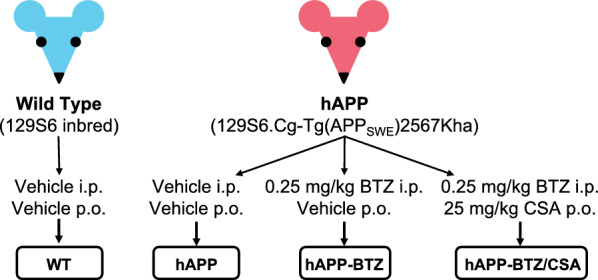
We treated hAPP mice with the proteasome inhibitor BTZ or a combination of BTZ with the P-gp inhibitor cyclosporin A (CSA) for 2 weeks. Vehicle-treated wild-type (WT) mice were used as a reference for normal P-gp protein expression and transport activity. In addition, we used the opioid receptor agonist loperamide as a P-gp substrate in tail flick assays to indirectly assess P-gp transport activity at the blood-brain barrier in vivo. We also determined P-gp protein expression by Western blotting, measured P-gp transport activity levels in isolated brain capillaries with live cell confocal imaging and assessed Aβ plasma and brain levels with ELISA.
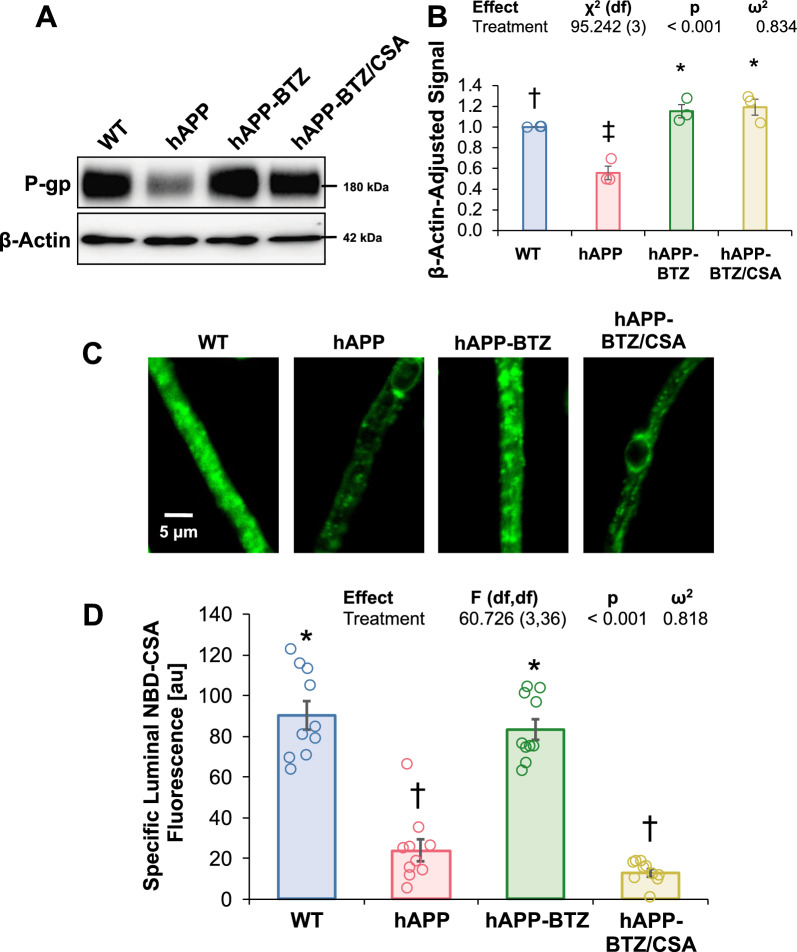
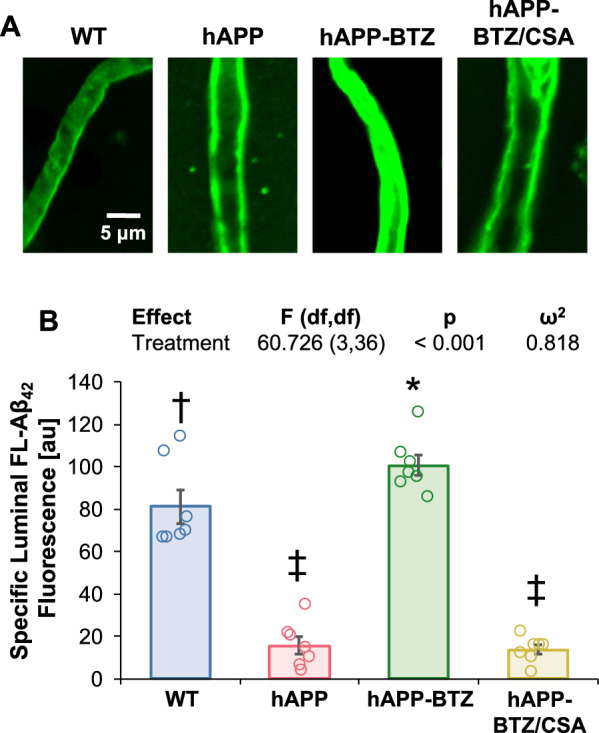
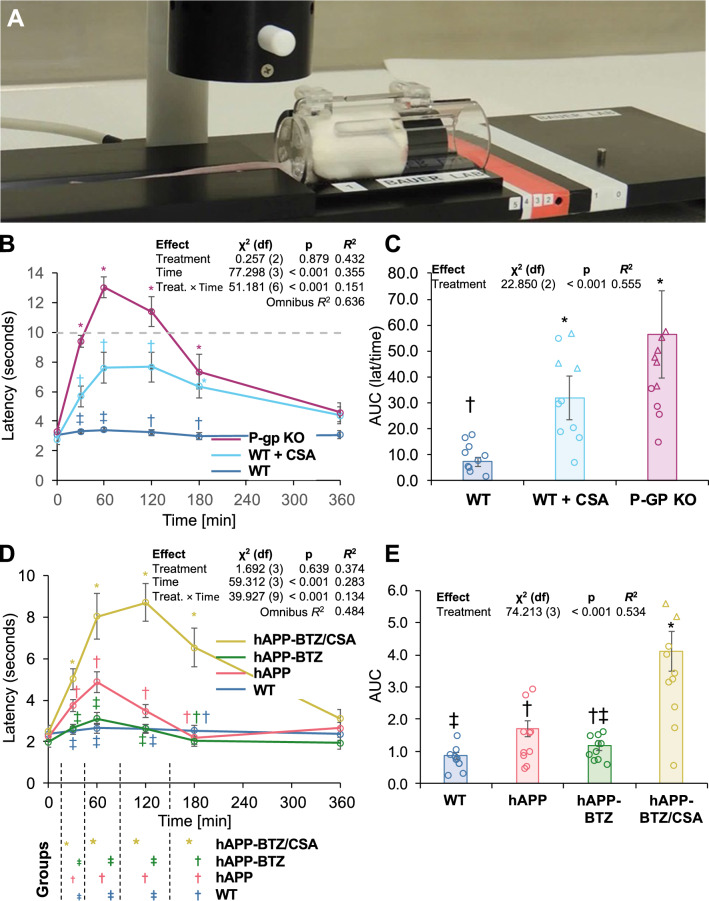
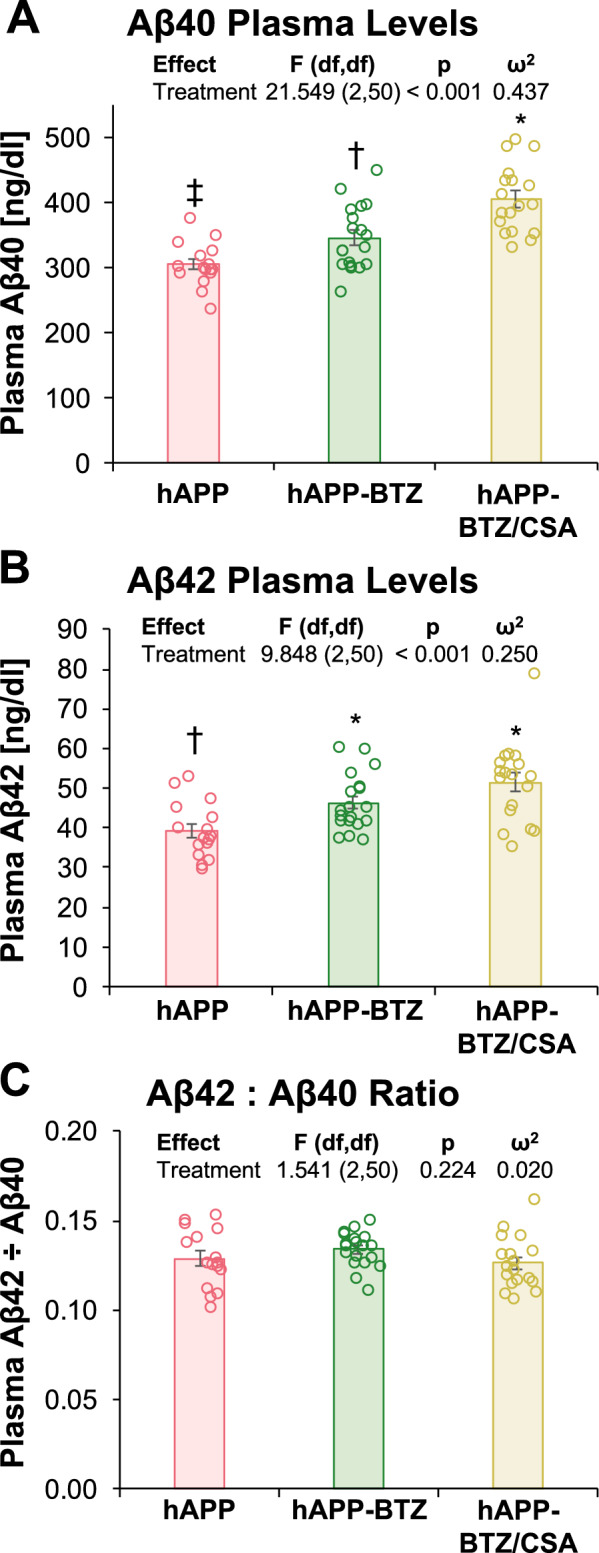
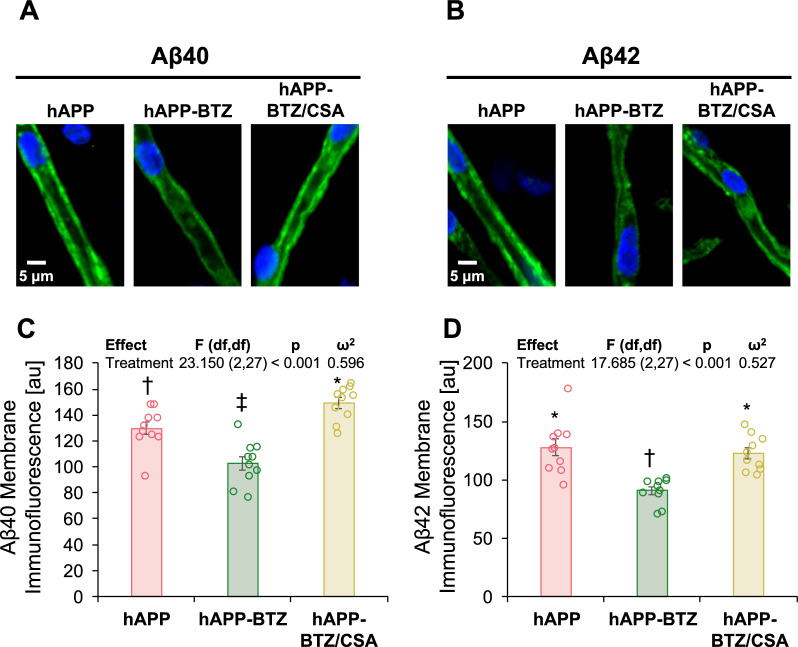
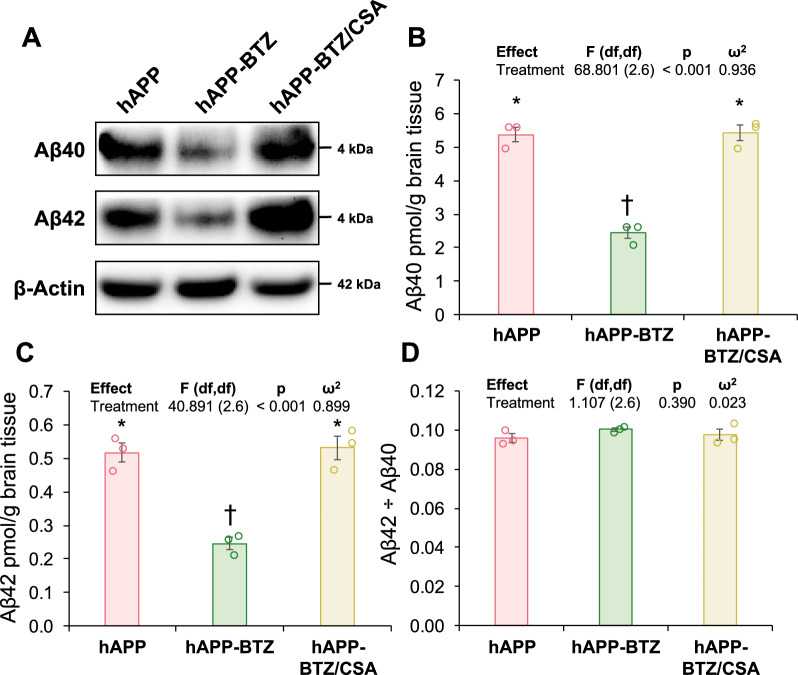
We found that 2-week BTZ treatment of hAPP mice restored P-gp protein expression and transport activity in brain capillaries to levels found in WT mice. We also observed that hAPP mice displayed significant loperamide-induced central antinociception compared to WT mice indicating impaired P-gp transport activity at the blood-brain barrier of hAPP mice in vivo. Furthermore, BTZ treatment prevented loperamide-induced antinociception suggesting BTZ protected P-gp loss in hAPP mice. Further, BTZ-treated hAPP mice had lower Aβ40 and Aβ42 brain levels compared to vehicle-treated hAPP mice.
Our data indicate that BTZ protects P-gp from proteasomal degradation in hAPP mice, which helps to reduce Aβ brain levels. Our data suggest that the proteasome system could be exploited for a novel therapeutic strategy in AD, particularly since increasing Aβ transport across the blood-brain barrier may prove an effective treatment for patients.
血脑屏障中 P-糖蛋白(P-gp)的丧失导致阿尔茨海默病(AD)中淀粉样β(Aβ)在大脑中的积累。我们之前使用过表达转基因人淀粉样前体蛋白(hAPP)的小鼠(Tg2576)表明,Aβ 通过激活泛素-蛋白酶体途径触发 P-gp 丢失,从而导致 P-gp 降解。此外,我们发现抑制泛素激活酶(E1)可防止 P-gp 丢失并降低 hAPP 小鼠大脑中的 Aβ 积累。基于这些数据,我们假设重新利用 FDA 批准的蛋白酶体抑制剂硼替佐米(Velcade;BTZ)可防止 hAPP 小鼠体内血脑屏障 P-gp 的降解。
我们用蛋白酶体抑制剂 BTZ 或 BTZ 与 P-gp 抑制剂环孢菌素 A(CSA)联合治疗 hAPP 小鼠 2 周。用载体处理的野生型(WT)小鼠作为正常 P-gp 蛋白表达和转运活性的参考。此外,我们使用阿片受体激动剂洛哌丁胺作为尾部闪烁测定中的 P-gp 底物,间接评估体内血脑屏障的 P-gp 转运活性。我们还通过 Western 印迹法测定 P-gp 蛋白表达,用活细胞共聚焦成像测量分离的脑毛细血管中的 P-gp 转运活性水平,并通过 ELISA 测定 Aβ 血浆和大脑水平。
我们发现,2 周的 BTZ 治疗可使 hAPP 小鼠的 P-gp 蛋白表达和脑毛细血管中的转运活性恢复到 WT 小鼠的水平。我们还观察到,与 WT 小鼠相比,hAPP 小鼠显示出明显的洛哌丁胺诱导的中枢镇痛作用,这表明 hAPP 小鼠体内血脑屏障的 P-gp 转运活性受损。此外,BTZ 治疗可预防洛哌丁胺诱导的镇痛作用,表明 BTZ 可防止 hAPP 小鼠的 P-gp 丢失。此外,与载体处理的 hAPP 小鼠相比,BTZ 处理的 hAPP 小鼠的大脑 Aβ40 和 Aβ42 水平较低。
我们的数据表明,BTZ 可防止 hAPP 小鼠的 P-gp 被蛋白酶体降解,从而有助于降低大脑中的 Aβ 水平。我们的数据表明,蛋白酶体系统可用于 AD 的新的治疗策略,特别是因为增加 Aβ 穿过血脑屏障的转运可能对患者有效。