Belmabrouk Sabrine, Abdelhedi Rania, Bougacha Fadia, Bouzid Fériel, Gargouri Héla, Ayadi Imen, Abdelmoula Nouha Bouayed, Abdelmoula Balkiss, Abdellaoui Nawel, BenMarzoug Riadh, Triki Nersrine, Torjmen Mouna, Kharrat Mohamed, Jmaiel Mohamed, Kharrat Najla, Rebai Ahmed
Laboratory of Screening Cellular and Molecular Process, Center of Biotechnology of Sfax, Sidi Mansour Road km 7, P.O Box 1177, 3018, Sfax, Tunisia.
National Institute of Statistics, 70, Ech-cham Road, P.O Box 265 CEDEX. Tunis, Tunisia.
World Allergy Organ J. 2023 Sep 28;16(9):100813. doi: 10.1016/j.waojou.2023.100813. eCollection 2023 Sep.
Food allergy (FA) has become a major public health concern affecting millions of children and adults worldwide. In Tunisia, published data on FA are scarce.
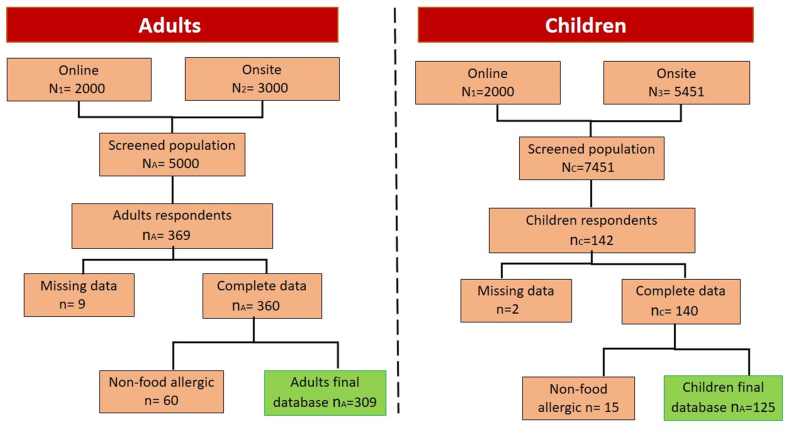
This study, was intended to fill the gap and estimate the frequency of allergy to different foods in the Sfax region, Tunisia, within self-reported FA. One hundred twenty-five (125) children (56% males, 1-17 years old), and 306 adults (17% males, 18-70 years old) were interviewed using a bilingual questionnaire.
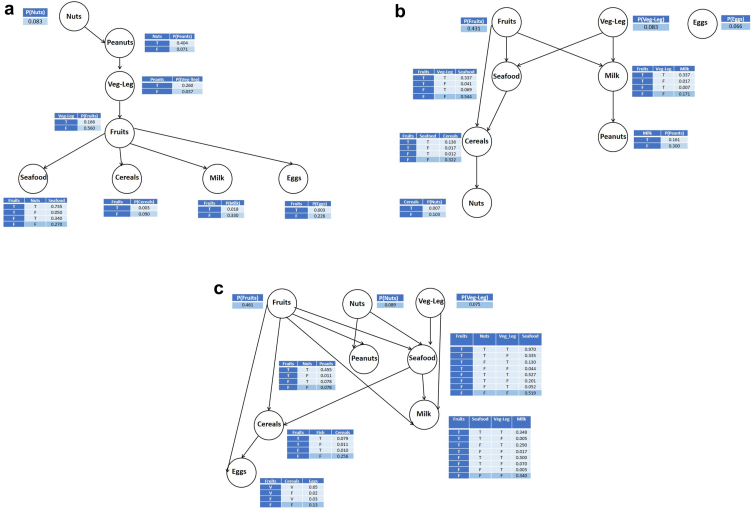
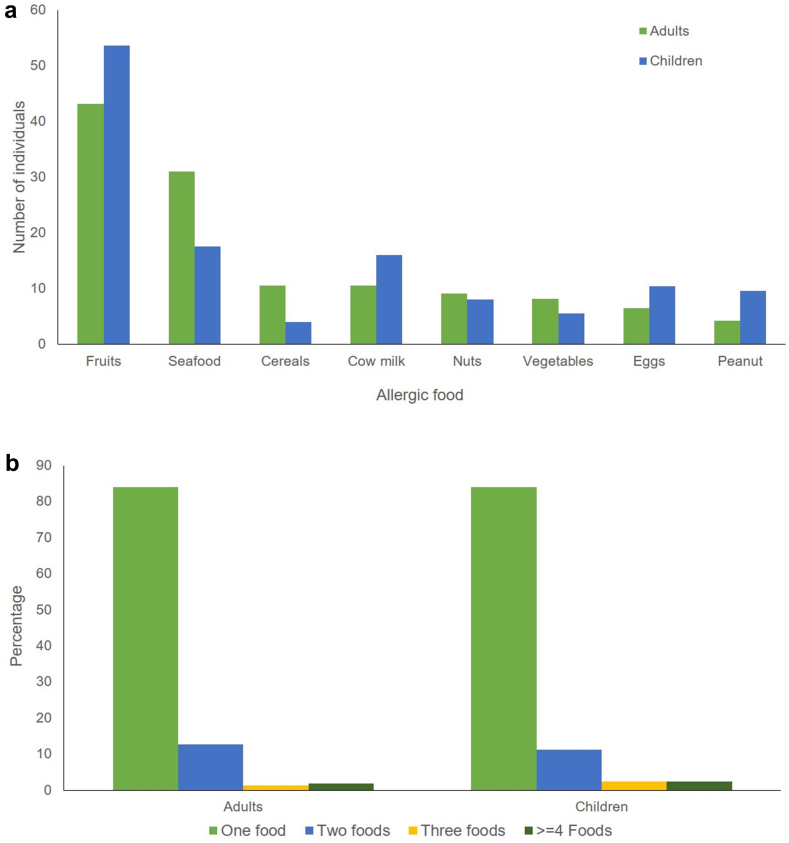
The number of self-reported food allergens in this sample was 105; allergens were clustered in 8 foods: fruits, seafood, eggs, milk and dairy, cereals, nuts, vegetables, and peanuts. Cutaneous reactions were the most frequent symptoms, in both children and adults. About 40% of children and 30% of adults had a family history of FA. About 81% of adults and 38% of children are allergic to at least 1 non-food allergen. The most prevalent food allergen was the fruit group in both adults and children, followed by seafood. Most food allergies were mutually exclusive and 90% of individuals have a single FA. The relationship between self-declared FA was modeled using a Bayesian network graphical model in order to estimate conditional probabilities of each FA when other FA is present.
Our findings suggest that the prevalence of self-reported FA in Tunisia depends on dietary habits and food availability since the most frequent allergens are from foods that are highly consumed by the Tunisian population.
食物过敏(FA)已成为一个重大的公共卫生问题,影响着全球数百万儿童和成人。在突尼斯,关于食物过敏的已发表数据很少。
本研究旨在填补这一空白,并估计突尼斯斯法克斯地区自我报告的食物过敏中对不同食物的过敏频率。使用双语问卷对125名儿童(56%为男性,年龄1至17岁)和306名成年人(17%为男性,年龄18至70岁)进行了访谈。
该样本中自我报告的食物过敏原数量为105种;过敏原集中在8种食物中:水果、海鲜、鸡蛋、牛奶及奶制品、谷物、坚果、蔬菜和花生。皮肤反应是儿童和成人中最常见的症状。约40%的儿童和30%的成人有食物过敏家族史。约81%的成年人和38%的儿童对至少一种非食物过敏原过敏。最常见的食物过敏原在成人和儿童中都是水果组,其次是海鲜。大多数食物过敏相互排斥,90%的个体有一种食物过敏。使用贝叶斯网络图形模型对自我声明的食物过敏之间的关系进行建模,以估计当存在其他食物过敏时每种食物过敏的条件概率。
我们的研究结果表明,突尼斯自我报告的食物过敏患病率取决于饮食习惯和食物供应情况,因为最常见的过敏原来自突尼斯人口大量食用的食物。