Department of Orthopedics, The First Affiliated Hospital of Soochow University, Jiangsu, China.
Department of Orthopedics, Changshu Hospital Affiliated to Soochow University, First People's Hospital of Changshu City, Jiangsu, China.
Aging Dis. 2024 Aug 1;15(4):1784-1812. doi: 10.14336/AD.2023.0924.
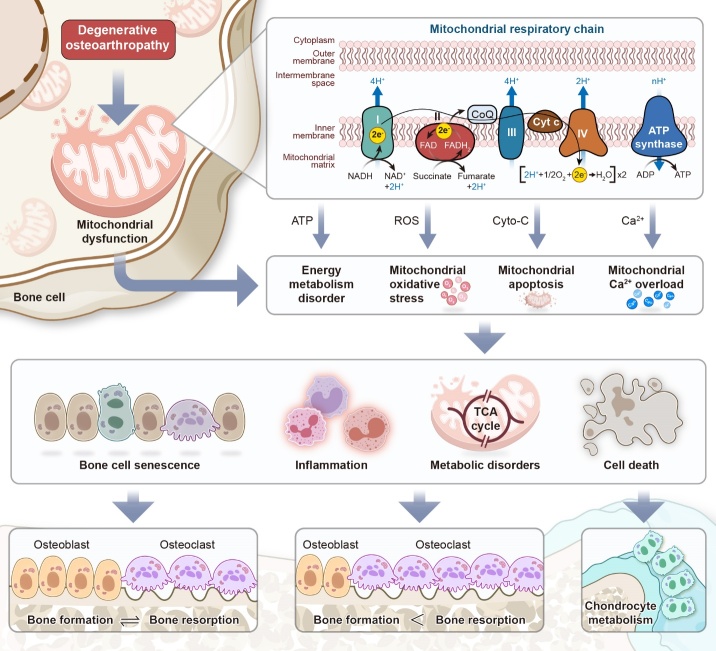
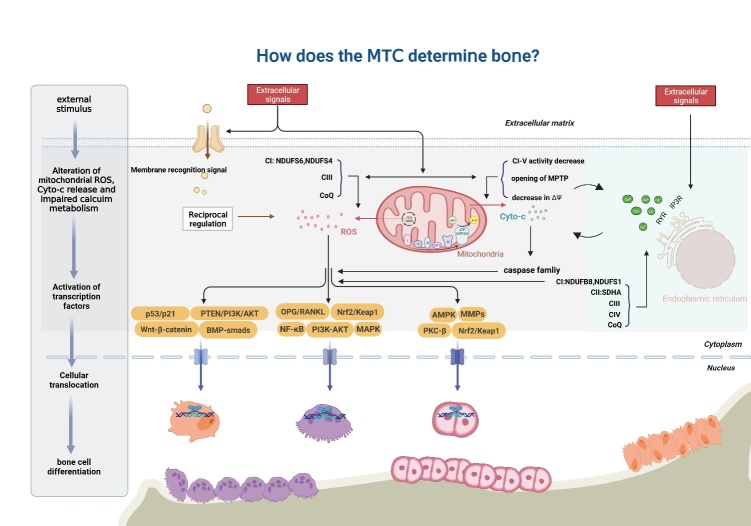
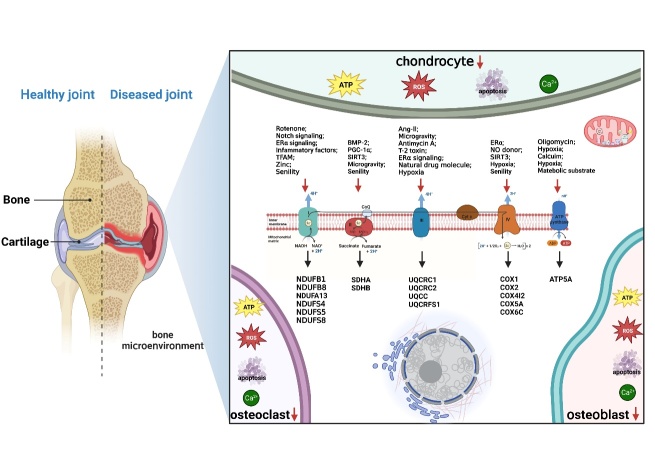
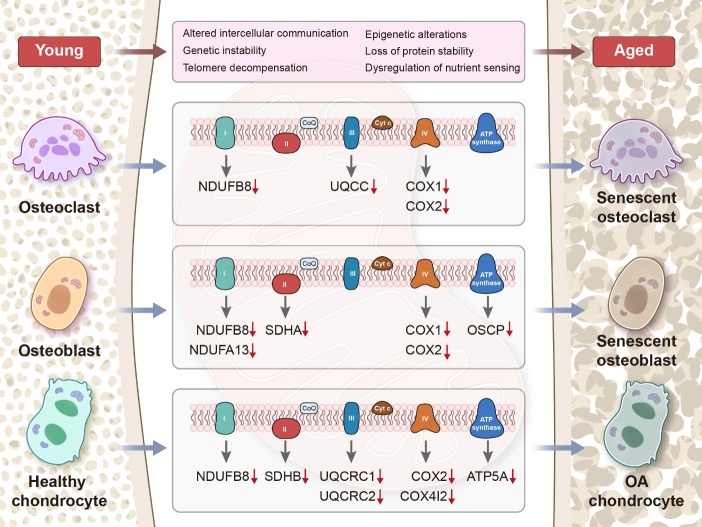
Maintenance of mitochondrial homeostasis is crucial for ensuring healthy mitochondria and normal cellular function. This process is primarily responsible for regulating processes that include mitochondrial OXPHOS, which generates ATP, as well as mitochondrial oxidative stress, apoptosis, calcium homeostasis, and mitophagy. Bone mesenchymal stem cells express factors that aid in bone formation and vascular growth. Positive regulation of hematopoietic stem cells in the bone marrow affects the differentiation of osteoclasts. Furthermore, the metabolic regulation of cells that play fundamental roles in various regions of the bone, as well as interactions within the bone microenvironment, actively participates in regulating bone integrity and aging. The maintenance of cellular homeostasis is dependent on the regulation of intracellular organelles, thus understanding the impact of mitochondrial functional changes on overall bone metabolism is crucially important. Recent studies have revealed that mitochondrial homeostasis can lead to morphological and functional abnormalities in senescent cells, particularly in the context of bone diseases. Mitochondrial dysfunction in skeletal diseases results in abnormal metabolism of bone-associated cells and a secondary dysregulated microenvironment within bone tissue. This imbalance in the oxidative system and immune disruption in the bone microenvironment ultimately leads to bone dysplasia. In this review, we examine the latest developments in mitochondrial respiratory chain regulation and its impacts on maintenance of bone health. Specifically, we explored whether enhancing mitochondrial function can reduce the occurrence of bone cell deterioration and improve bone metabolism. These findings offer prospects for developing bone remodeling biology strategies to treat age-related degenerative diseases.
维持线粒体动态平衡对于确保健康的线粒体和正常的细胞功能至关重要。这个过程主要负责调节包括线粒体氧化磷酸化(OXPHOS)、产生 ATP,以及线粒体氧化应激、细胞凋亡、钙稳态和线粒体自噬在内的过程。骨髓间充质干细胞表达有助于骨形成和血管生长的因子。骨髓中造血干细胞的正向调节影响破骨细胞的分化。此外,对骨骼不同区域起基本作用的细胞的代谢调节,以及骨骼微环境内的相互作用,积极参与调节骨骼完整性和衰老。细胞内细胞器的调节依赖于细胞内细胞器的调节,因此了解线粒体功能变化对整体骨骼代谢的影响至关重要。最近的研究表明,线粒体动态平衡会导致衰老细胞的形态和功能异常,特别是在骨骼疾病的背景下。骨骼疾病中的线粒体功能障碍导致与骨相关的细胞代谢异常,以及骨组织内的二级失调微环境。这种氧化系统失衡和骨骼微环境中的免疫紊乱最终导致骨发育不良。在这篇综述中,我们探讨了线粒体呼吸链调节的最新进展及其对维持骨骼健康的影响。具体来说,我们探讨了增强线粒体功能是否可以减少骨细胞恶化的发生并改善骨代谢。这些发现为开发治疗与年龄相关的退行性疾病的骨骼重塑生物学策略提供了前景。