Soliman Taha, Chatterjee Swetaki, Laleni Nellie, Müller Franz, Kirchner Tobias, Wehn Norbert, Kämpfe Thomas, Chauhan Yogesh Singh, Amrouch Hussam
Robert Bosch GmbH, Renningen, Germany.
Semiconducture Test and Reliability, University of Stuttgart, Stuttgart, Germany.
Nat Commun. 2023 Oct 10;14(1):6348. doi: 10.1038/s41467-023-42110-y.
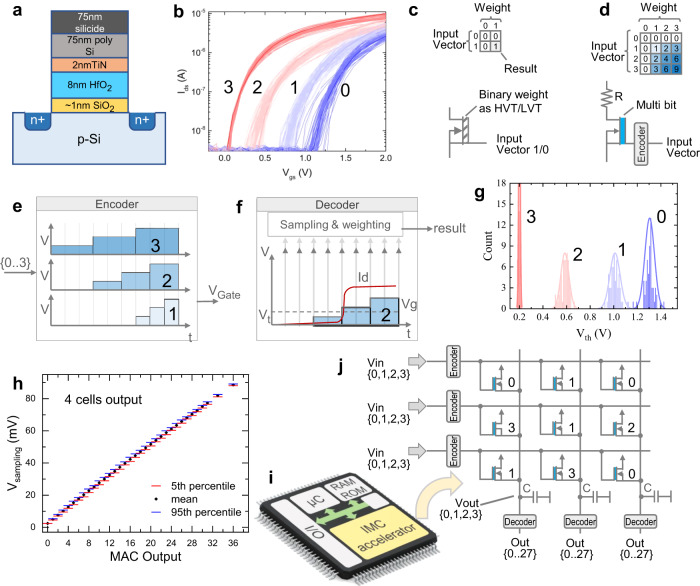
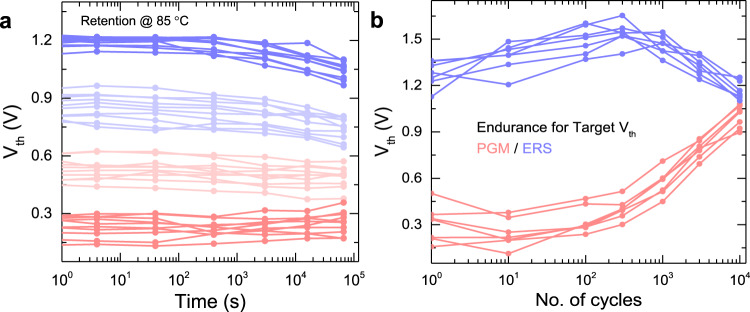
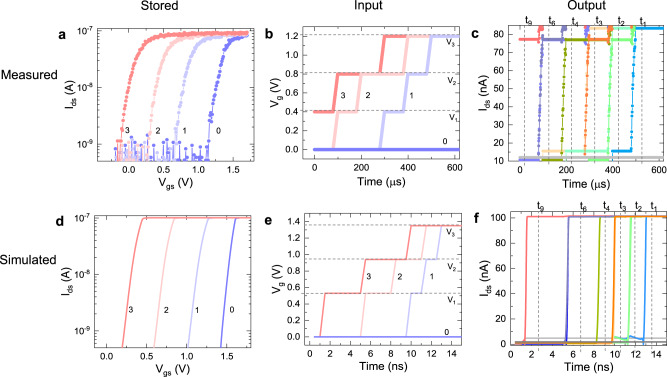
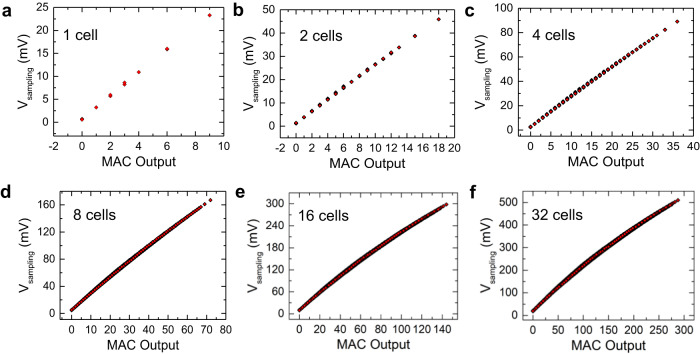
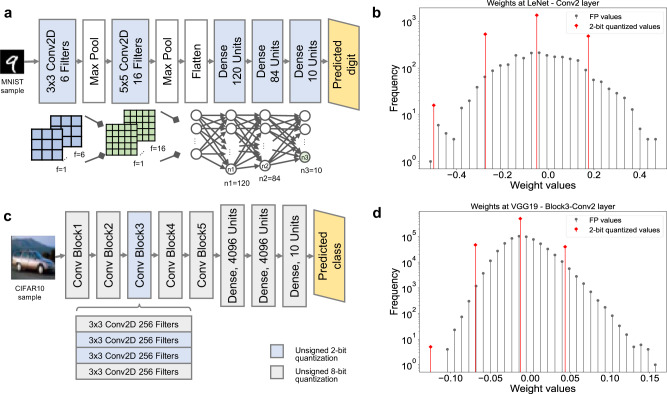
Advancements in AI led to the emergence of in-memory-computing architectures as a promising solution for the associated computing and memory challenges. This study introduces a novel in-memory-computing (IMC) crossbar macro utilizing a multi-level ferroelectric field-effect transistor (FeFET) cell for multi-bit multiply and accumulate (MAC) operations. The proposed 1FeFET-1R cell design stores multi-bit information while minimizing device variability effects on accuracy. Experimental validation was performed using 28 nm HKMG technology-based FeFET devices. Unlike traditional resistive memory-based analog computing, our approach leverages the electrical characteristics of stored data within the memory cell to derive MAC operation results encoded in activation time and accumulated current. Remarkably, our design achieves 96.6% accuracy for handwriting recognition and 91.5% accuracy for image classification without extra training. Furthermore, it demonstrates exceptional performance, achieving 885.4 TOPS/W-nearly double that of existing designs. This study represents the first successful implementation of an in-memory macro using a multi-state FeFET cell for complete MAC operations, preserving crossbar density without additional structural overhead.
人工智能的进步促使内存计算架构应运而生,成为应对相关计算和内存挑战的一种有前景的解决方案。本研究介绍了一种新颖的内存计算(IMC)交叉开关宏,它利用多级铁电场效应晶体管(FeFET)单元进行多位乘法和累加(MAC)运算。所提出的1FeFET-1R单元设计在存储多位信息的同时,将器件变化对精度的影响降至最低。使用基于28纳米HKMG技术的FeFET器件进行了实验验证。与传统的基于电阻式存储器的模拟计算不同,我们的方法利用存储在存储单元内的数据的电学特性,得出在激活时间和累积电流中编码的MAC运算结果。值得注意的是,我们的设计在无需额外训练的情况下,手写识别准确率达到96.6%,图像分类准确率达到91.5%。此外,它还展现出卓越的性能,达到885.4 TOPS/W,几乎是现有设计的两倍。本研究代表了首次成功实现使用多态FeFET单元进行完整MAC运算的内存宏,在不增加额外结构开销的情况下保持交叉开关密度。