Soltan Dallal Mohammad Mehdi, Karimaei Samira, Hajighasem Maryam, Hashemi Seyed Jamal, Rahimi Foroushani Abbas, Ghazi-Khansari Mahmoud, Partoazar Alireza
Department of Pathobiology, School of Public Health Tehran University of Medical Sciences Tehran Iran.
Food Microbiology Research Center Tehran University of Medical Sciences Tehran Iran.
Food Sci Nutr. 2023 Jun 23;11(10):5882-5889. doi: 10.1002/fsn3.3528. eCollection 2023 Oct.
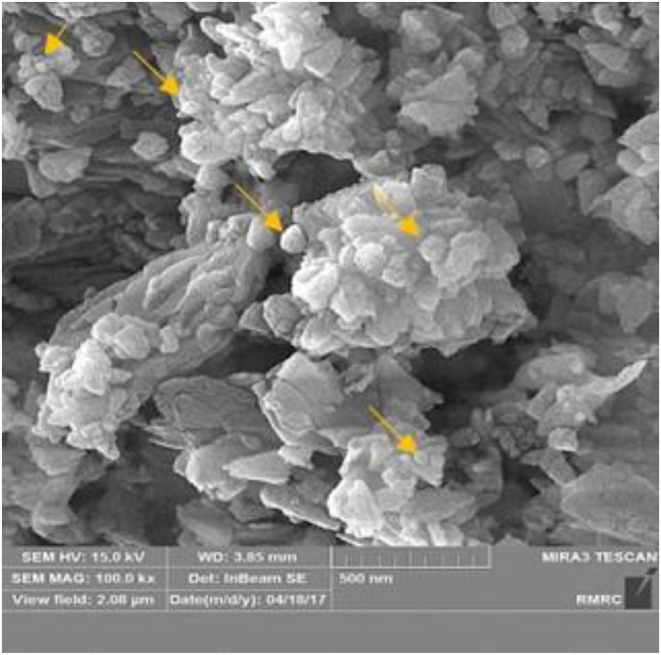
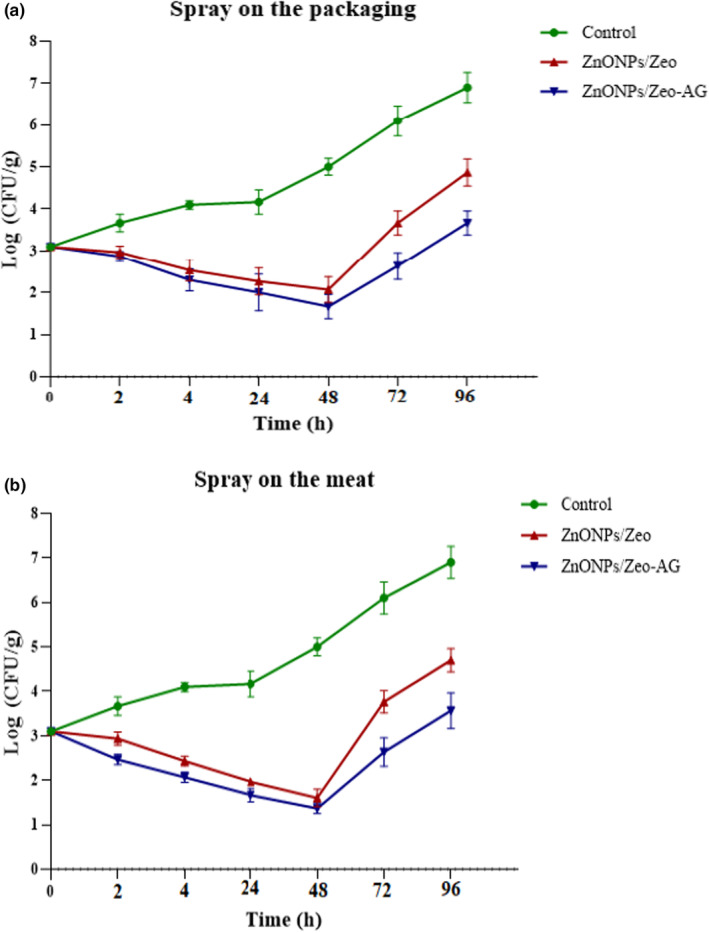
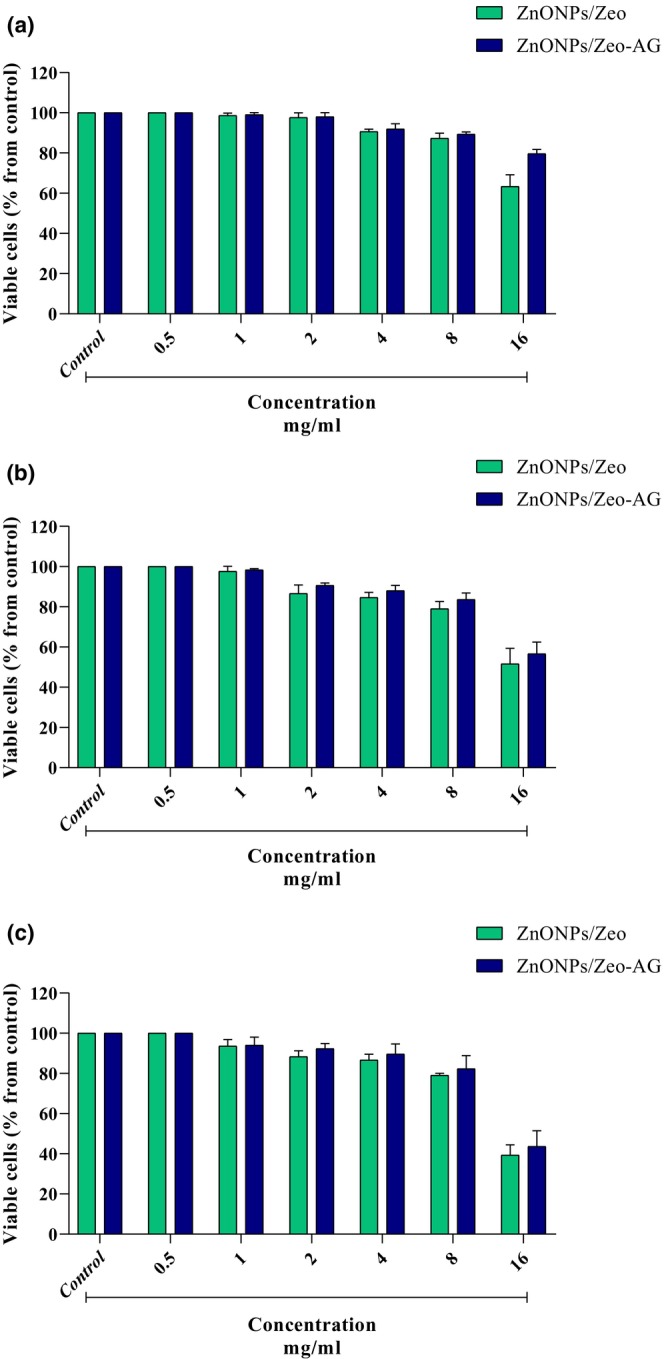
The growing demand for high food quality has been encouraging researchers in the food industry to apply biodegradable nanocomposites, which provide new opportunities and challenges for the advance of nanomaterials in the food industry. The objective of this study was to estimate the antibacterial activity and cytotoxicity effects of zinc oxide nanocomposite/zeolite (c/Zeo) with gel (AG) and its effect on the shelf life of chicken meat. The ZnONPs/Zeo was assessed using X-ray fluorescence (XRF) and field emission scanning electron microscopy (FE-SEM) analyses. The cytotoxicity effect of ZnONPs/Zeo was assessed by MTT assay. Then, the minimum inhibitory concentrations (MIC) and minimum bactericidal concentration (MBC) of ZnONPs/Zeo and ZnONPs/Zeo-AG against and A were investigated. Also, the preservative effect of nanocomposites on chicken fillets was evaluated. The results showed that these nanocomposites have the least cytotoxicity effect, resulting in good biocompatibility with the host. The MIC and MBC values of ZnONPs/Zeo-AG were lower than the ZnONPs/Zeo against and A. Both ZnONPs/Zeo-AG and ZnONPs/Zeo caused a significant decrease in the bacterial count of the chicken fillets. So, by spraying on meat, the number of bacteria presented a sharper decline as compared with the control group, resulting in an approximately 3.3 and 3-log reduction over 48 h in the ZnONPs/Zeo-AG and ZnONPs/Zeo treatment samples, respectively. In conclusion, antimicrobial packaging with ZnONPs containing is a beneficial solution for preserving and improving the quality, safety, and shelf life of fresh meat products.
对高食品质量的需求不断增长,这促使食品行业的研究人员应用可生物降解的纳米复合材料,这为纳米材料在食品行业的发展带来了新的机遇和挑战。本研究的目的是评估氧化锌纳米复合材料/沸石(c/Zeo)与凝胶(AG)的抗菌活性和细胞毒性作用及其对鸡肉保质期的影响。使用X射线荧光(XRF)和场发射扫描电子显微镜(FE-SEM)分析对ZnONPs/Zeo进行评估。通过MTT法评估ZnONPs/Zeo的细胞毒性作用。然后,研究了ZnONPs/Zeo和ZnONPs/Zeo-AG对 和 A的最低抑菌浓度(MIC)和最低杀菌浓度(MBC)。此外,还评估了纳米复合材料对鸡肉片的保鲜效果。结果表明,这些纳米复合材料的细胞毒性作用最小,与宿主具有良好的生物相容性。ZnONPs/Zeo-AG对 和 A的MIC和MBC值低于ZnONPs/Zeo。ZnONPs/Zeo-AG和ZnONPs/Zeo均导致鸡肉片中细菌数量显著减少。因此,通过喷洒在肉上,与对照组相比,细菌数量下降更为明显,在ZnONPs/Zeo-AG和ZnONPs/Zeo处理样品中,48小时内细菌数量分别减少了约3.3和3个对数。总之,含有ZnONPs 的抗菌包装是保存和提高鲜肉制品质量、安全性和保质期的有益解决方案。