Ura Hiroki, Togi Sumihito, Niida Yo
Center for Clinical Genomics, Kanazawa Medical University Hospital, Uchinada, Ishikawa, Japan.
Division of Genomic Medicine, Department of Advanced Medicine, Medical Research Institute, Kanazawa Medical University, Uchinada, Ishikawa, Japan.
Front Genet. 2023 Sep 27;14:1256064. doi: 10.3389/fgene.2023.1256064. eCollection 2023.
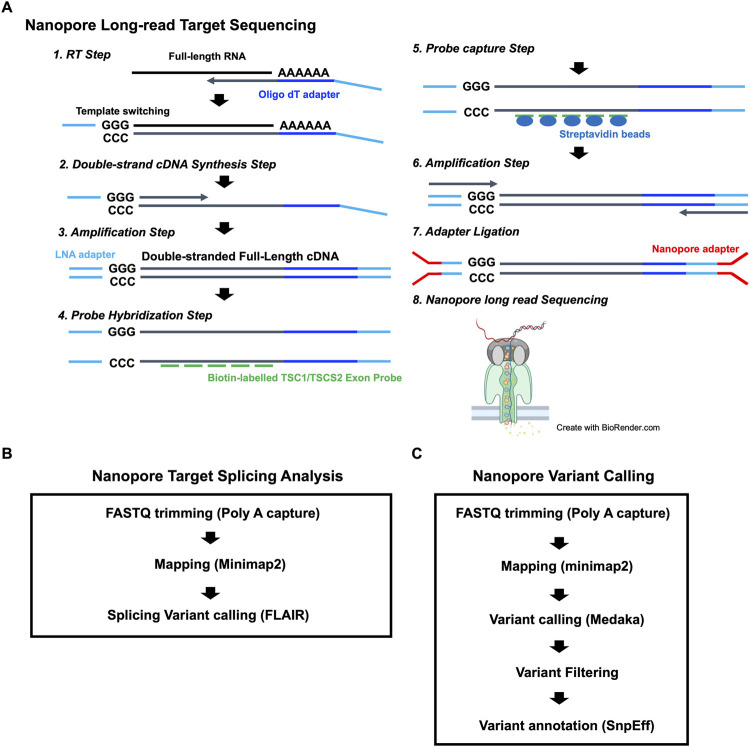
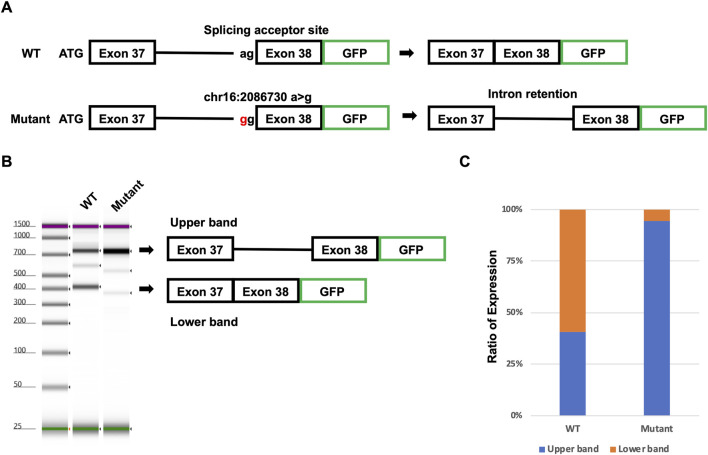
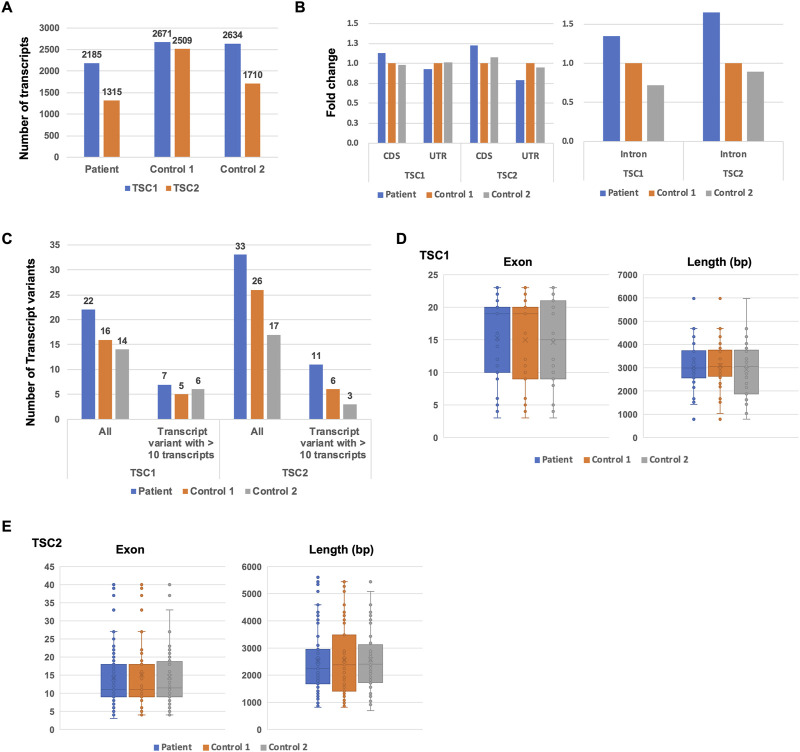
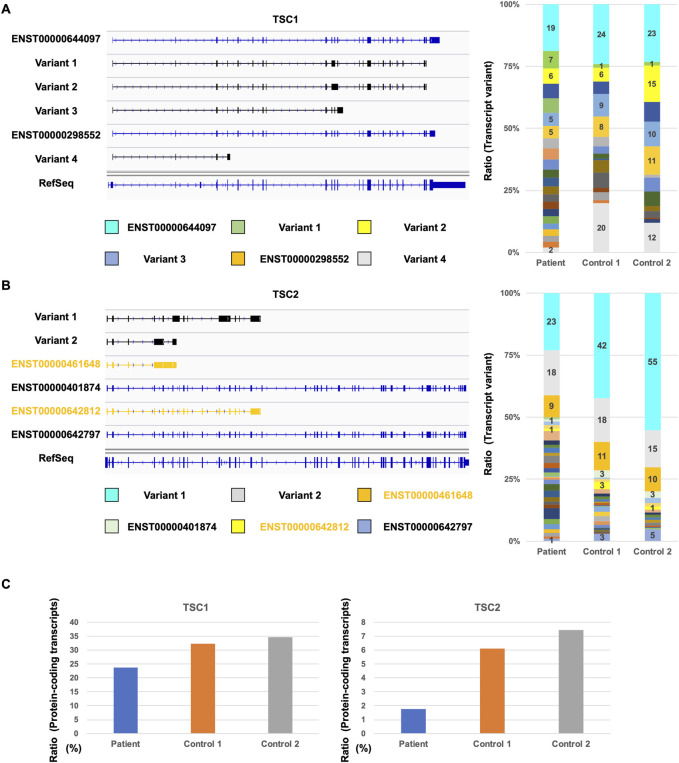
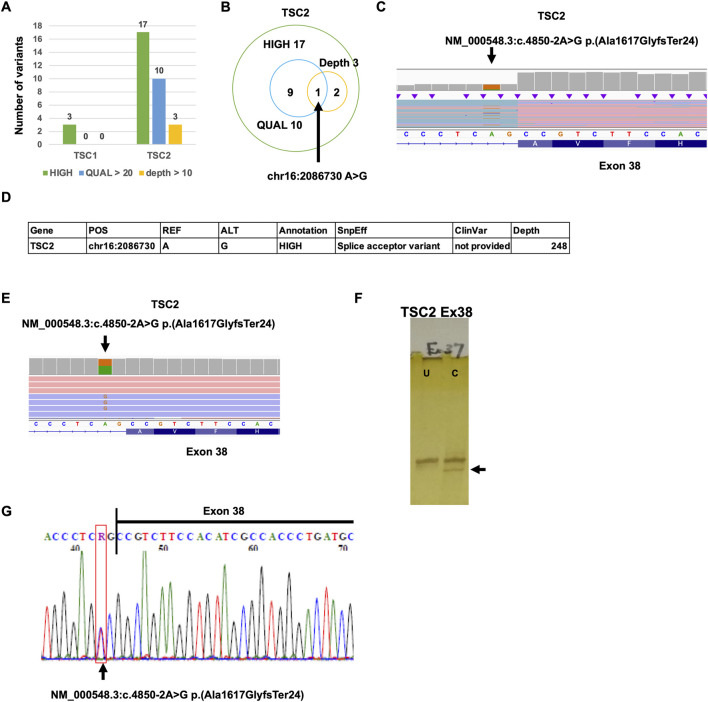
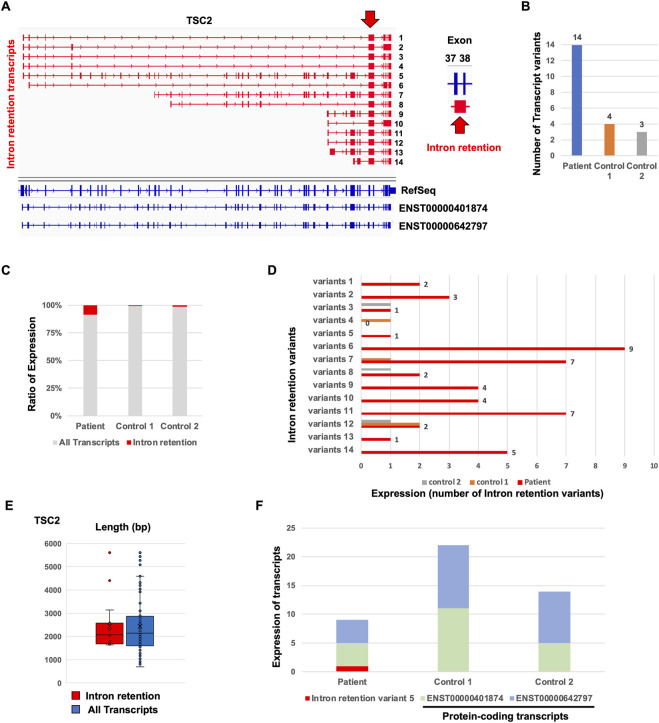
Tuberous sclerosis complex (TSC) is a relatively common autosomal dominant disorder characterized by multiple dysplastic organ lesions and neuropsychiatric symptoms caused by loss-of-function mutation of either or . The genetic diagnosis of inherited diseases, including TSC, in the clinical field is widespread using next-generation sequencing. The mutations in protein-coding exon tend to be verified because mutations directly cause abnormal protein. However, it is relatively difficult to verify mutations in the intron region because it is required to investigate whether the intron mutations affect the abnormal splicing of transcripts. In this study, we developed a target-capture full-length double-stranded cDNA sequencing method using Nanopore long-read sequencer (Nanopore long-read target sequencing). This method revealed the occurrence of intron mutation in the gene and found that the intron mutation produces novel intron retention splicing transcripts that generate truncated proteins. The protein-coding transcripts were decreased due to the expression of the novel intron retention transcripts, which caused TSC in patients with the intron mutation. Our results indicate that Nanopore long-read target sequencing is useful for the detection of mutations and confers information on the full-length alternative splicing of transcripts for genetic diagnosis.
结节性硬化症(TSC)是一种相对常见的常染色体显性疾病,其特征是由 或 的功能丧失突变导致多个发育异常的器官病变和神经精神症状。在临床领域,包括TSC在内的遗传性疾病的基因诊断广泛使用下一代测序技术。蛋白质编码外显子中的突变往往容易得到验证,因为突变直接导致蛋白质异常。然而,内含子区域的突变相对难以验证,因为需要研究内含子突变是否会影响转录本的异常剪接。在本研究中,我们开发了一种使用纳米孔长读长测序仪的靶向捕获全长双链cDNA测序方法(纳米孔长读长靶向测序)。该方法揭示了 基因中内含子突变的发生,并发现该内含子突变产生了新的内含子保留剪接转录本,这些转录本产生截短的蛋白质。由于新的内含子保留转录本的表达,蛋白质编码转录本减少,这在具有内含子突变的患者中导致了TSC。我们的结果表明,纳米孔长读长靶向测序对于检测突变很有用,并能为基因诊断提供转录本全长可变剪接的信息。