Mersha Abera, Abera Abebe, Tesfaye Temamen, Abera Tesfaye, Belay Admasu, Melaku Tsegaye, Shiferaw Misaye, Shibiru Shitaye, Estifanos Wubshet, Wake Senahara Korsa
School of Nursing, College of Medicine and Health Sciences, Arba Minch University, Arba Minch, Arba Minch, Ethiopia.
School of Nursing, Institute of Health, Jimma University, Jimma, Ethiopia.
BMC Nurs. 2023 Oct 13;22(1):381. doi: 10.1186/s12912-023-01526-z.
Therapeutic communication can assist nurses in achieving their goals. Effective nurse-patient communication can improve clinical outcomes and boosts patient satisfaction. But, there is an arming gap in therapeutic communication between nurses and patients in Ethiopia, which hinders the quality of nursing care. Some studies have been done on therapeutic and its barriers. Nevertheless, those studies did not fully address factors from different perspectives and were supported by nursing theories or models. Therefore, this study aimed to fill these gaps in the study setting.
Institution-based cross-sectional study was conducted among 408 nurses working in public hospitals of Gamo zone from December 1, 2021, to January 30, 2022. Out of the six hospitals in the Gamo zone, three were selected by simple random sampling method. The data were collected by an interview-administered Open Data Kit survey tool and analyzed by SAS version 9.4. Descriptive statistics were computed and a generalized linear model was used to identify associated factors.
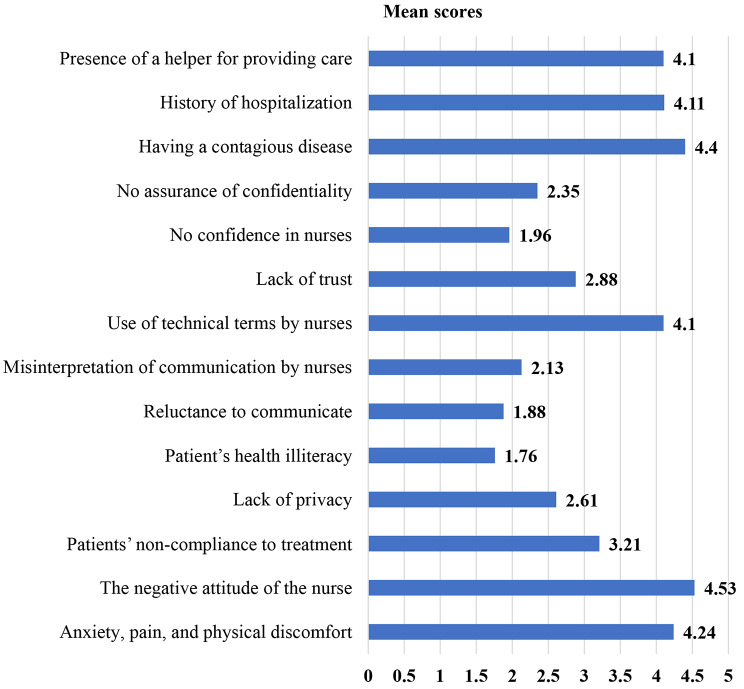
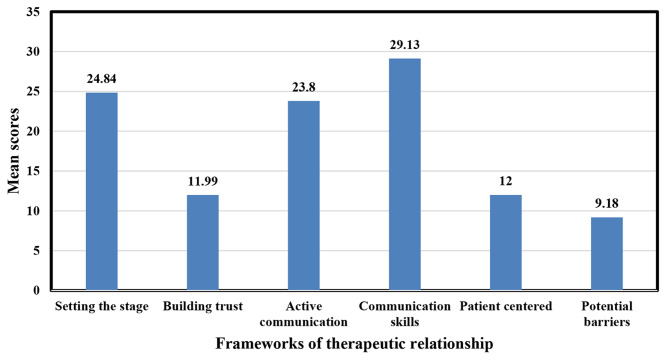
In this study, a standardized percentage of the maximum scale of therapeutic communication was 52.32%. Of the participants, 40.4% had high, 25.0% moderate, and 34.6% had low levels of therapeutic communication. Age, marital status, and qualification showed significant and positive relationships with the overall therapeutic communication. However, sex, working unit, nurse burnout, lack of empathy from nurses, challenging nursing tasks, lack of privacy, use of technical terms by nurses, lack of confidence in nurses, stress, unfamiliarity with the nursing job description, shortage of nurses, insufficient knowledge, lack of participation in decision making, and having contagious disease showed a significant and negative relationship with overall therapeutic communication.
This finding indicates a gap in therapeutic communication between nurses and patients, and modifiable factors are identified. Therefore, giving opportunities for nurses to improve their qualifications, a special attention to nurses working in stressful areas, sharing the burden of nurses, involving nurses and patients in decision-making, and motivating and creating a positive working environment is vital to improving therapeutic communication.
治疗性沟通有助于护士实现其目标。有效的护患沟通可以改善临床结局并提高患者满意度。但是,埃塞俄比亚护士与患者之间的治疗性沟通存在明显差距,这阻碍了护理质量。已经对治疗性沟通及其障碍进行了一些研究。然而,这些研究并未从不同角度充分探讨相关因素,也缺乏护理理论或模型的支持。因此,本研究旨在填补该研究背景下的这些空白。
2021年12月1日至2022年1月30日,在加莫地区公立医院工作的408名护士中开展了基于机构的横断面研究。加莫地区的六所医院中,通过简单随机抽样法选取了三所。数据通过访谈式开放数据工具包调查收集,并使用SAS 9.4版本进行分析。计算描述性统计量,并使用广义线性模型确定相关因素。
在本研究中,治疗性沟通最大量表的标准化百分比为52.32%。参与者中,40.4%的治疗性沟通水平高,25.0%中等,34.6%低。年龄、婚姻状况和资质与总体治疗性沟通呈显著正相关。然而,性别、工作单位、护士职业倦怠、护士缺乏同理心、具有挑战性的护理任务、缺乏隐私、护士使用专业术语、对护士缺乏信心、压力、对护理工作描述不熟悉、护士短缺、知识不足、缺乏参与决策以及患有传染病与总体治疗性沟通呈显著负相关。
这一发现表明护士与患者之间的治疗性沟通存在差距,并确定了可改变的因素。因此,为护士提供提升资质的机会、特别关注在压力大的地区工作的护士、分担护士的工作负担、让护士和患者参与决策以及激励并营造积极的工作环境对于改善治疗性沟通至关重要。