Kim Soohyun, Choi Young, Lee Kichang, Kim Sung-Hwan, Kim Hwajung, Shin Sanghoon, Park Soyoon, Oh Yong-Seog
Division of Cardiology, Department of Internal Medicine, Seoul St. Mary Hospital, College of Medicine, The Catholic University of Korea, Seoul 06591, Republic of Korea.
Cardiovascular Research Institute for Intractable Disease, College of Medicine, The Catholic University of Korea, Seoul 06591, Republic of Korea.
Diagnostics (Basel). 2023 Sep 28;13(19):3078. doi: 10.3390/diagnostics13193078.
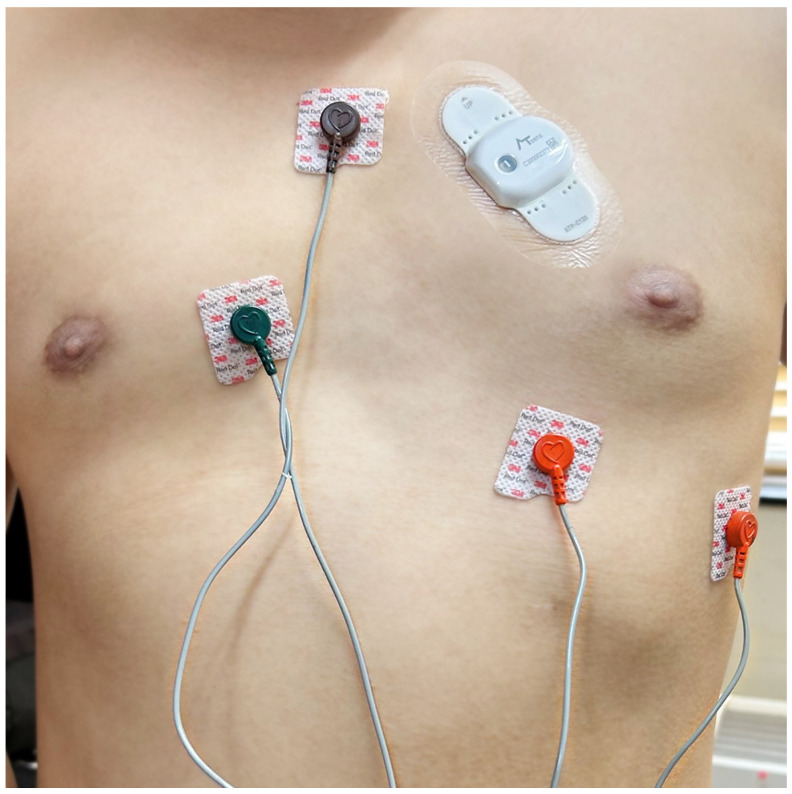
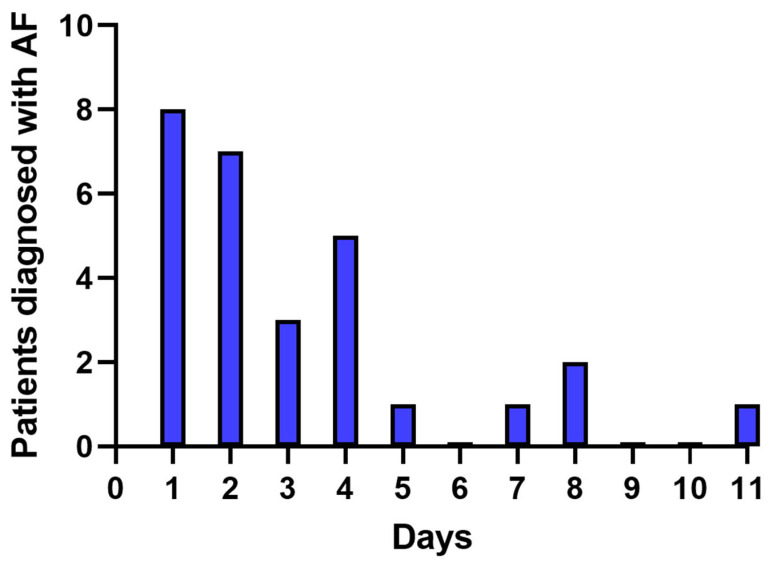
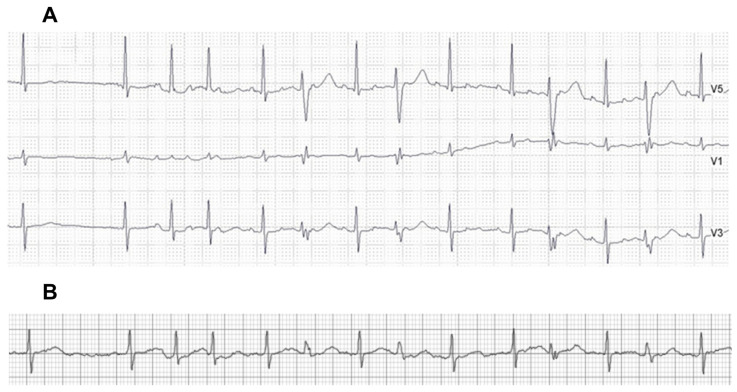
Accurate assessment of the response to the antiarrhythmic drug (AAD) in atrial fibrillation (AF) is crucial to achieve adequate rhythm control. We evaluated the effectiveness of extended cardiac monitoring using an adhesive ECG patch in the detection of drug-refractory paroxysmal AF. Patients diagnosed with paroxysmal AF and receiving AAD therapy were enrolled. The subjects simultaneously underwent 11-day adhesive ECG patch monitoring and a 24-h Holter test. The primary study outcome was a detection rate of drug-refractory AF or atrial tachycardia (AT) lasting ≥30 s. A total of 59 patients were enrolled and completed the study examinations. AF or AT was detected in 28 (47.5%) patients by an 11-day ECG patch monitor and in 8 (13.6%) patients by a 24-h Holter test ( < 0.001). The 11-day ECG patch monitor identified an additional 20 patients (33.8%) with drug-refractory AF not detected by the 24-h Holter, and as a result, the treatment plan was changed in 11 patients (10 catheter ablations, one medication change). In conclusion, extended cardiac rhythm monitoring using an adhesive ECG patch in patients with paroxysmal AF under AAD therapy led to over a threefold higher detection of drug-refractory AF episodes, compared to the 24-h Holter test.
准确评估抗心律失常药物(AAD)对心房颤动(AF)的疗效对于实现充分的节律控制至关重要。我们评估了使用粘性心电图贴片进行延长心脏监测在检测药物难治性阵发性房颤方面的有效性。纳入诊断为阵发性房颤并接受AAD治疗的患者。受试者同时接受为期11天的粘性心电图贴片监测和24小时动态心电图检查。主要研究结果是持续≥30秒的药物难治性房颤或房性心动过速(AT)的检出率。共有59名患者入组并完成了研究检查。通过为期11天的心电图贴片监测在28名(47.5%)患者中检测到房颤或AT,通过24小时动态心电图检查在8名(13.6%)患者中检测到房颤或AT(P<0.001)。为期11天的心电图贴片监测还发现了另外20名(33.8%)24小时动态心电图未检测到的药物难治性房颤患者,结果,11名患者(10例导管消融术,1例药物更换)的治疗方案发生了改变。总之,与24小时动态心电图检查相比,在接受AAD治疗的阵发性房颤患者中使用粘性心电图贴片进行延长心脏节律监测可使药物难治性房颤发作的检测率提高三倍以上。