
外泌体作为运动诱导的有益因子预防和治疗心血管疾病的递送工具:系统评价和荟萃分析
Exosomes as a delivery tool of exercise-induced beneficial factors for the prevention and treatment of cardiovascular disease: a systematic review and meta-analysis.
作者信息
Lai Zhijie, Liang Jiling, Zhang Jingfeng, Mao Yuheng, Zheng Xinguang, Shen Xiang, Lin Wentao, Xu Guoqin
机构信息
Department of School of Physical Education, Guangzhou College of Commerce, Guangzhou, China.
College of Sports Medicine, Wuhan Sports University, Wuhan, China.
出版信息
Front Physiol. 2023 Sep 29;14:1190095. doi: 10.3389/fphys.2023.1190095. eCollection 2023.
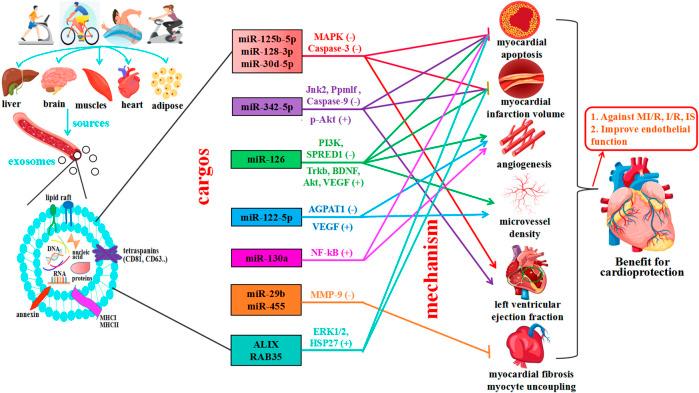
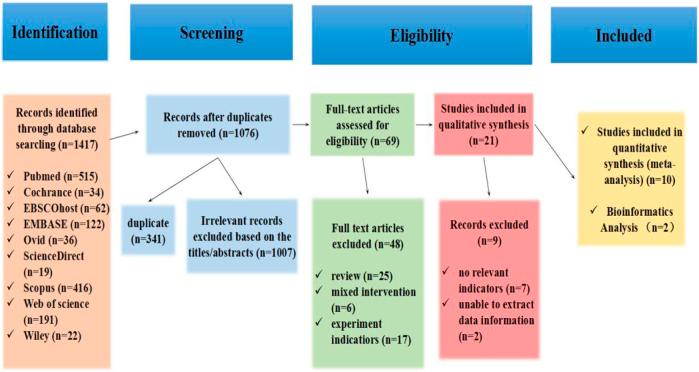
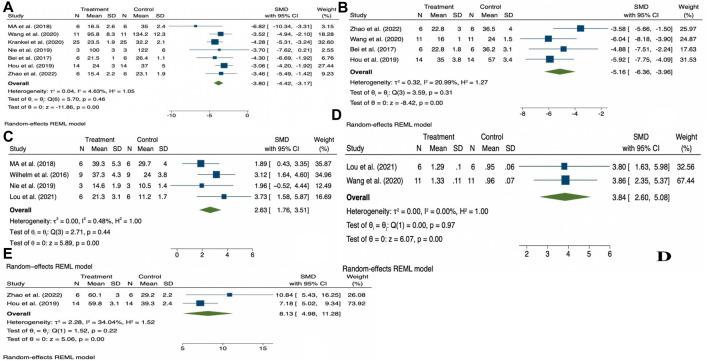
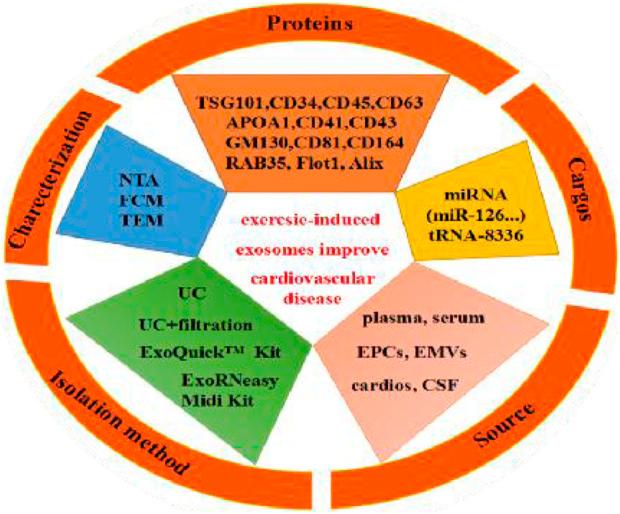
Exercise-derived exosomes have been identified as novel players in mediating cell-to-cell communication in the beneficial effects of improving cardiovascular disease (CVD). This review aimed to systematically investigate exosomes as delivery tools for the benefits of exercise in the prevention and treatment of CVD and summarize these outcomes with an overview of their therapeutic implications. Among the 1417 articles obtained in nine database searches (PubMed, EBSCO, Embase, Web of Science, CENTRAL, Ovid, Science Direct, Scopus, and Wiley), 12 articles were included based on eligibility criteria. The results indicate that exercise increases the release of exosomes, increasing exosomal markers (TSG101, CD63, and CD81) and exosome-carried miRNAs (miR-125b-5p, miR-122-5p, miR-342-5p, miR-126, miR-130a, miR-138-5p, and miR-455). These miRNAs mainly regulate the expression of MAPK, NF-kB, VEGF, and Caspase to protect the cardiovascular system. Moreover, the outcome indicators of myocardial apoptosis and myocardial infarction volume are significantly reduced following exercise-induced exosome release, and angiogenesis, microvessel density and left ventricular ejection fraction are significantly increased, as well as alleviating myocardial fibrosis following exercise-induced exosome release. Collectively, these results further confirm that exercise-derived exosomes have a beneficial role in potentially preventing and treating CVD and support the use of exercise-derived exosomes in clinical settings.
运动衍生的外泌体已被确定为在改善心血管疾病(CVD)的有益作用中介导细胞间通讯的新参与者。本综述旨在系统地研究外泌体作为运动在预防和治疗CVD中的有益作用的递送工具,并通过概述其治疗意义来总结这些结果。在九个数据库搜索(PubMed、EBSCO、Embase、Web of Science、CENTRAL、Ovid、Science Direct、Scopus和Wiley)中获得的1417篇文章中,根据纳入标准纳入了12篇文章。结果表明,运动增加了外泌体的释放,增加了外泌体标志物(TSG101、CD63和CD81)和外泌体携带的miRNA(miR-125b-5p、miR-122-5p、miR-342-5p、miR-126、miR-130a、miR-138-5p和miR-455)。这些miRNA主要调节MAPK、NF-kB、VEGF和Caspase的表达以保护心血管系统。此外,运动诱导的外泌体释放后,心肌细胞凋亡和心肌梗死体积的结果指标显著降低,血管生成、微血管密度和左心室射血分数显著增加,运动诱导的外泌体释放后心肌纤维化也得到缓解。总的来说,这些结果进一步证实了运动衍生的外泌体在潜在预防和治疗CVD方面具有有益作用,并支持在临床环境中使用运动衍生的外泌体。
 Zotero 插件