Department of Neurosurgery, College of Medicine, Cheonan Hospital, Soonchunhyang University, Cheonan 31151, Korea.
Soonchunhyang Institute of Medi-Bio Science (SIMS), Soon Chun Hyang University, Cheonan 31151, Korea.
Int J Mol Sci. 2022 Jul 28;23(15):8367. doi: 10.3390/ijms23158367.
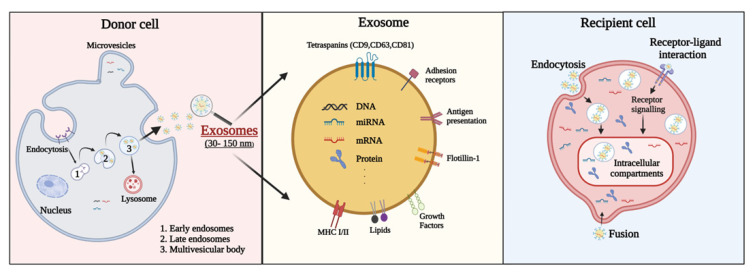
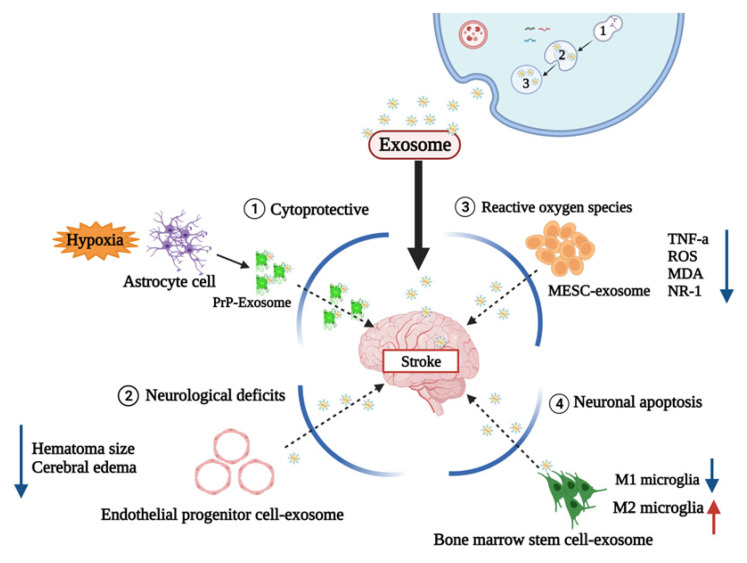
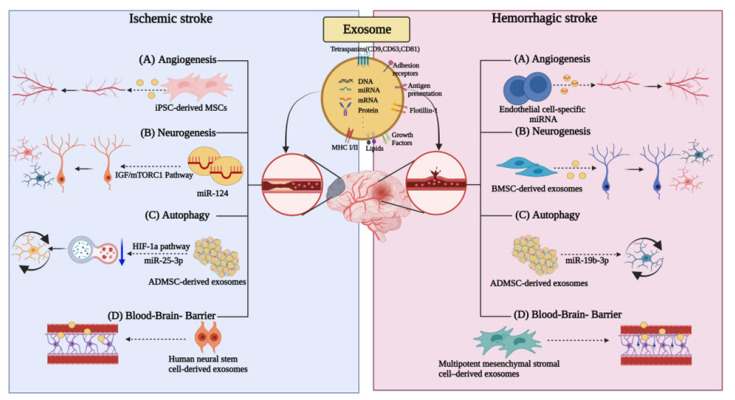
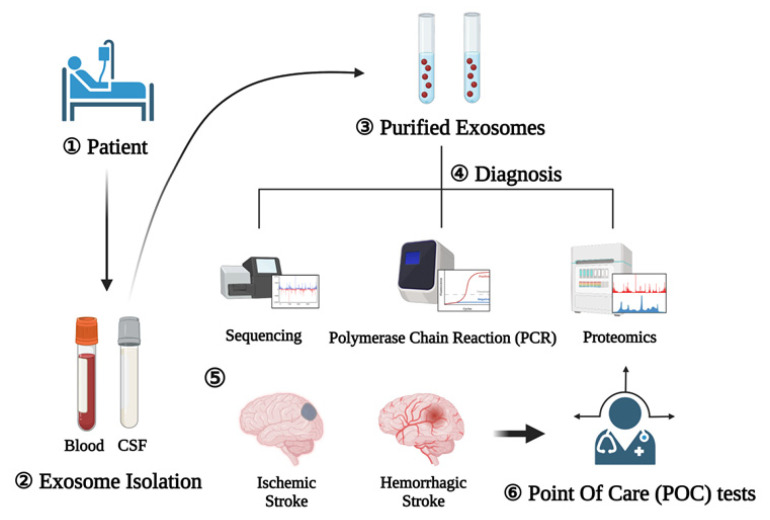
Stroke is the leading cause of death and neurological disorders worldwide. However, diagnostic techniques and treatments for stroke patients are still limited for certain types of stroke. Intensive research has been conducted so far to find suitable diagnostic techniques and treatments, but so far there has been no success. In recent years, various studies have drawn much attention to the clinical value of utilizing the mechanism of exosomes, low toxicity, biodegradability, and the ability to cross the blood-brain barrier. Recent studies have been reported on the use of biomarkers and protective and recovery effects of exosomes derived from stem cells or various cells in the diagnostic stage after stroke. This review focuses on publications describing changes in diagnostic biomarkers of exosomes following various strokes and processes for various potential applications as therapeutics.
中风是全球范围内导致死亡和神经紊乱的主要原因。然而,针对某些类型的中风患者,其诊断技术和治疗方法仍然有限。目前已经进行了大量的研究来寻找合适的诊断技术和治疗方法,但到目前为止还没有成功。近年来,各种研究引起了人们对利用外泌体的机制的临床价值的极大关注,这些机制包括低毒性、生物降解性和穿过血脑屏障的能力。最近的研究报道了在中风后的诊断阶段利用干细胞或各种细胞来源的外泌体的生物标志物、保护和恢复作用。本综述重点介绍了描述各种中风后外泌体诊断生物标志物变化的出版物,以及各种潜在应用的治疗方法。