Tiwari Anushree, Gupta Neha, Singla Deepika, Ranjan Swain Jnana, Gupta Ruchi, Mehta Dhaval, Kumar Santosh
Clinical Quality and Value, American Academy of Orthopaedic Surgeons, Rosemont, USA.
Department of Oral Pathology, Microbiology & Forensic Odontology, Dental College, Rajendra Institute of Medical Sciences, Ranchi, IND.
Cureus. 2023 Sep 13;15(9):e45187. doi: 10.7759/cureus.45187. eCollection 2023 Sep.
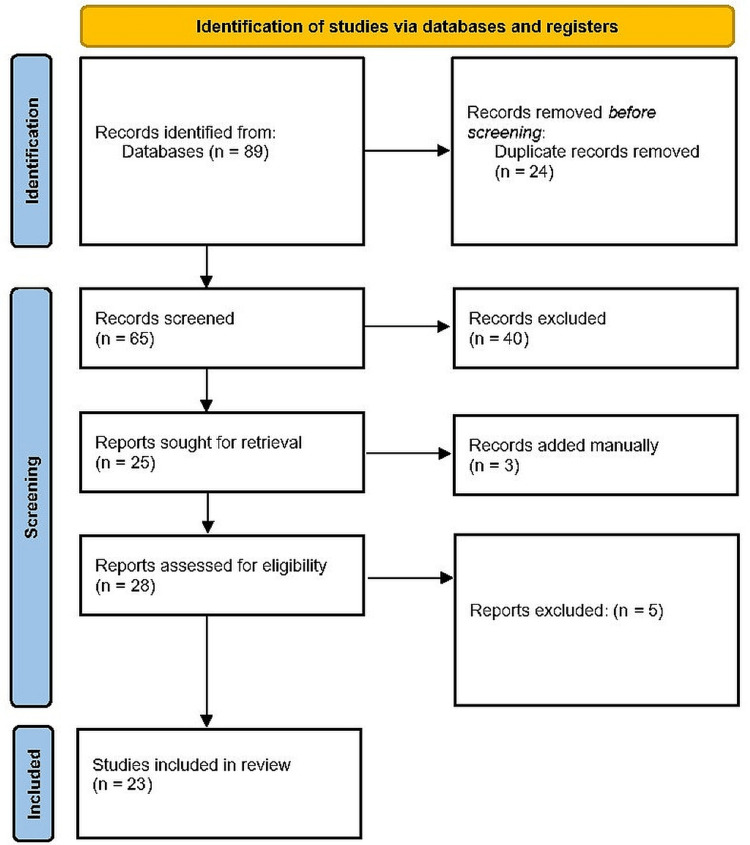
Artificial intelligence (AI) has been cited as being helpful in the diagnosis of diseases, the prediction of prognoses, and the development of patient-specific therapeutic strategies. AI can help dentists, in particular, when they need to make important judgments quickly. It can eliminate human mistakes in making decisions, resulting in superior and consistent medical treatment while lowering the workload on dentists. The existing studies relevant to the study and application of AI in the diagnosis of various forms of mouth ulcers are reviewed in this work. The Preferred Reporting Items for Systematic Reviews and Meta-Analyses (PRISMA) standards were followed in the preparation of the review. There were no rule violations, with the significant exception of the use of a better search method that led to more accurate findings. Using search terms mainly such as AI, oral health, oral ulcers, oral herpes simplex, oral lichen planus, pemphigus vulgaris, recurrent aphthous ulcer (RAU), oral cancer, premalignant and malignant disorders, etc., a comprehensive search was carried out in the reliable sources of literature, namely PubMed, Scopus, Embase, Web of Science, Ovid, Global Health, and PsycINFO. For all papers, exhaustive searches were done using inclusion criteria as well as exclusion criteria between June 28, 2018, and June 28, 2023. An AI framework for the automatic categorization of oral ulcers from oral clinical photographs was developed by the authors, and it performed satisfactorily. The newly designed AI model works better than the current convolutional neural network image categorization techniques and shows a fair level of precision in the classification of oral ulcers. However, despite being useful for identifying oral ulcers, the suggested technique needs a broader set of data for validation and training purposes before being used in clinical settings. Automated OCSCC identification using a deep learning-based technique is a quick, harmless, affordable, and practical approach to evaluating the effectiveness of cancer treatment. The categorization and identification of RAU lesions through the use of non-intrusive oral pictures using the previously developed ResNet50 and YOLOV algorithms demonstrated better accuracy as well as adequate potential for the future, which could be helpful in clinical practice. Moreover, the most reliable projections for the likelihood of the presence or absence of RAU were made by the optimized neural network. The authors also discovered variables associated with RAU that might be used as input information to build artificial neural networks that anticipate RAU.
人工智能(AI)已被认为有助于疾病诊断、预后预测以及制定针对特定患者的治疗策略。特别是当牙医需要快速做出重要判断时,AI 能够提供帮助。它可以消除决策过程中的人为错误,从而在降低牙医工作量的同时提供更优质、更一致的医疗服务。本文对现有的关于 AI 在各种口腔溃疡诊断中的研究与应用进行了综述。本综述的撰写遵循了系统评价和 Meta 分析的首选报告项目(PRISMA)标准。除了使用更好的搜索方法从而得出更准确的结果这一显著例外情况外,未出现违规行为。使用主要诸如 AI、口腔健康、口腔溃疡、口腔单纯疱疹、口腔扁平苔藓、寻常型天疱疮、复发性阿弗他溃疡(RAU)、口腔癌、癌前和恶性疾病等搜索词,在可靠的文献来源,即 PubMed、Scopus、Embase、科学网、Ovid、全球健康和 PsycINFO 中进行了全面搜索。对于所有论文,在 2018 年 6 月 28 日至 2023 年 6 月 28 日期间,使用纳入标准和排除标准进行了详尽搜索。作者开发了一个用于从口腔临床照片自动分类口腔溃疡的 AI 框架,并且该框架表现令人满意。新设计的 AI 模型比当前的卷积神经网络图像分类技术表现更好,并且在口腔溃疡分类中显示出相当高的精度水平。然而,尽管所提出的技术对于识别口腔溃疡很有用,但在用于临床环境之前,还需要更广泛的数据集用于验证和训练目的。使用基于深度学习的技术自动识别口腔鳞状细胞癌是一种快速、无害、经济且实用的评估癌症治疗效果的方法。通过使用先前开发的 ResNet50 和 YOLOV 算法,利用非侵入性口腔图片对 RAU 病变进行分类和识别,显示出了更高的准确性以及未来的充分潜力,这在临床实践中可能会有所帮助。此外,优化后的神经网络对 RAU 存在或不存在的可能性做出了最可靠的预测。作者还发现了与 RAU 相关的变量,这些变量可作为输入信息来构建预测 RAU 的人工神经网络。