Division of Clinical Neuroscience, Chiba University Center for Forensic Mental Health, Chiba, 260-8670, Japan.
Mol Psychiatry. 2023 Sep;28(9):3625-3637. doi: 10.1038/s41380-023-02287-6. Epub 2023 Oct 16.
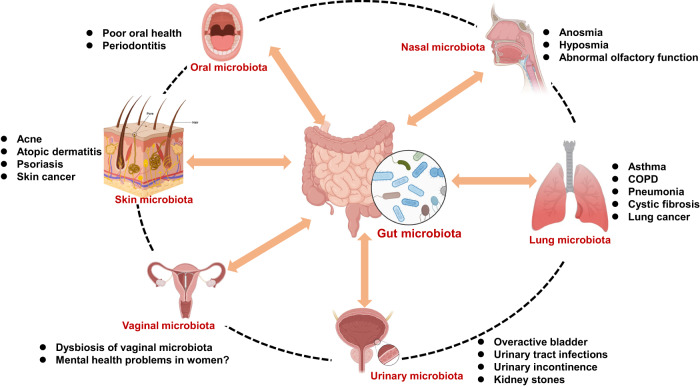
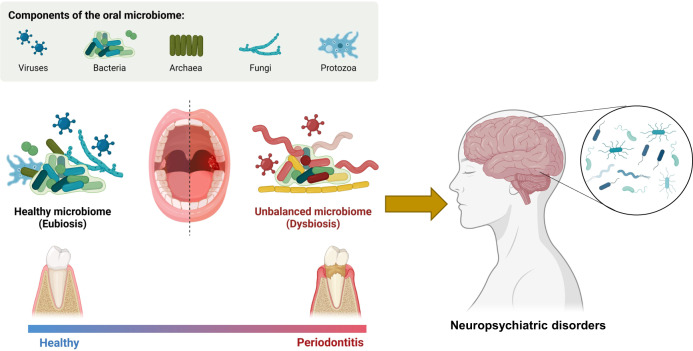
The human body harbors a diverse ecosystem of microorganisms, including bacteria, viruses, and fungi, collectively known as the microbiota. Current research is increasingly focusing on the potential association between the microbiota and various neuropsychiatric disorders. The microbiota resides in various parts of the body, such as the oral cavity, nasal passages, lungs, gut, skin, bladder, and vagina. The gut microbiota in the gastrointestinal tract has received particular attention due to its high abundance and its potential role in psychiatric and neurodegenerative disorders. However, the microbiota presents in other body tissues, though less abundant, also plays crucial role in immune system and human homeostasis, thus influencing the development and progression of neuropsychiatric disorders. For example, oral microbiota imbalance and associated periodontitis might increase the risk for neuropsychiatric disorders. Additionally, studies using the postmortem brain samples have detected the widespread presence of oral bacteria in the brains of patients with Alzheimer's disease. This article provides an overview of the emerging role of the host microbiota in neuropsychiatric disorders and discusses future directions, such as underlying biological mechanisms, reliable biomarkers associated with the host microbiota, and microbiota-targeted interventions, for research in this field.
人体中栖息着多种多样的微生物生态系统,包括细菌、病毒和真菌,统称为微生物组。目前的研究越来越关注微生物组与各种神经精神疾病之间的潜在关联。微生物组存在于身体的各个部位,如口腔、鼻腔、肺部、肠道、皮肤、膀胱和阴道。由于其丰富的数量和在精神疾病和神经退行性疾病中的潜在作用,肠道微生物组在胃肠道中受到了特别关注。然而,其他组织中的微生物组虽然数量较少,但在免疫系统和人体稳态中也起着至关重要的作用,从而影响神经精神疾病的发展和进程。例如,口腔微生物组失衡和相关的牙周炎可能会增加患神经精神疾病的风险。此外,使用死后脑组织样本的研究在阿尔茨海默病患者的大脑中检测到了广泛存在的口腔细菌。本文概述了宿主微生物组在神经精神疾病中的新兴作用,并讨论了该领域研究的未来方向,如潜在的生物学机制、与宿主微生物组相关的可靠生物标志物以及针对微生物组的干预措施。