Department of Internal Medicine, Triemli Hospital, Zurich, Switzerland.
Department of Gastroenterology and Hepatology, University Hospital Zurich, Zurich, Switzerland.
Mol Diagn Ther. 2024 Jan;28(1):27-35. doi: 10.1007/s40291-023-00678-7. Epub 2023 Oct 17.
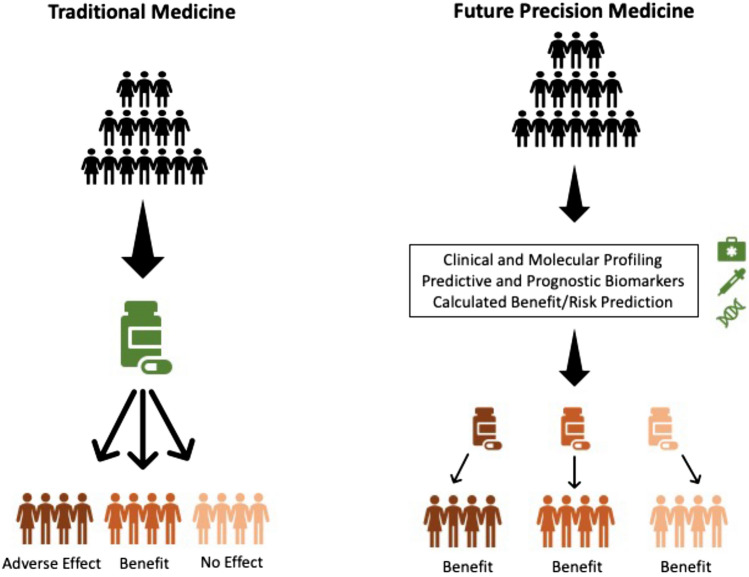
The genetic background of inflammatory bowel disease, both Crohn's disease and ulcerative colitis, has been known for more than 2 decades. In the last 20 years, genome-wide association studies have dramatically increased our knowledge on the genetics of inflammatory bowel disease with more than 200 risk genes having been identified. Paralleling this increasing knowledge, the armamentarium of inflammatory bowel disease medications has been growing constantly. With more available therapeutic options, treatment decisions become more complex, with still many patients experiencing a debilitating disease course and a loss of response to treatment over time. With a better understanding of the disease, more effective personalized treatment strategies are looming on the horizon. Genotyping has long been considered a strategy for treatment decisions, such as the detection of thiopurine S-methyltransferase and nudix hydrolase 15 polymorphisms before the initiation of azathioprine. However, although many risk genes have been identified in inflammatory bowel disease, a substantial impact of genetic risk assessment on therapeutic strategies and disease outcome is still missing. In this review, we discuss the genetic background of inflammatory bowel disease, with a particular focus on the latest advances in the field and their potential impact on management decisions.
炎症性肠病(包括克罗恩病和溃疡性结肠炎)的遗传背景已为人所知超过 20 年。在过去的 20 年中,全基因组关联研究极大地增加了我们对炎症性肠病遗传学的认识,已经确定了 200 多个风险基因。随着知识的不断增加,炎症性肠病药物的种类也在不断增加。随着更多的治疗选择,治疗决策变得更加复杂,仍然有许多患者经历着致残性疾病过程,并随着时间的推移对治疗失去反应。随着对疾病的更好理解,更有效的个性化治疗策略正在出现。基因分型一直被认为是治疗决策的一种策略,例如在开始使用硫唑嘌呤之前检测巯基嘌呤 S-甲基转移酶和 nudix 水解酶 15 多态性。然而,尽管已经在炎症性肠病中发现了许多风险基因,但遗传风险评估对治疗策略和疾病结果的重大影响仍然缺失。在这篇综述中,我们讨论了炎症性肠病的遗传背景,特别关注该领域的最新进展及其对管理决策的潜在影响。