Department of Medicine, Division of Hematology and Oncology, University of California Irvine School of Medicine, 200 South Manchester Ave, Orange, CA, 92868, USA.
Chao Family Comprehensive Cancer Center, Orange, CA, USA.
BMC Cancer. 2023 Oct 18;23(1):1000. doi: 10.1186/s12885-023-11457-2.
Two ROS1 tyrosine kinase inhibitors have been approved for ROS1 fusion positive (ROS1+) non-small cell lung cancer (NSCLC) tumors. We performed a pan-tumor analysis of the incidence of ROS1 fusions to assess if more ROS1+ patients who could benefit from ROS1 TKIs could be identified.
A retrospective analysis of ROS1 positive solid malignancies identified by targeted RNA sequencing and whole transcriptome sequencing of clinical tumor samples performed at Caris Life Science (Phoenix, AZ).
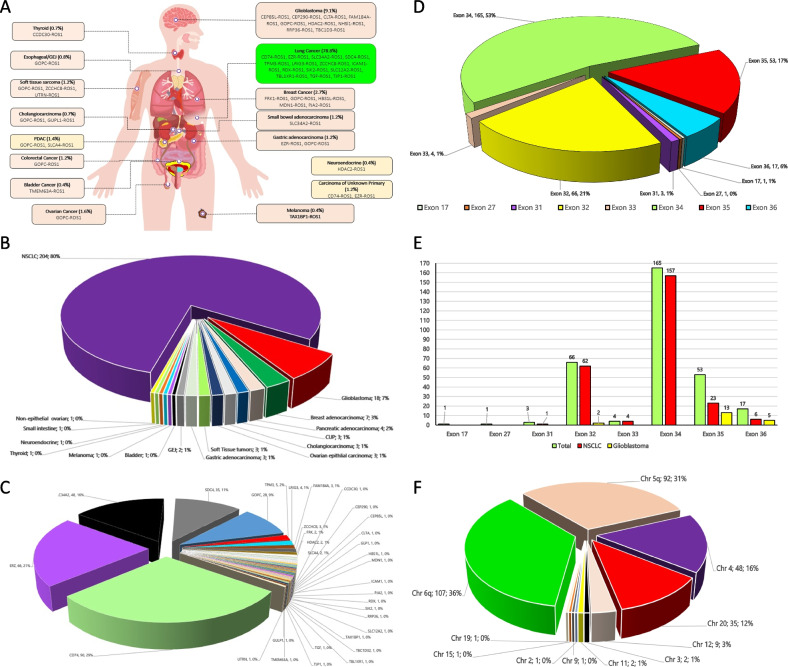
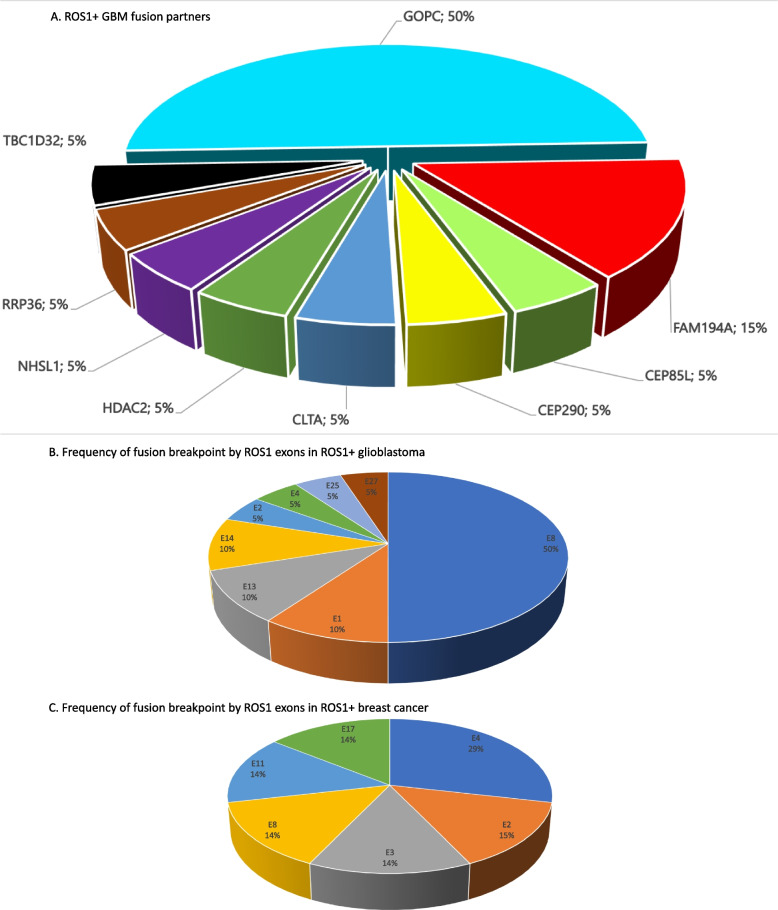
A total of 259 ROS1+ solid malignancies were identified from approximately 175,350 tumors that underwent next-generation sequencing (12% from targeted RNA sequencing [Archer]; 88% from whole transcriptome sequencing). ROS1+ NSCLC constituted 78.8% of the ROS1+ solid malignancies, follow by glioblastoma (GBM) (6.9%), and breast cancer (2.7%). The frequency of ROS1 fusion was approximately 0.47% among NSCLC, 0.29% for GBM, 0.04% of breast cancer. The mean tumor mutation burden for all ROS1+ tumors was 4.8 mutations/megabase. The distribution of PD-L1 (22C3) expression among all ROS1+ malignancies were 0% (18.6%), 1%-49% (29.4%), and ≥ 50% (60.3%) [for NSCLC: 0% (17.8%); 1-49% (27.7%); ≥ 50% (53.9%). The most common genetic co-alterations of ROS1+ NSCLC were TP53 (29.1%), SETD2 (7.3%), ARIAD1A (6.3%), and U2AF1 (5.6%).
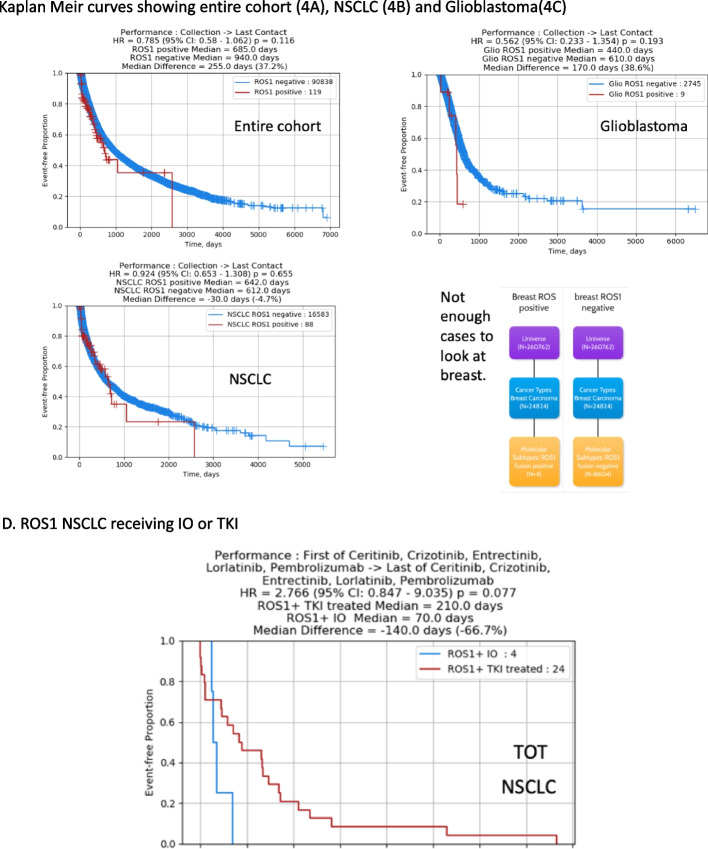
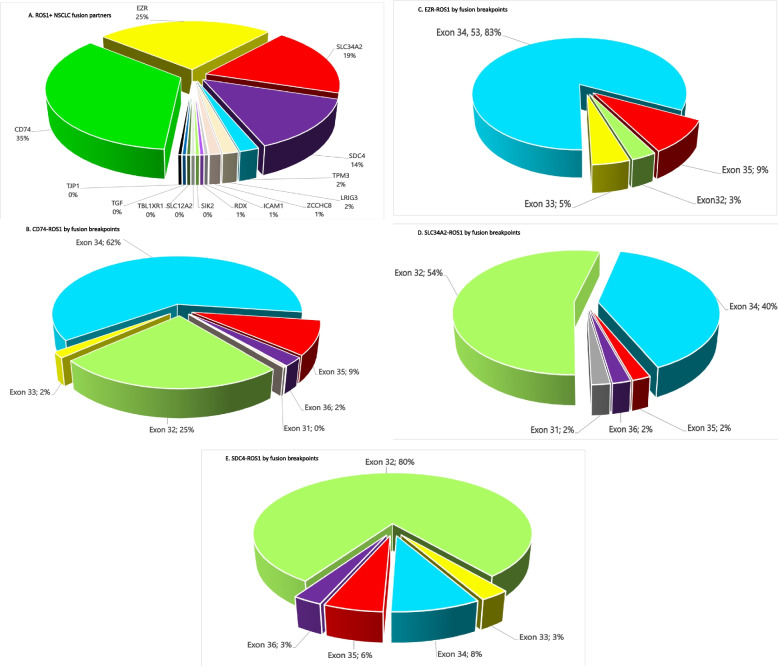
ROS1+ NSCLC tumors constituted the majority of ROS1+ solid malignancies with four major fusion partners. Given that > 20% of ROS1+ solid tumors may benefit from ROS1 TKIs treatment, comprehensive genomic profiling should be performed on all solid tumors.
已有两种 ROS1 酪氨酸激酶抑制剂获批用于 ROS1 融合阳性(ROS1+)非小细胞肺癌(NSCLC)肿瘤。我们对 ROS1 融合的发生率进行了全肿瘤分析,以评估是否可以发现更多可能从 ROS1 TKI 中获益的 ROS1+患者。
对 Caris Life Science(凤凰城,AZ)进行的临床肿瘤样本靶向 RNA 测序和全转录组测序中确定的 ROS1 阳性实体恶性肿瘤进行回顾性分析。
在进行下一代测序的大约 175350 个肿瘤中,共确定了 259 例 ROS1+实体恶性肿瘤(12%来自靶向 RNA 测序[Archer];88%来自全转录组测序)。ROS1+NSCLC 构成了 ROS1+实体恶性肿瘤的 78.8%,其次是胶质母细胞瘤(GBM)(6.9%)和乳腺癌(2.7%)。ROS1 融合在 NSCLC 中的频率约为 0.47%,在 GBM 中为 0.29%,在乳腺癌中为 0.04%。所有 ROS1+肿瘤的平均肿瘤突变负担为 4.8 个突变/Mb。所有 ROS1+恶性肿瘤中 PD-L1(22C3)表达的分布为 0%(18.6%)、1%-49%(29.4%)和≥50%(60.3%)[NSCLC 为 0%(17.8%);1%-49%(27.7%);≥50%(53.9%)]。ROS1+NSCLC 最常见的遗传共改变是 TP53(29.1%)、SETD2(7.3%)、ARIAD1A(6.3%)和 U2AF1(5.6%)。
ROS1+NSCLC 肿瘤构成了大多数 ROS1+实体恶性肿瘤,有四个主要融合伙伴。鉴于>20%的 ROS1+实体肿瘤可能受益于 ROS1 TKI 治疗,应在所有实体肿瘤上进行全面的基因组分析。