Singh Phougeishangbam Rolish, Gitonga Denis, Hajihassani Abolfazl, Verhage Adriaan, van Aalst-Philipse Eveline, Couvreur Marjolein, Bert Wim
Department of Entomology and Nematology, Fort Lauderdale Research and Education Center, Institute of Food and Agricultural Sciences, University of Florida; Davie, FL 33314, USA.
Nematology Research Unit, Department of Biology, Ghent University, K.L. Ledeganckstraat 35, 9000 Ghent, Belgium.
J Nematol. 2023 Oct 21;55(1):20230042. doi: 10.2478/jofnem-2023-0042. eCollection 2023 Feb.
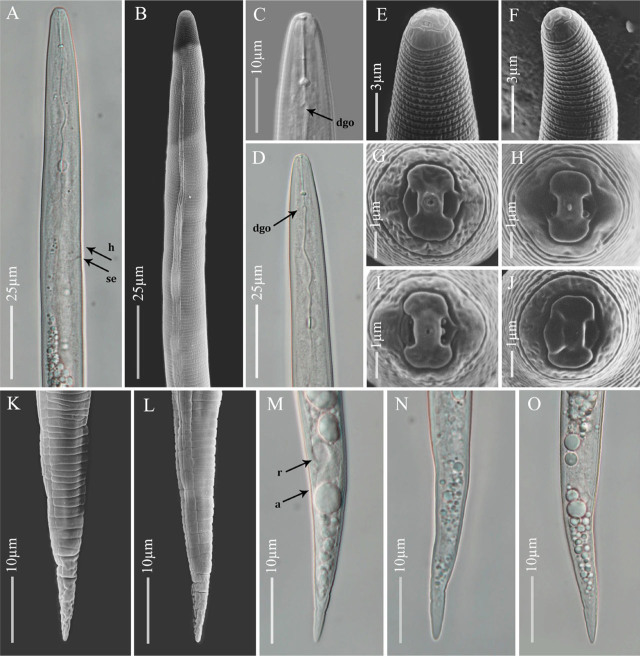
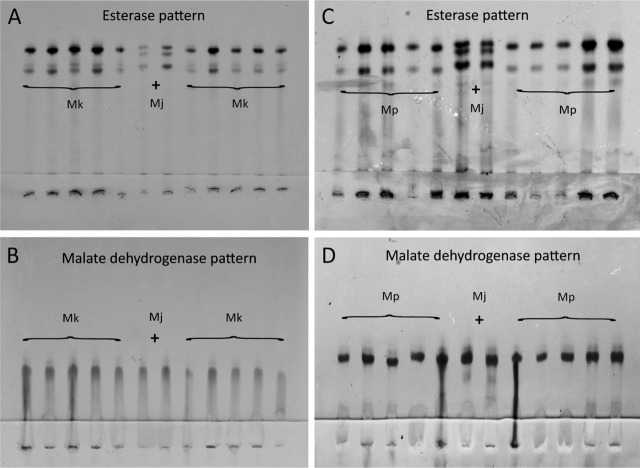
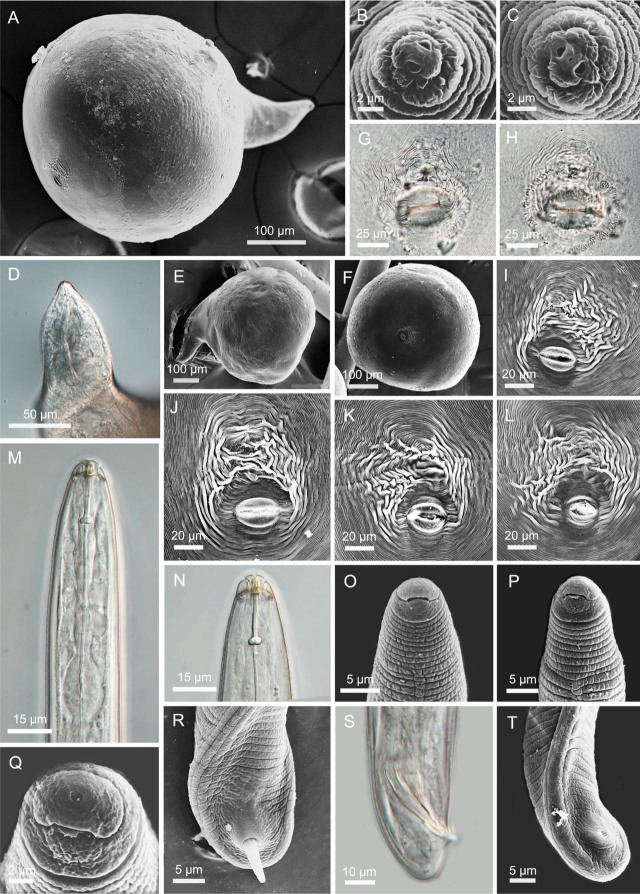
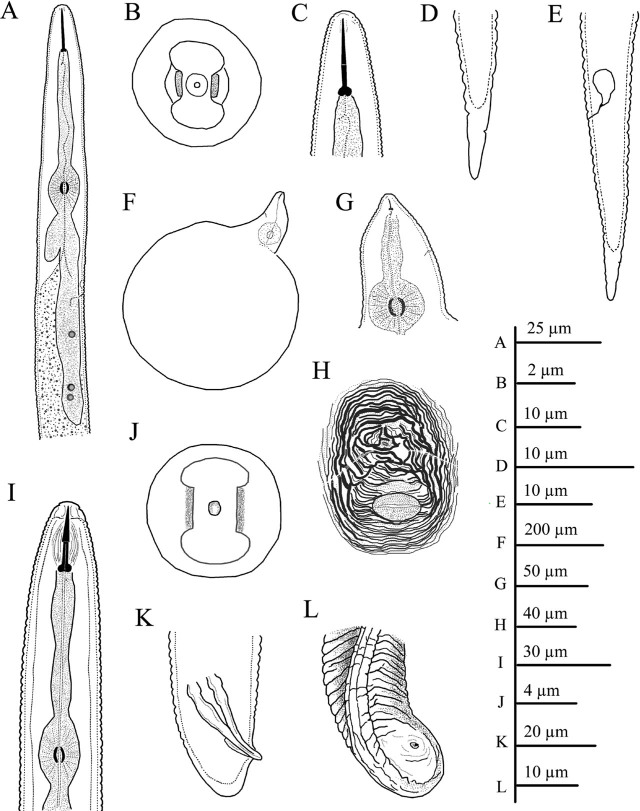
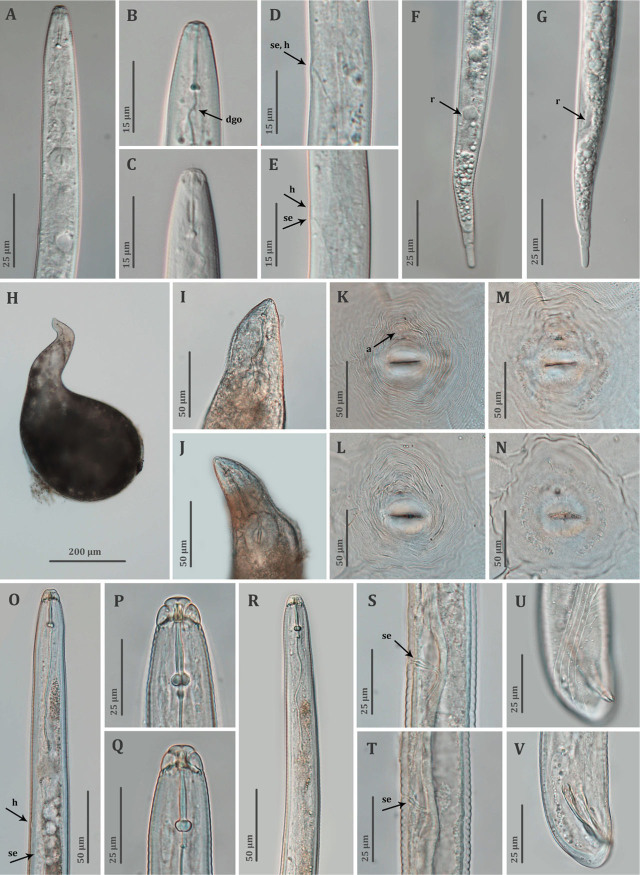
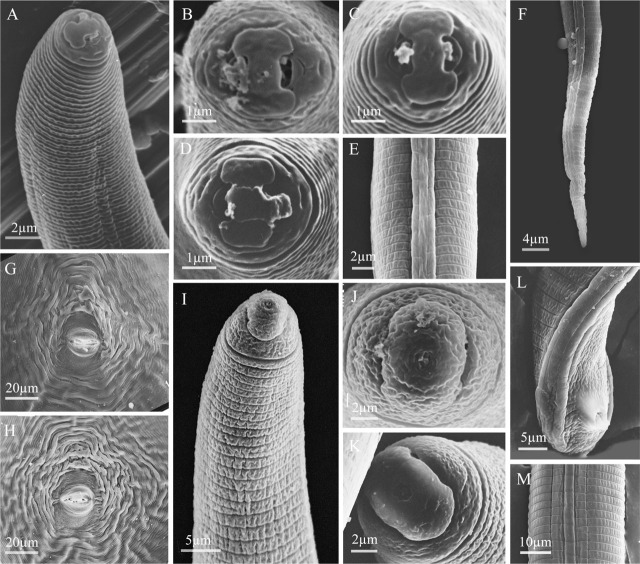
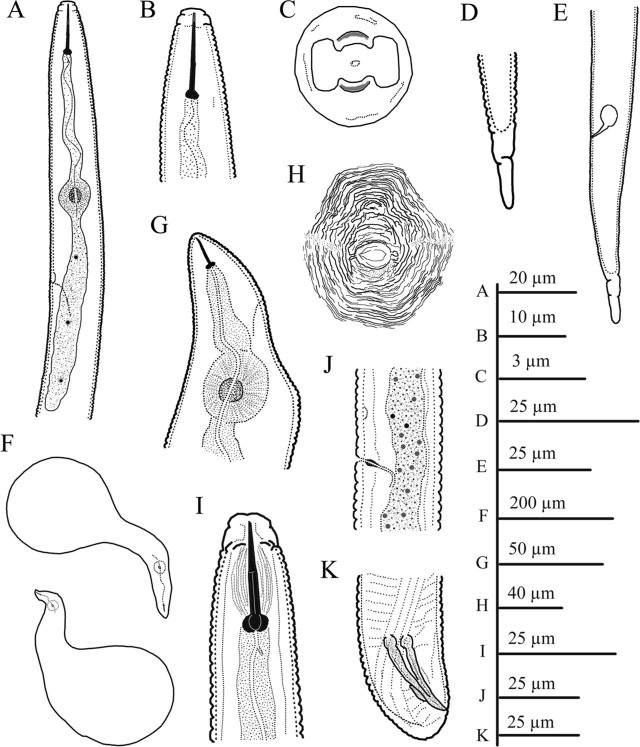
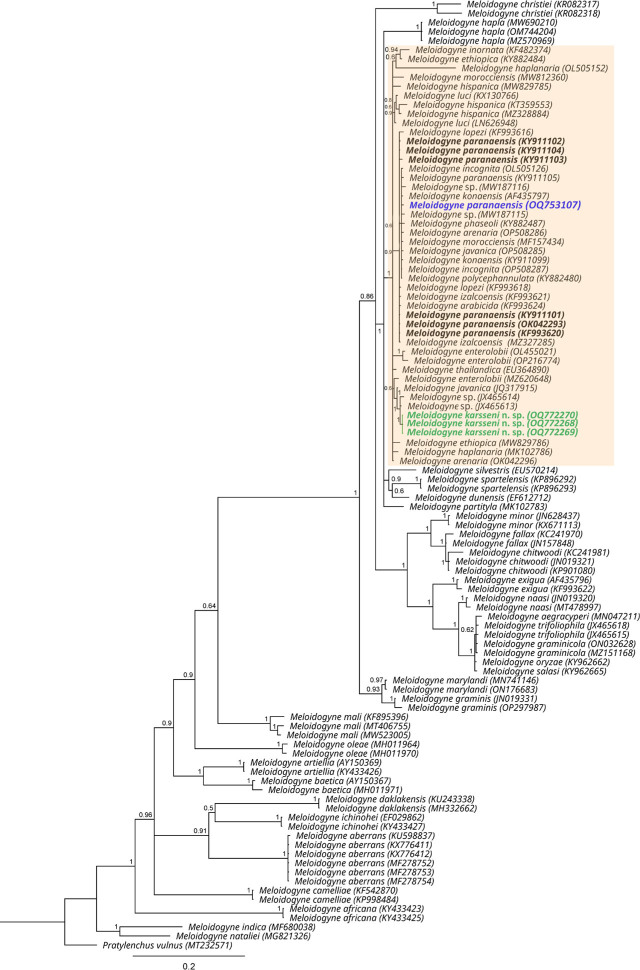
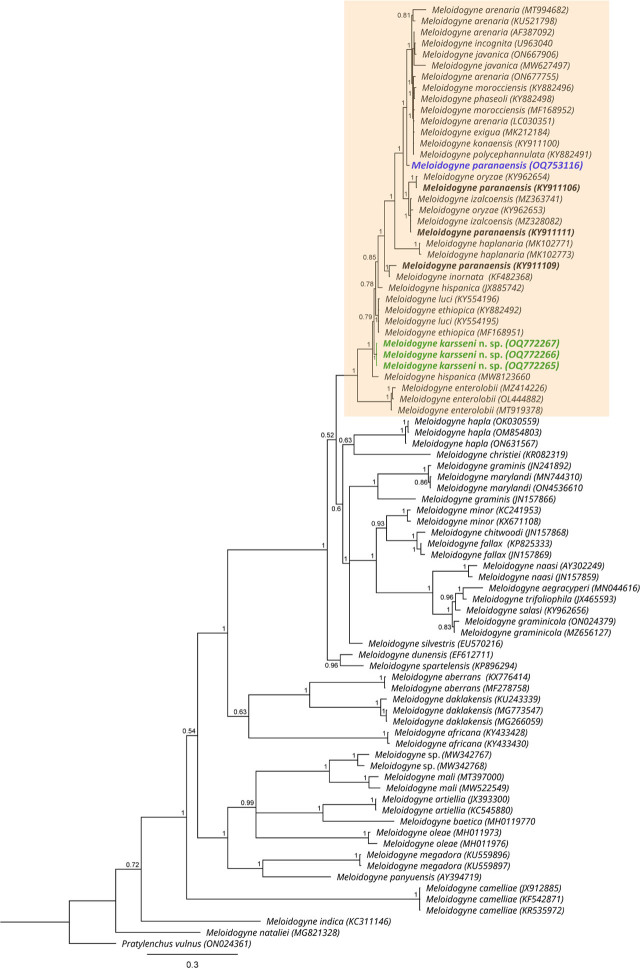
A new root-knot nematode (RKN) species, n. sp., associated with sweet pepper from Mexico, and a population of from Guatemala, are described using data from morphological, biochemical (isozyme enzymes), molecular, and phylogenetic analyses. n. sp. can be morphologically diagnosed using the combined features of the second-stage juveniles, viz. body length (345 to 422 μm), a conical rounded head region, a post-labial annule lacking transverse striation, a thin stylet 11 to 12 μm long, rounded to oval and backwardly sloping knobs, dorsal gland orifice (DGO) at 5.2 to 6.0 μm from the knobs, a hemizonid just above the secretory-excretory (SE) pore, a tapering tail with finely rounded terminus and one or two very weak constrictions at hyaline tail tip; the female characters viz. oval-to-rounded perineal pattern with coarse striation on lateral sides around the anus, low dorsal arch with finer striations, and distinctly visible lateral lines; and the male characteristics viz. a rounded and continuous head, a post-labial annule without transverse striations, a robust stylet 20 to 24 μm long, rounded-to-oval and slightly backwardly sloping knobs, and a DGO at 2.4 to 2.9 μm from the knobs. In all the studied males of , a characteristic sclerotization around the duct of SE-pore was also observed for the first time. Sequences of 18S, D2-D3 of 28S, and ITS of rDNA, and 1 of mtDNA were generated for the two species, and in the phylogenetic trees based on these genes, both species appeared in the tropical RKN species complex clade.
利用形态学、生化(同工酶)、分子和系统发育分析数据,描述了一种与来自墨西哥的甜椒相关的新根结线虫物种,即新种,以及来自危地马拉的一个群体。新种可通过第二阶段幼虫的综合特征进行形态学诊断,即体长(345至422μm)、圆锥形圆形头部区域、无横向条纹的唇后环纹、11至12μm长的细口针、圆形至椭圆形且向后倾斜的瘤、距瘤5.2至6.0μm处的背腺孔(DGO)、分泌排泄(SE)孔上方的半侧线、逐渐变细的尾部,末端精细圆形,透明尾尖有一或两个非常微弱的缢缩;雌性特征为椭圆形至圆形的会阴花纹,肛门周围侧面有粗条纹,低背拱有更细的条纹,以及明显可见的侧线;雄性特征为圆形且连续的头部、无横向条纹的唇后环纹、20至24μm长的粗壮口针、圆形至椭圆形且略向后倾斜的瘤,以及距瘤2.4至2.9μm处的DGO。在所有研究的该物种雄性中,还首次观察到SE孔导管周围的特征性硬化。为这两个物种生成了18S、28S的D2 - D3和rDNA的ITS以及mtDNA的1的序列,在基于这些基因的系统发育树中,这两个物种都出现在热带根结线虫物种复合体分支中。