Warkentin Christopher L, Frontiera Renee R
Department of Chemistry, University of Minnesota, Minneapolis, MN 55455.
Proc Natl Acad Sci U S A. 2023 Oct 31;120(44):e2305932120. doi: 10.1073/pnas.2305932120. Epub 2023 Oct 24.
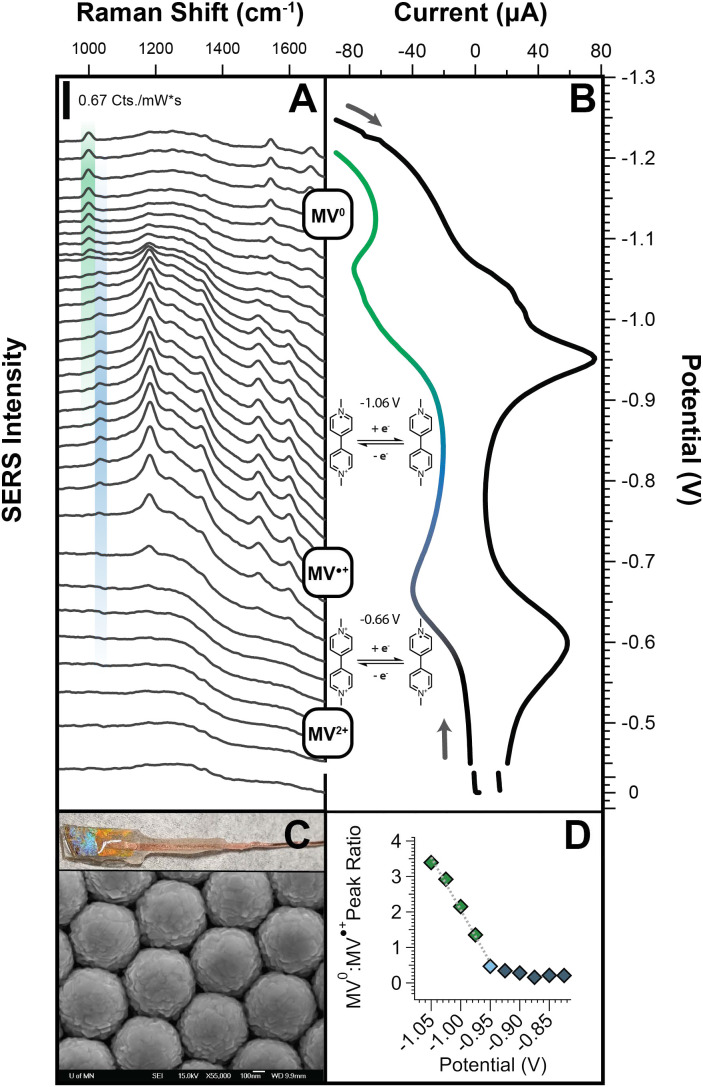
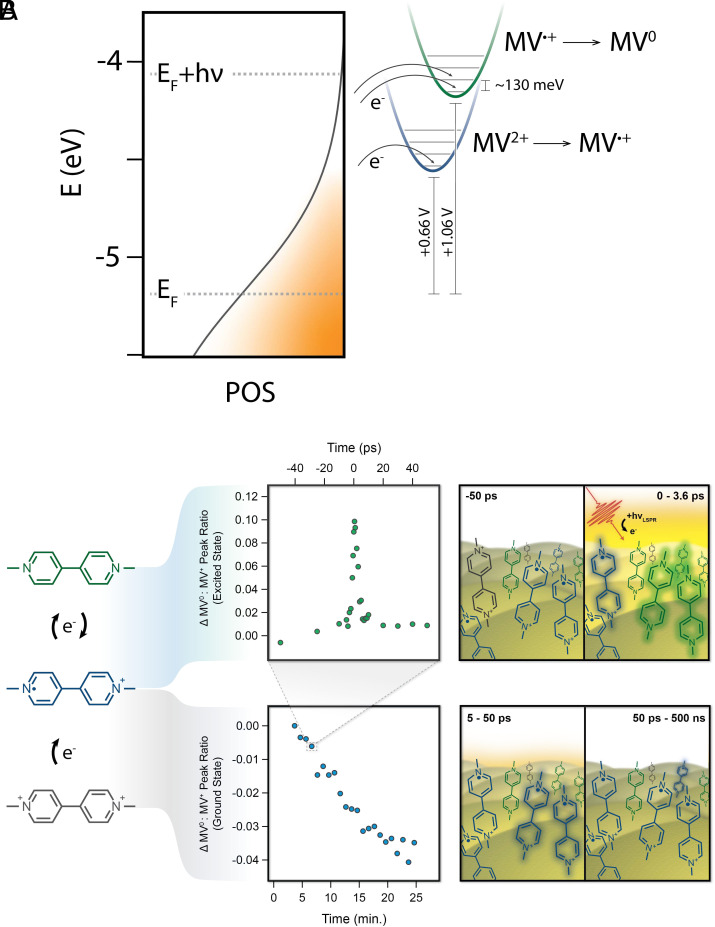
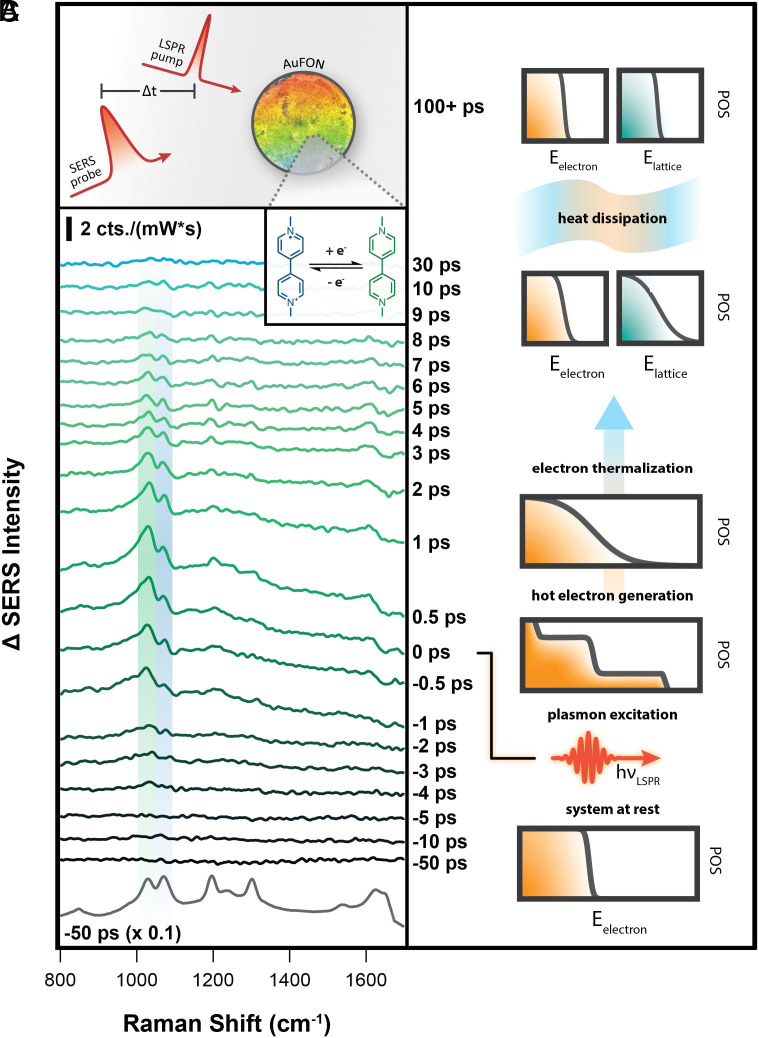
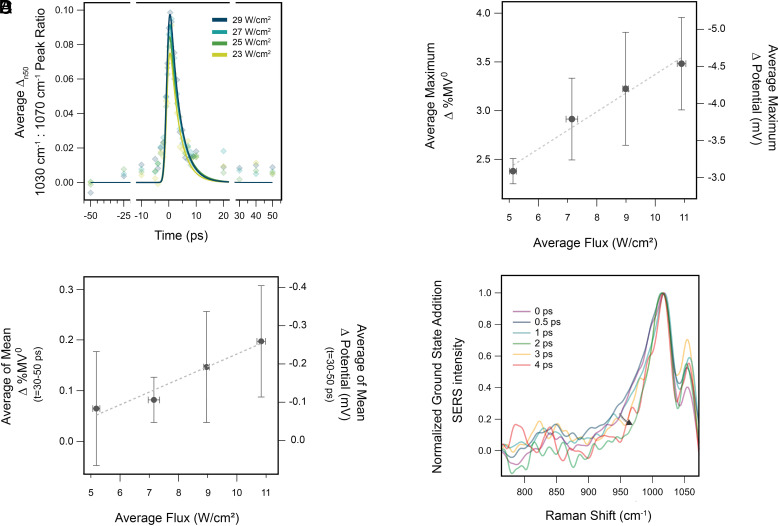
Plasmonic materials are promising photocatalysts as they are well suited to convert light into hot carriers and heat. Hot electron transfer is suggested as the driving force in many plasmon-driven reactions. However, to date, there are no direct molecular measures of the rate and yield of plasmon-to-molecule electron transfer or energy of these electrons on the timescale of plasmon decay. Here, we use ultrafast and spectroelectrochemical surface-enhanced Raman spectroscopy to quantify electron transfer from a plasmonic substrate to adsorbed methyl viologen molecules. We observe a reduction yield of 2.4 to 3.5% on the picosecond timescale, with plasmon-induced potentials ranging from [Formula: see text]3.1 to [Formula: see text]4.5 mV. Excitingly, some of these reduced species are stabilized and persist for tens of minutes. This work provides concrete metrics toward optimizing material-molecule interactions for efficient plasmon-driven photocatalysis.
等离子体材料是很有前景的光催化剂,因为它们非常适合将光转化为热载流子和热量。在许多等离子体驱动的反应中,热电子转移被认为是驱动力。然而,到目前为止,在等离子体衰减的时间尺度上,还没有直接的分子方法来测量等离子体到分子的电子转移速率和产率,或者这些电子的能量。在这里,我们使用超快和光谱电化学表面增强拉曼光谱来量化从等离子体基底到吸附的甲基紫精分子的电子转移。我们观察到在皮秒时间尺度上还原产率为2.4%至3.5%,等离子体诱导的电位范围为-3.1至-4.5毫伏。令人兴奋的是,其中一些还原物种是稳定的,并且可以持续数十分钟。这项工作为优化材料-分子相互作用以实现高效的等离子体驱动光催化提供了具体的指标。