Department II of Internal Medicine, Hematology/Oncology, Goethe University Frankfurt, Frankfurt am Main, Germany.
German Cancer Consortium (DKTK), Partner Site Frankfurt/Mainz and German Cancer Research Center (DKFZ), Heidelberg, Germany.
Clin Infect Dis. 2024 Apr 10;78(4):889-899. doi: 10.1093/cid/ciad618.
Numerous prognostic scores have been published to support risk stratification for patients with coronavirus disease 2019 (COVID-19).
We performed a systematic review to identify the scores for confirmed or clinically assumed COVID-19 cases. An in-depth assessment and risk of bias (ROB) analysis (Prediction model Risk Of Bias ASsessment Tool [PROBAST]) was conducted for scores fulfilling predefined criteria ([I] area under the curve [AUC)] ≥ 0.75; [II] a separate validation cohort present; [III] training data from a multicenter setting [≥2 centers]; [IV] point-scale scoring system).
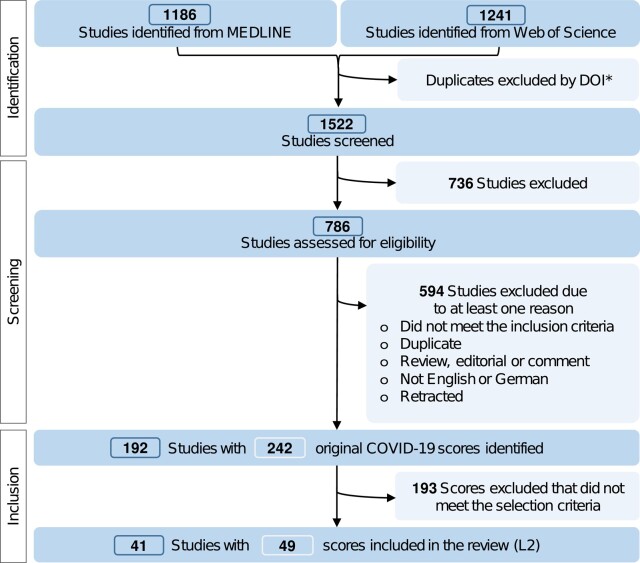
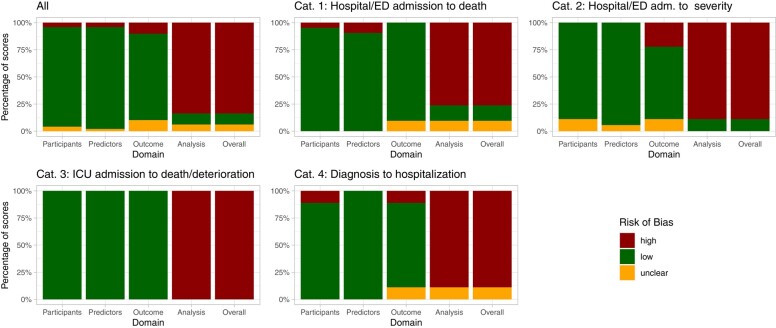
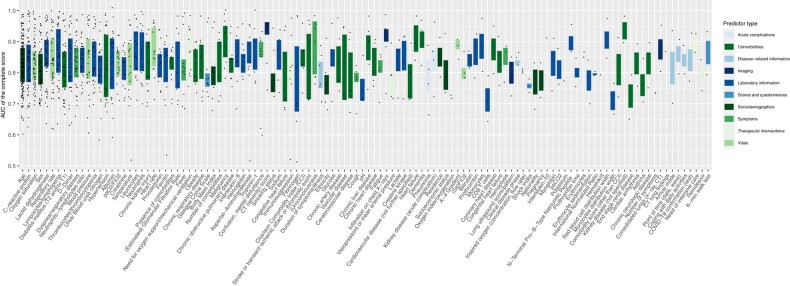
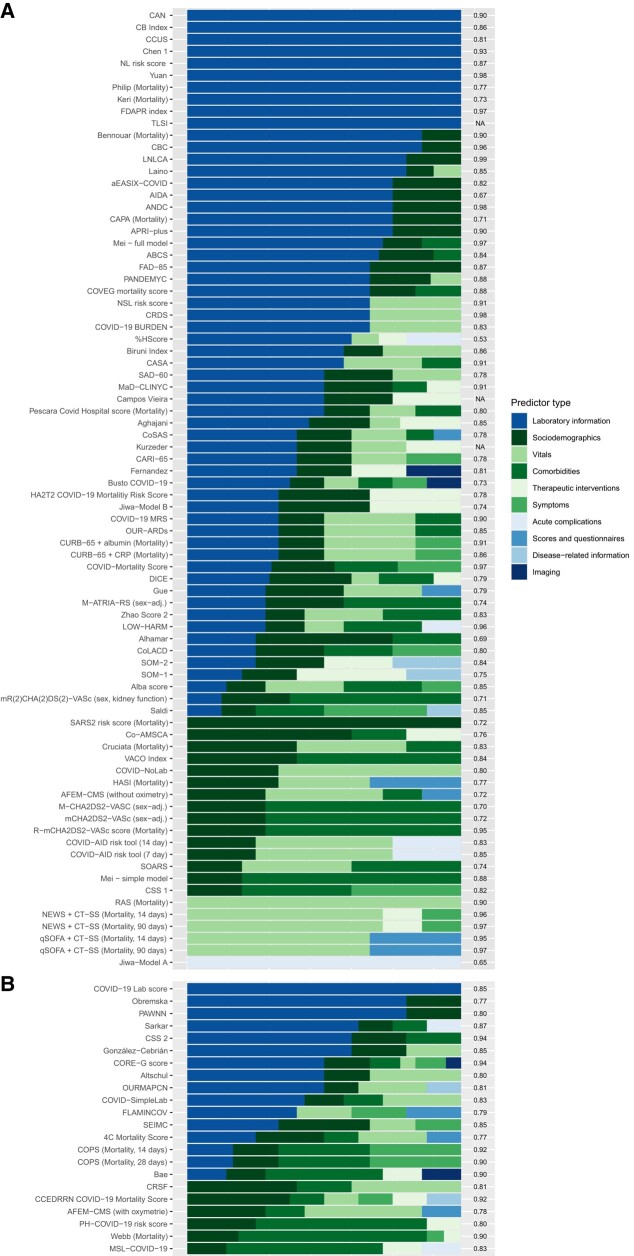
Out of 1522 studies extracted from MEDLINE/Web of Science (20/02/2023), we identified 242 scores for COVID-19 outcome prognosis (mortality 109, severity 116, hospitalization 14, long-term sequelae 3). Most scores were developed using retrospective (75.2%) or single-center (57.1%) cohorts. Predictor analysis revealed the primary use of laboratory data and sociodemographic information in mortality and severity scores. Forty-nine scores were included in the in-depth analysis. The results indicated heterogeneous quality and predictor selection, with only five scores featuring low ROB. Among those, based on the number and heterogeneity of validation studies, only the 4C Mortality Score can be recommended for clinical application so far.
The application and translation of most existing COVID scores appear unreliable. Guided development and predictor selection would have improved the generalizability of the scores and may enhance pandemic preparedness in the future.
已有大量预后评分被发表以支持对 2019 冠状病毒病(COVID-19)患者进行风险分层。
我们进行了一项系统综述,以确定用于确诊或临床疑似 COVID-19 病例的评分。对符合以下预定标准的评分进行了深入评估和偏倚风险(ROB)分析(预测模型风险偏倚评估工具[PROBAST]):[I] 曲线下面积(AUC)≥0.75;[II] 存在单独的验证队列;[III] 来自多中心设置(≥2 个中心)的训练数据;[IV] 点计分评分系统)。
从 MEDLINE/Web of Science(2023 年 2 月 20 日)中提取的 1522 项研究中,我们确定了 242 项 COVID-19 预后评分(死亡率 109 项、严重程度 116 项、住院治疗 14 项、长期后遗症 3 项)。大多数评分是使用回顾性(75.2%)或单中心(57.1%)队列开发的。预测分析显示,死亡率和严重程度评分主要使用实验室数据和社会人口统计学信息。49 项评分被纳入深入分析。结果表明质量和预测因子选择存在异质性,仅有 5 项评分的 ROB 较低。在这些评分中,基于验证研究的数量和异质性,迄今为止,只有 4C 死亡率评分可以推荐用于临床应用。
大多数现有 COVID 评分的应用和转化似乎不可靠。评分的开发和预测因子选择指导如果得到改进,可能会提高评分的泛化能力,并有助于未来的大流行准备。