State Key Laboratory of Membrane Biology, School of Life Sciences, Peking University, Beijing, China.
IDG/McGovern Institute for Brain Research, Peking University, Beijing, China.
Nature. 2023 Nov;623(7987):562-570. doi: 10.1038/s41586-023-06681-6. Epub 2023 Oct 25.
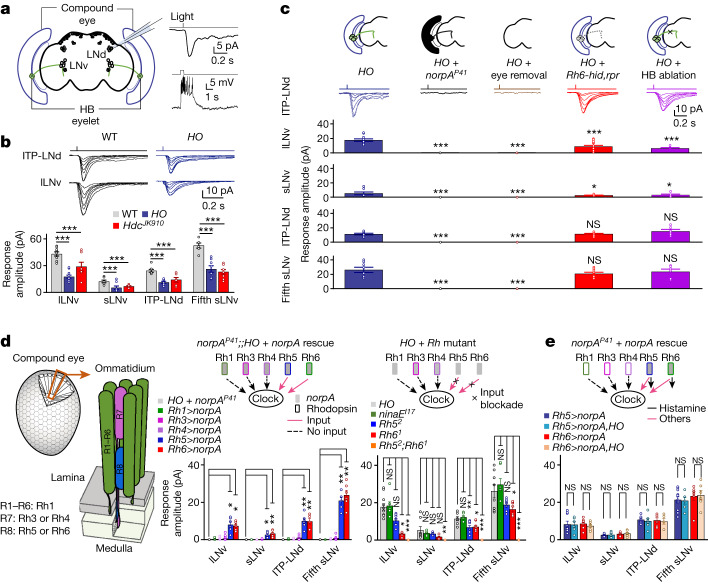
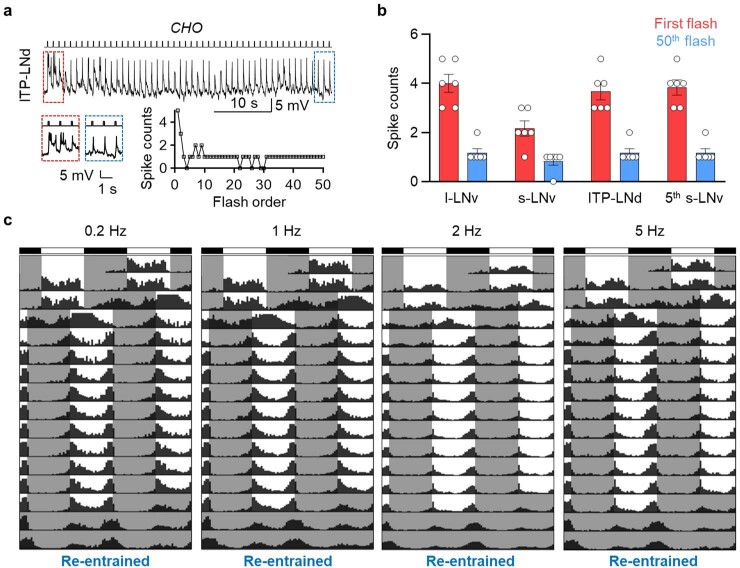
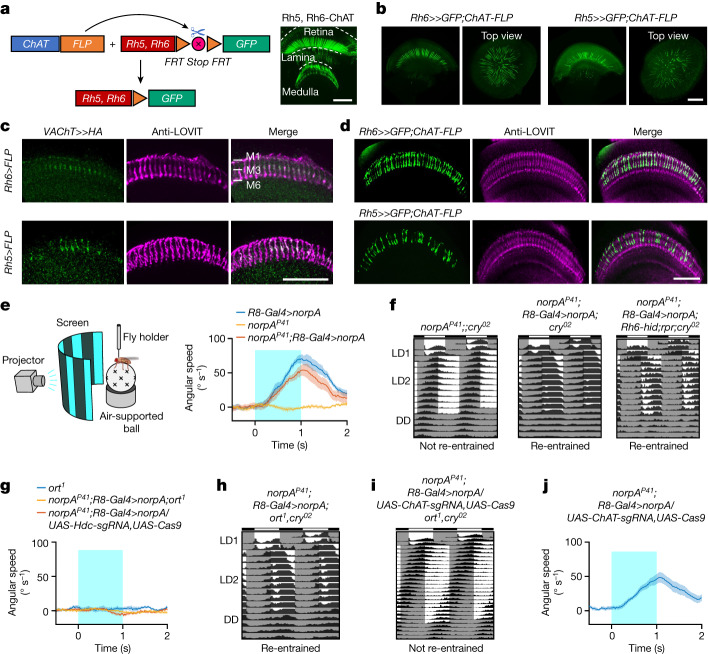
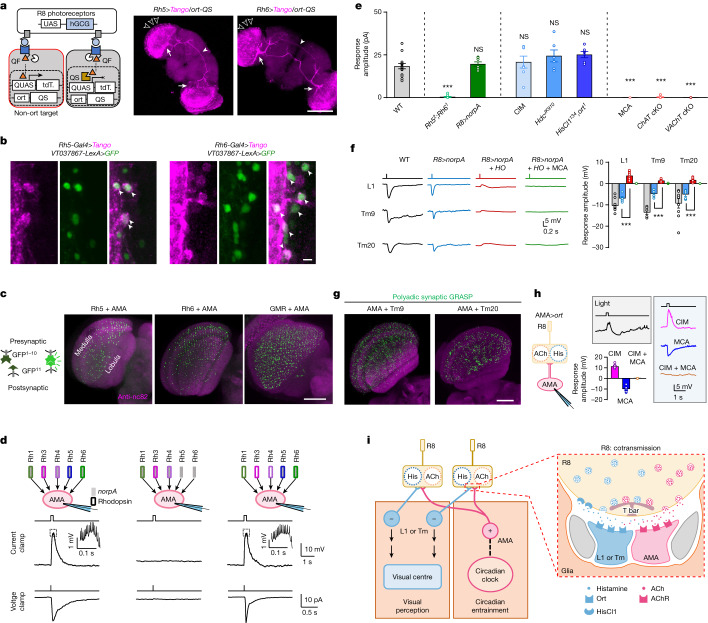
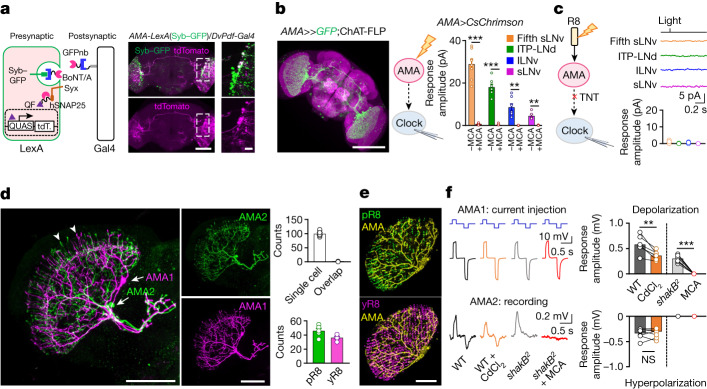
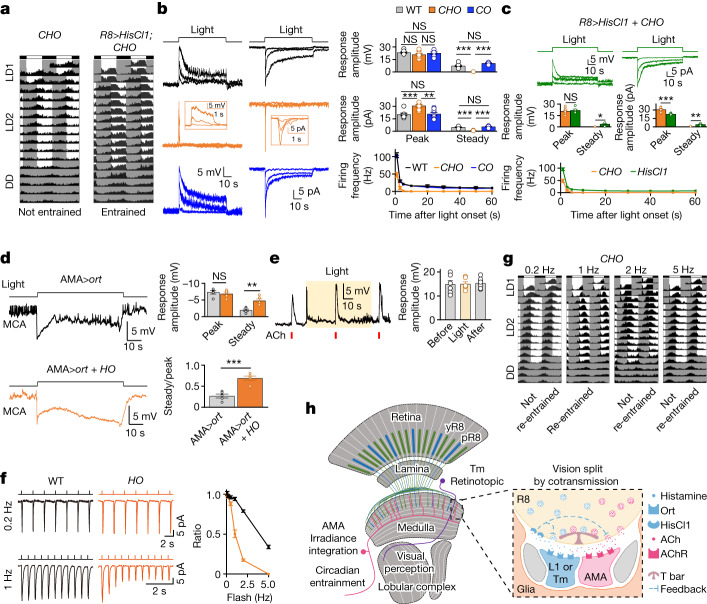
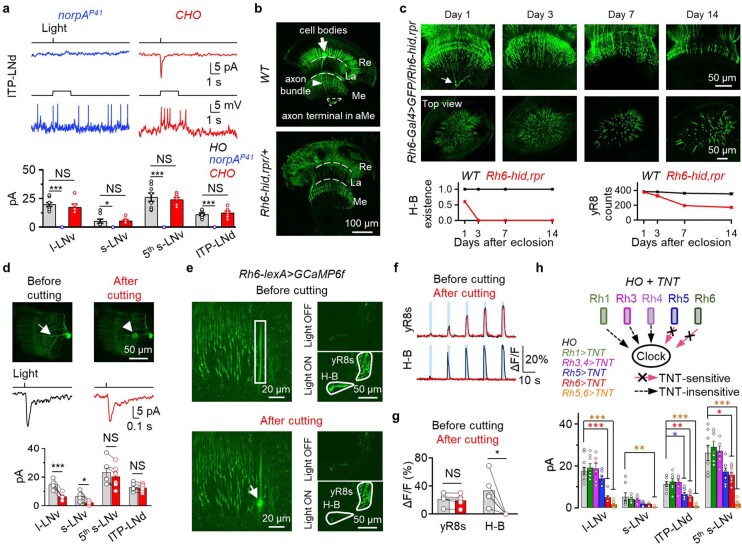
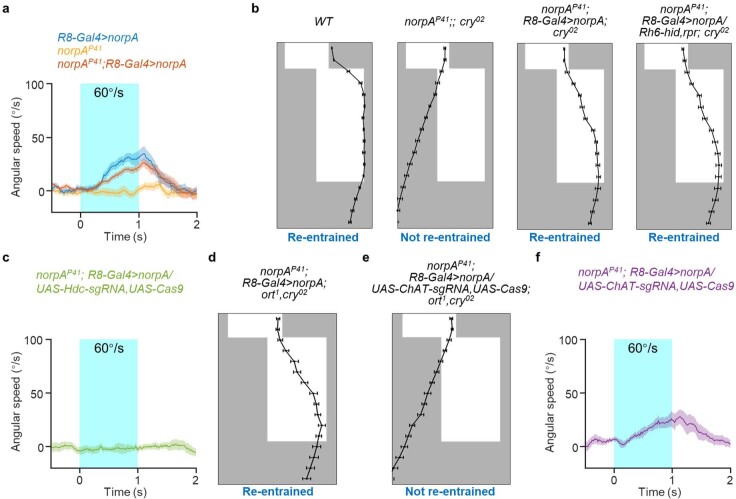
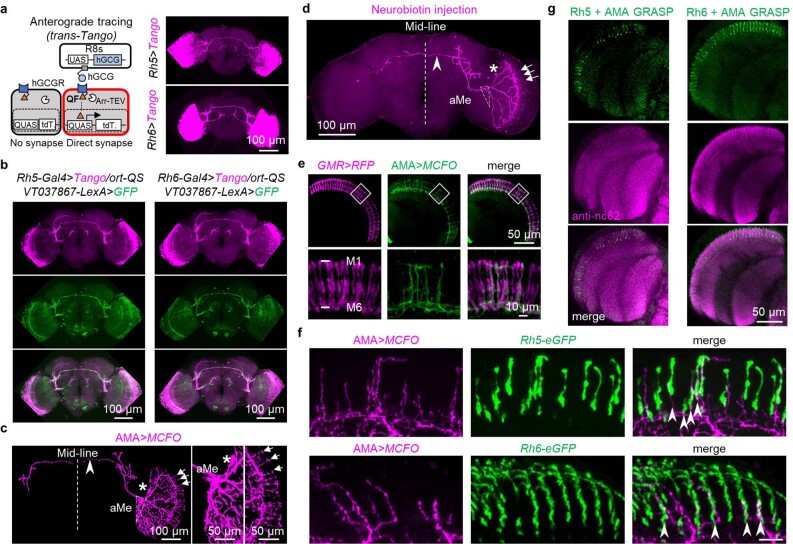
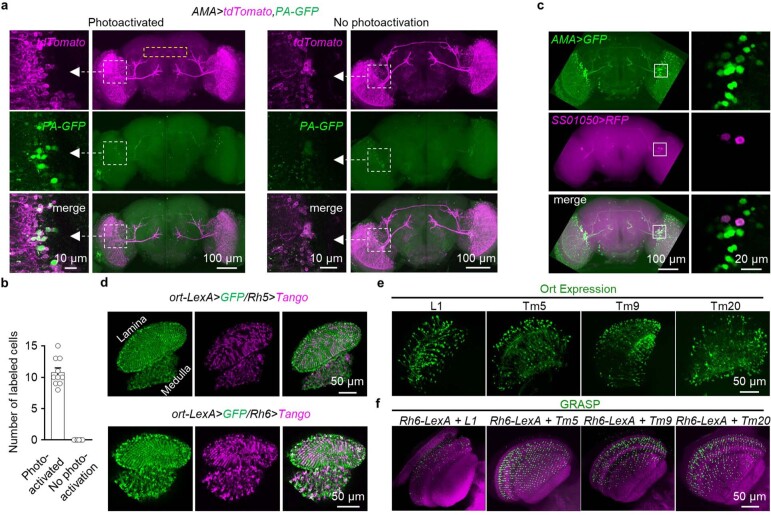
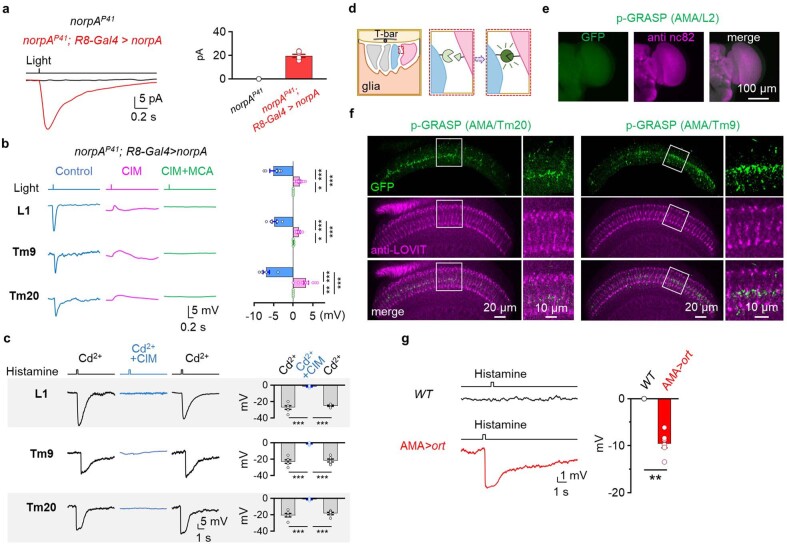
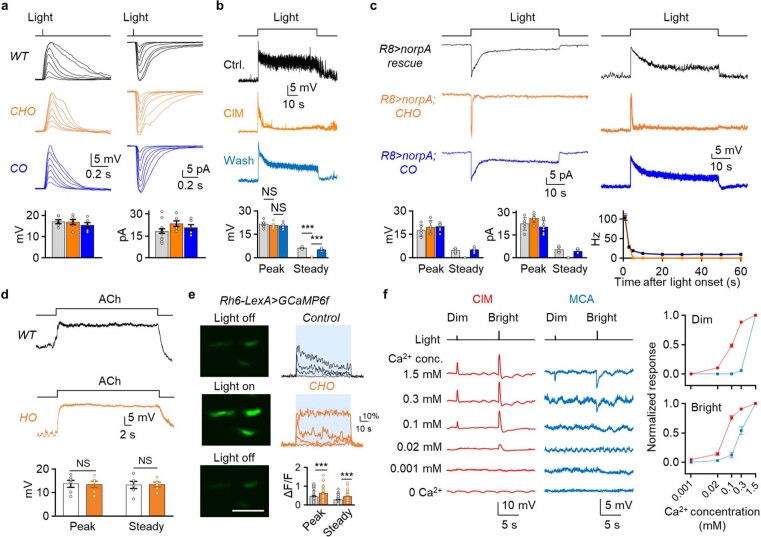
Vision enables both image-forming perception, driven by a contrast-based pathway, and unconscious non-image-forming circadian photoentrainment, driven by an irradiance-based pathway. Although two distinct photoreceptor populations are specialized for each visual task, image-forming photoreceptors can additionally contribute to photoentrainment of the circadian clock in different species. However, it is unknown how the image-forming photoreceptor pathway can functionally implement the segregation of irradiance signals required for circadian photoentrainment from contrast signals required for image perception. Here we report that the Drosophila R8 photoreceptor separates image-forming and irradiance signals by co-transmitting two neurotransmitters, histamine and acetylcholine. This segregation is further established postsynaptically by histamine-receptor-expressing unicolumnar retinotopic neurons and acetylcholine-receptor-expressing multicolumnar integration neurons. The acetylcholine transmission from R8 photoreceptors is sustained by an autocrine negative feedback of the cotransmitted histamine during the light phase of light-dark cycles. At the behavioural level, elimination of histamine and acetylcholine transmission impairs R8-driven motion detection and circadian photoentrainment, respectively. Thus, a single type of photoreceptor can achieve the dichotomy of visual perception and circadian photoentrainment as early as the first visual synapses, revealing a simple yet robust mechanism to segregate and translate distinct sensory features into different animal behaviours.
视觉既能感知基于对比度的图像,也能感知基于辐照度的无意识非图像形成的昼夜节律光同步,这两种感知分别由对比度通路和辐照度通路驱动。虽然两种不同的光感受器细胞专门用于执行每种视觉任务,但图像形成光感受器细胞还可以在不同物种中为昼夜节律时钟的光同步做出贡献。然而,目前尚不清楚图像形成光感受器途径如何能够在功能上实现将光同步所需的辐照度信号与图像感知所需的对比度信号分离。在这里,我们报告果蝇 R8 光感受器通过共传递两种神经递质组胺和乙酰胆碱来分离图像形成和辐照度信号。这种分离进一步通过表达组胺受体的单柱状视向性神经元和表达乙酰胆碱受体的多柱状整合神经元在突触后建立。在光-暗循环的光相期间,共传递的组胺通过自分泌负反馈持续传递 R8 光感受器的乙酰胆碱传递。在行为水平上,消除组胺和乙酰胆碱传递分别会损害 R8 驱动的运动检测和昼夜节律光同步。因此,早在第一视觉突触中,单一类型的光感受器就可以实现视觉感知和昼夜节律光同步的二分法,揭示了一种简单而强大的机制,可以将不同的感觉特征分离并转化为不同的动物行为。