Department of Drug and Health Sciences, University of Catania, Viale Andrea Doria, 6, 95125 Catania, Italy.
Department of Pharmacy, University of Pisa, Via Bonanno Pisano 6, 56126 Pisa, Italy.
Molecules. 2023 Oct 13;28(20):7064. doi: 10.3390/molecules28207064.
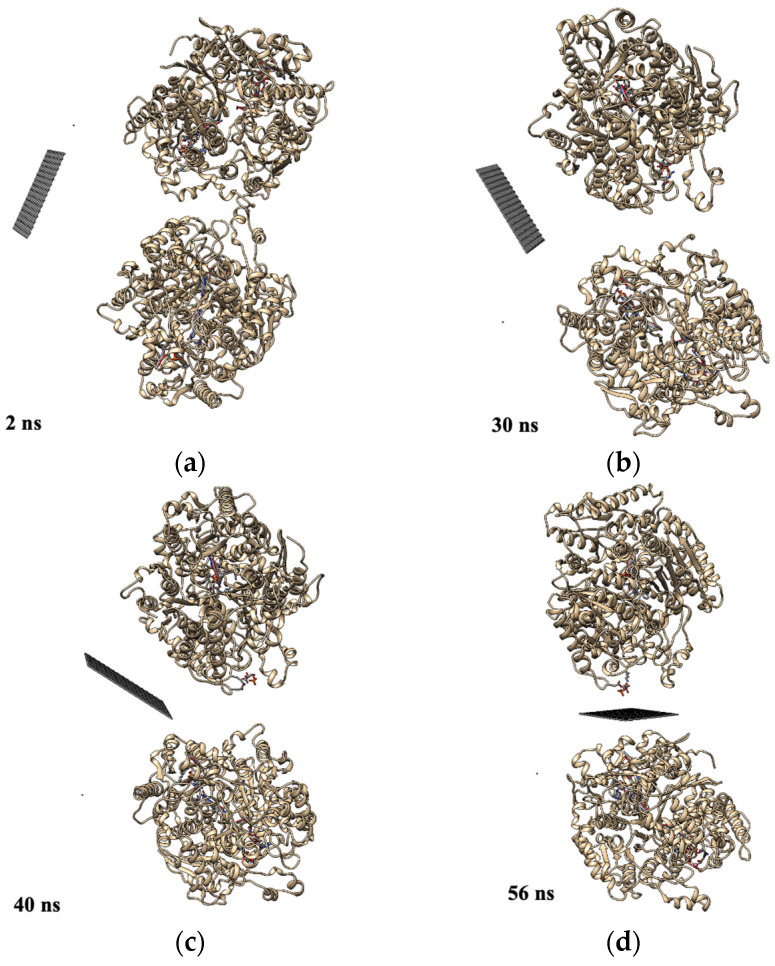
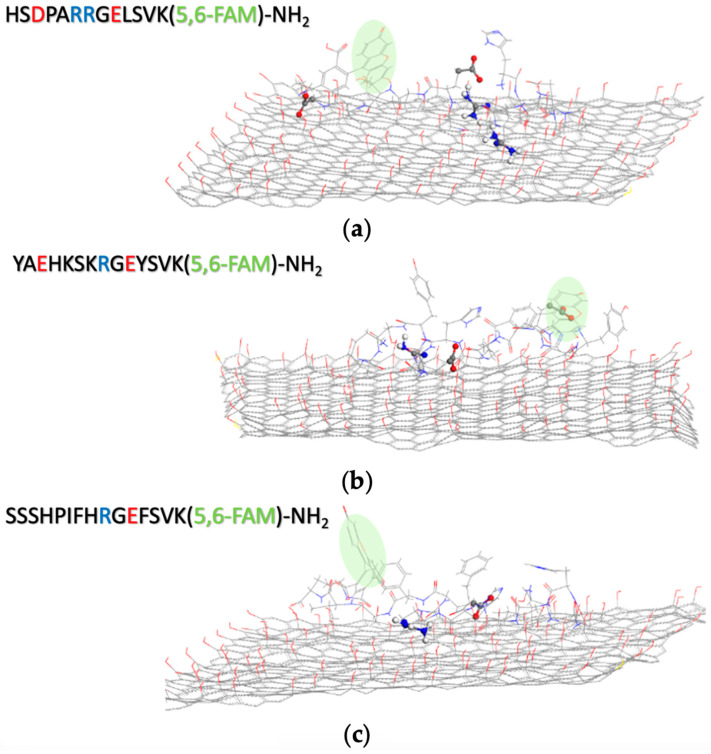
In typical protein-nanoparticle surface interactions, the biomolecule surface binding and consequent conformational changes are intermingled with each other and are pivotal to the multiple functional properties of the resulting hybrid bioengineered nanomaterial. In this review, we focus on the peculiar properties of the layer formed when biomolecules, especially proteins and peptides, face two-dimensional (2D) nanomaterials, to provide an overview of the state-of-the-art knowledge and the current challenges concerning the biomolecule coronas and, in general, the 2D nano-biointerface established when peptides and proteins interact with the nanosheet surface. Specifically, this review includes both experimental and simulation studies, including some recent machine learning results of a wide range of nanomaterial and peptide/protein systems.
在典型的蛋白质-纳米粒子表面相互作用中,生物分子表面的结合和随之而来的构象变化相互交织在一起,对所得到的混合生物工程纳米材料的多种功能特性至关重要。在这篇综述中,我们专注于生物分子(特别是蛋白质和肽)与二维(2D)纳米材料接触时形成的层的特殊性质,提供有关生物分子冠层的最新知识和当前挑战的概述,以及一般来说,当肽和蛋白质与纳米片表面相互作用时建立的 2D 纳米-生物界面。具体来说,本综述包括实验和模拟研究,包括最近在广泛的纳米材料和肽/蛋白质系统中应用机器学习的一些结果。