Papaioannou Afroditi, Liakopoulou Angeliki, Papoulis Dimitris, Gianni Eleni, Gkolfi Patroula, Zygouri Eleni, Letsiou Sophia, Hatziantoniou Sophia
Department of Pharmacy, University of Patras, 26504 Patras, Greece.
Department of Geology, University of Patras, 26504 Patras, Greece.
Pharmaceutics. 2023 Oct 16;15(10):2471. doi: 10.3390/pharmaceutics15102471.
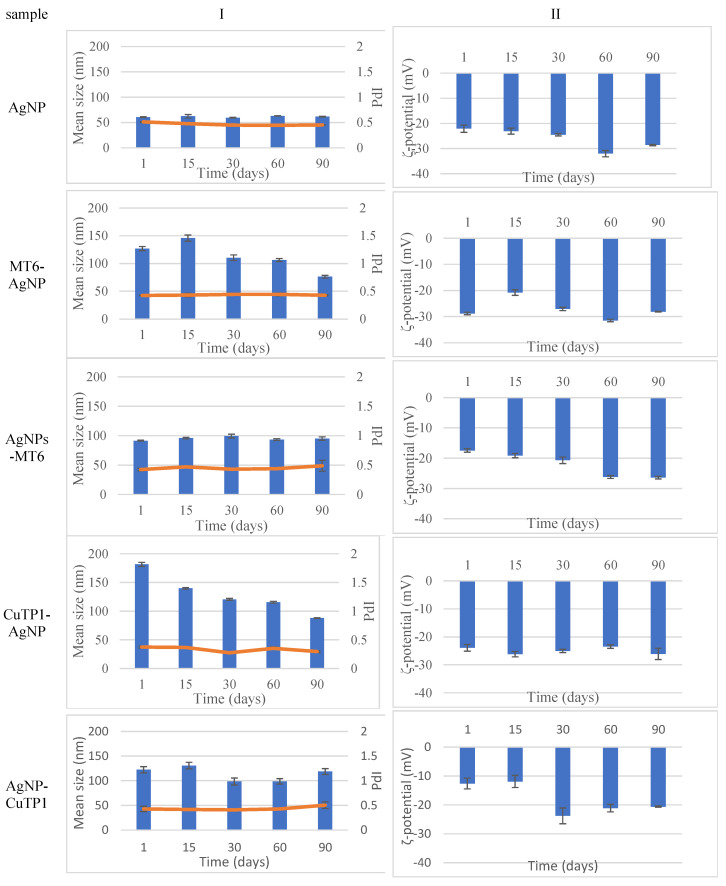
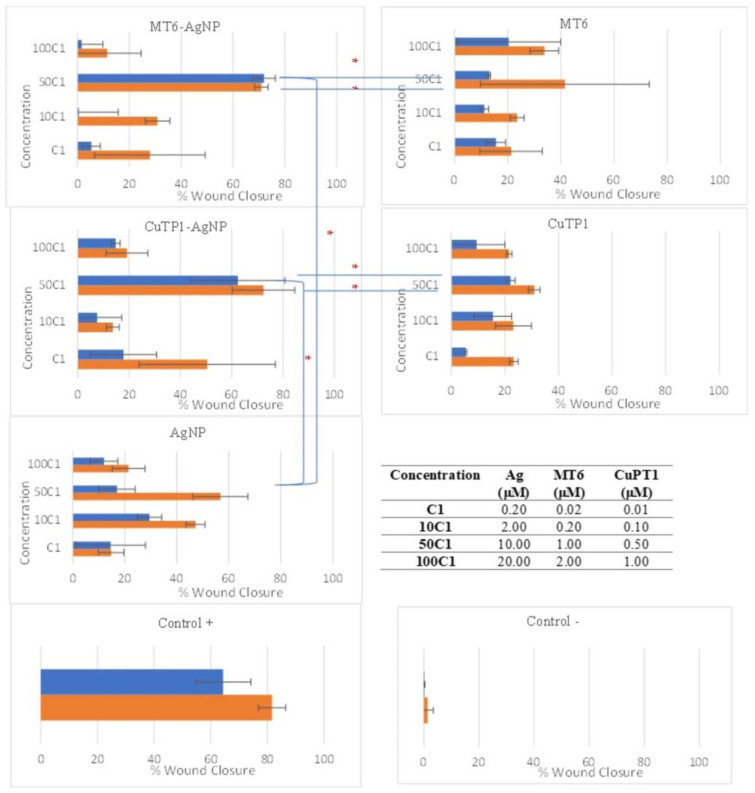
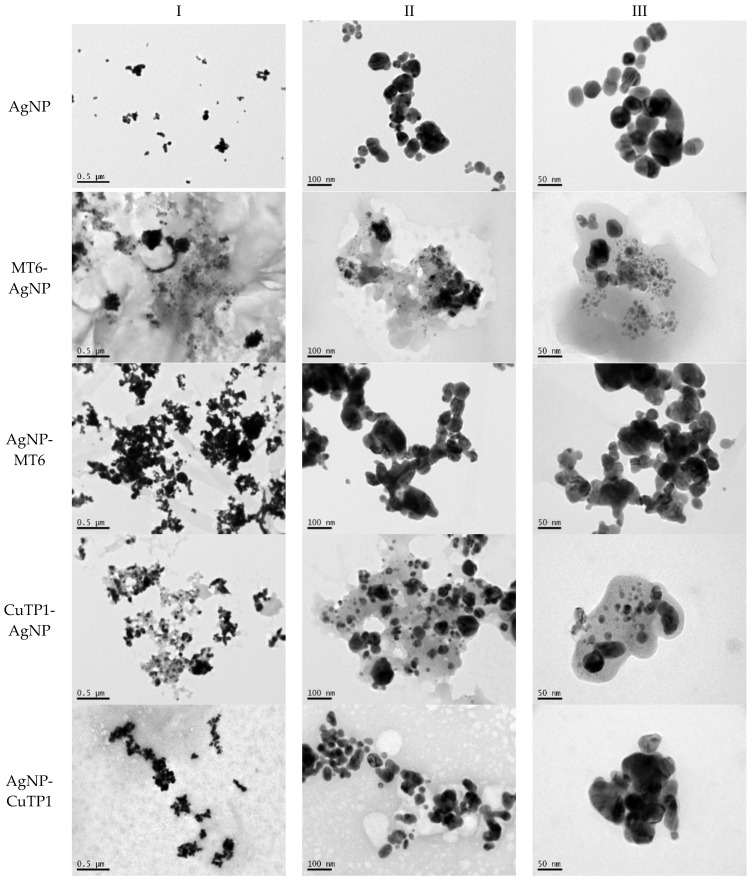
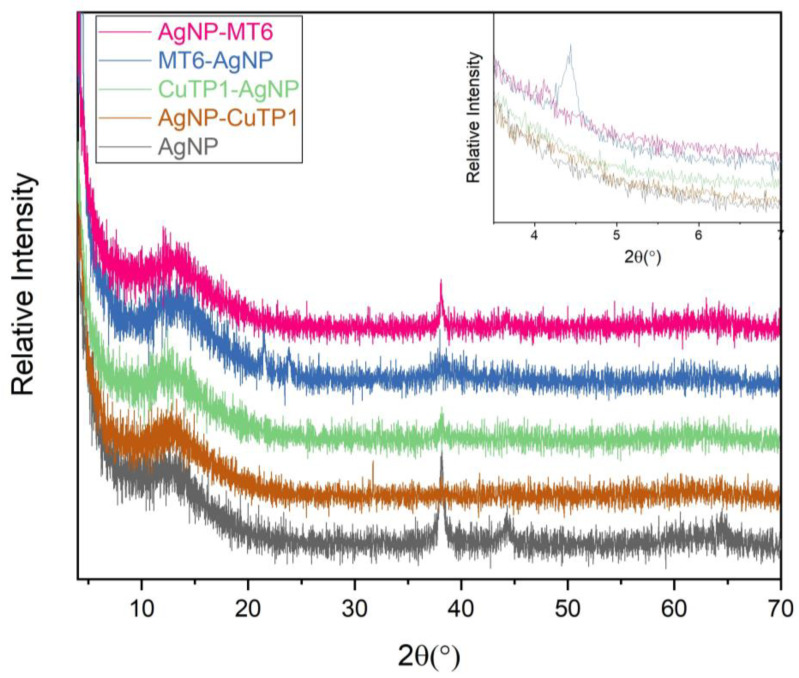
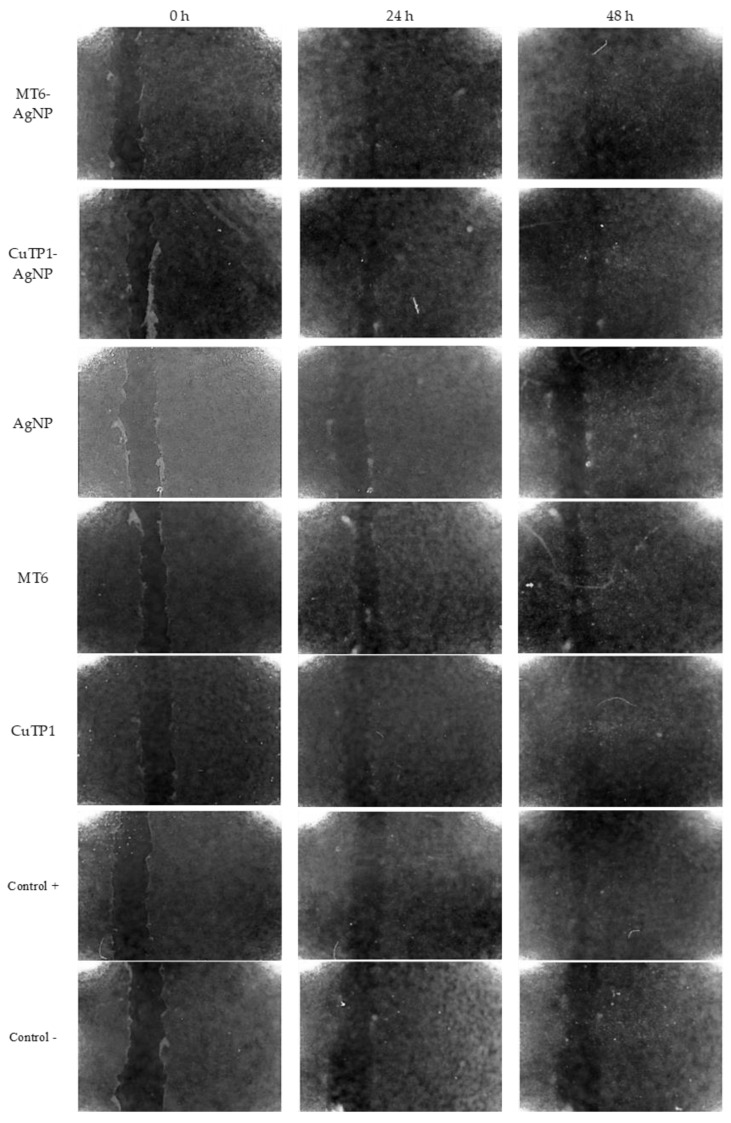
The aim of this study is the synthesis of novel peptide-silver nanoparticle conjugates with enhanced wound healing capacity. Peptide-silver nanoparticle conjugates were synthesized using myristoyl tetrapeptide 6 (MT6) or copper tripeptide 1 (CuTP1). Peptide-free silver nanoparticles (AgNP) were synthesized using NaBH4 and sodium citrate and were used as control. The addition of the peptides during or after the synthesis of nanoparticles and its impact on the properties of the synthesized peptide-silver nanoparticle conjugates were assessed. The monitoring of the synthesis of nanoparticles was achieved using ultraviolet-visible spectrophotometry (UV-/Vis). The characteristics and colloidal stability of the nanoparticles (size and ζ-potential distribution, morphology, composition and structure) were monitored using dynamic laser scattering (DLS), transmission electron microscopy (TEM), atomic absorption spectroscopy (AAS) and X-ray diffraction (XRD). The wound healing capacity of the peptide-silver nanoparticle conjugates was assessed using scratch test assay on fibroblasts (NIH/3T3). The results indicated that the addition of the peptides during the synthesis of nanoparticles lead to better yield of the reaction and more effective capping while the size distribution and ζ-potential of the conjugates indicated long-term colloidal stability. The MT6-AgNP conjugate exhibited 71.97 ± 4.35% wound closure, which was about 5.48-fold higher ( < 0.05) than the corresponding free MT6. The CuTP1-AgNP conjugate exhibited 62.37 ± 18.33% wound closure that was better by 2.82 fold ( < 0.05) compared to the corresponding free CuTP1. Both peptides led to the synthesis of silver nanoparticle conjugates with enhanced wound healing capacity compared to the respective free peptide or to the peptide-free AgNP (29.53 ± 4.71% wound closure, < 0.05). Our findings demonstrated that the synthetized peptide-silver nanoparticle conjugates are promising ingredients for wound care formulation.
本研究的目的是合成具有增强伤口愈合能力的新型肽-银纳米颗粒缀合物。使用肉豆蔻酰四肽6(MT6)或铜三肽1(CuTP1)合成肽-银纳米颗粒缀合物。使用硼氢化钠和柠檬酸钠合成无肽银纳米颗粒(AgNP)并用作对照。评估了在纳米颗粒合成期间或之后添加肽及其对合成的肽-银纳米颗粒缀合物性质的影响。使用紫外-可见分光光度法(UV-/Vis)监测纳米颗粒的合成。使用动态激光散射(DLS)、透射电子显微镜(TEM)、原子吸收光谱(AAS)和X射线衍射(XRD)监测纳米颗粒的特性和胶体稳定性(尺寸和ζ电位分布、形态、组成和结构)。使用对成纤维细胞(NIH/3T3)的划痕试验评估肽-银纳米颗粒缀合物的伤口愈合能力。结果表明,在纳米颗粒合成期间添加肽导致反应产率更高且封端更有效,而缀合物的尺寸分布和ζ电位表明具有长期胶体稳定性。MT6-AgNP缀合物表现出71.97±4.35%的伤口闭合率,比相应的游离MT6高约5.48倍(<0.05)。CuTP1-AgNP缀合物表现出62.37±18.33%的伤口闭合率,与相应的游离CuTP1相比提高了2.82倍(<0.05)。与各自的游离肽或无肽AgNP(29.53±4.71%的伤口闭合率,<0.05)相比,两种肽都导致合成了具有增强伤口愈合能力的银纳米颗粒缀合物。我们的研究结果表明,合成的肽-银纳米颗粒缀合物是伤口护理制剂中有前景的成分。