Institute of Physics and Technology, Petrozavodsk State University, 185910 Petrozavodsk, Russia.
Intelligent Signal Processing (ISP) Research Lab, Department of Electronics and Communication Engineering, Kuwait College of Science and Technology, Block 4, Kuwait City 13133, Kuwait.
Sensors (Basel). 2023 Oct 20;23(20):8609. doi: 10.3390/s23208609.
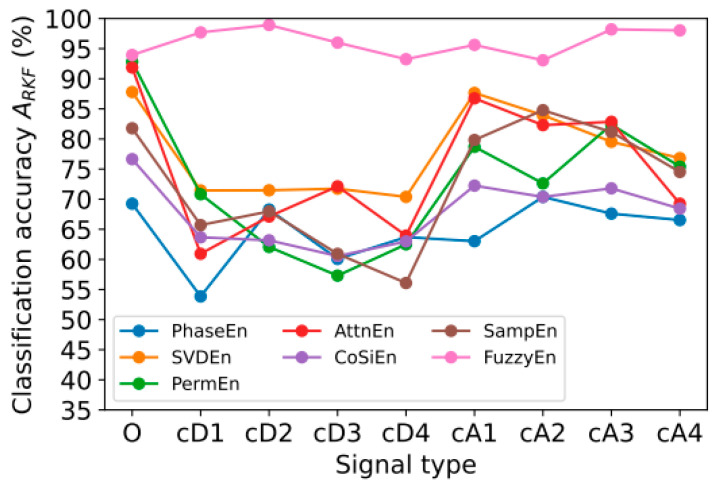
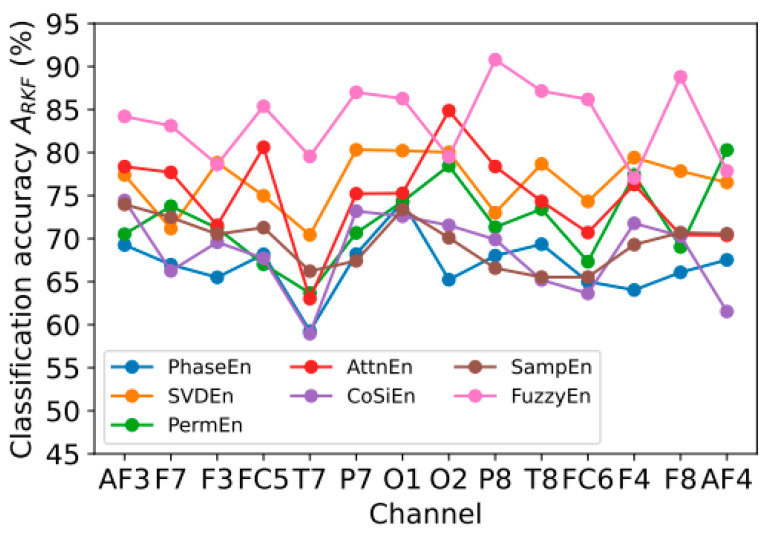
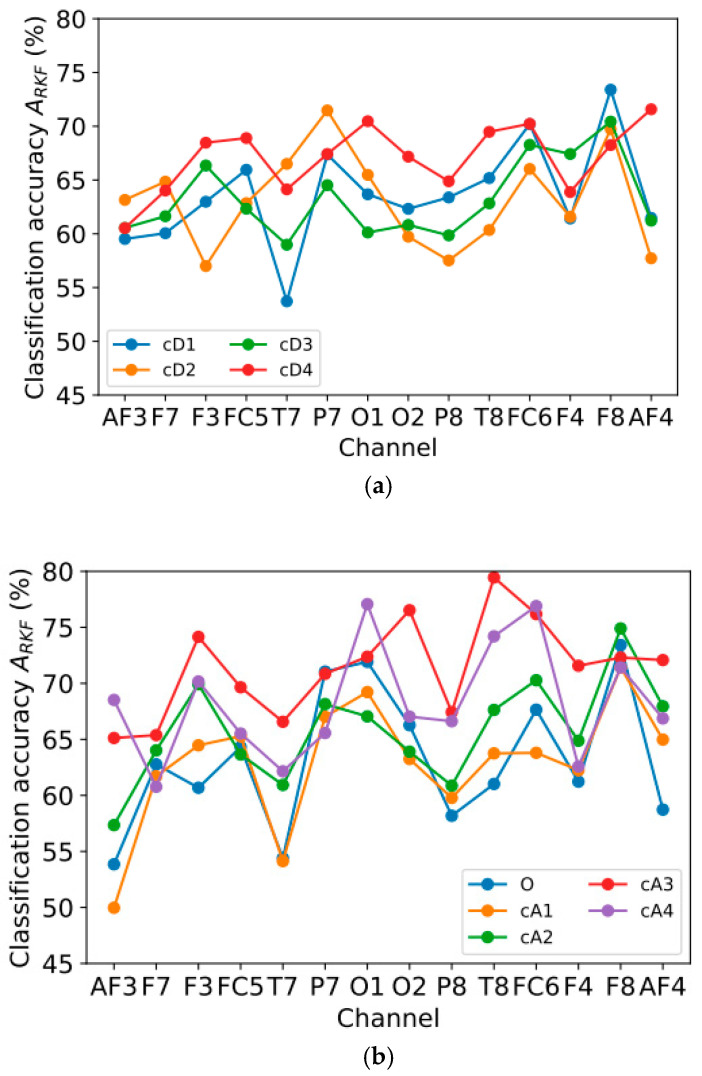
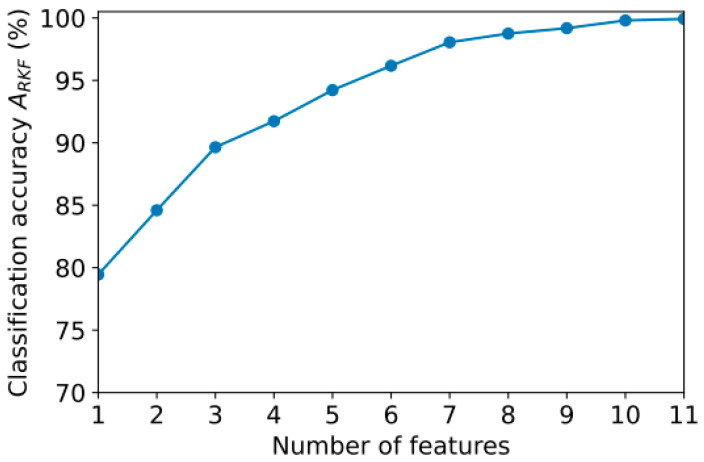
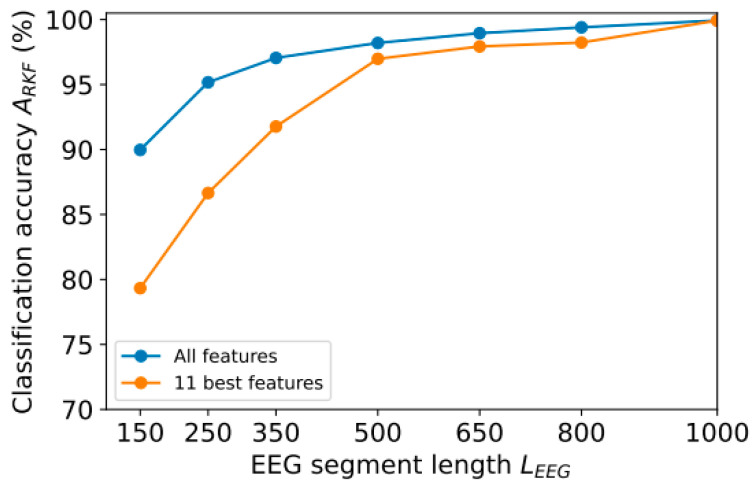
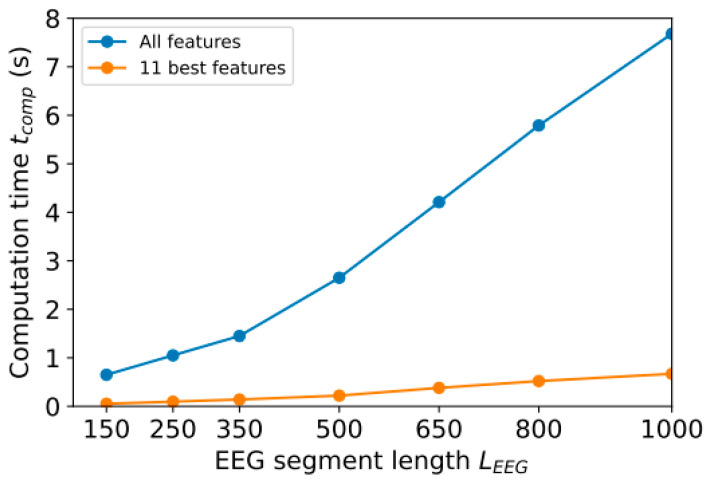
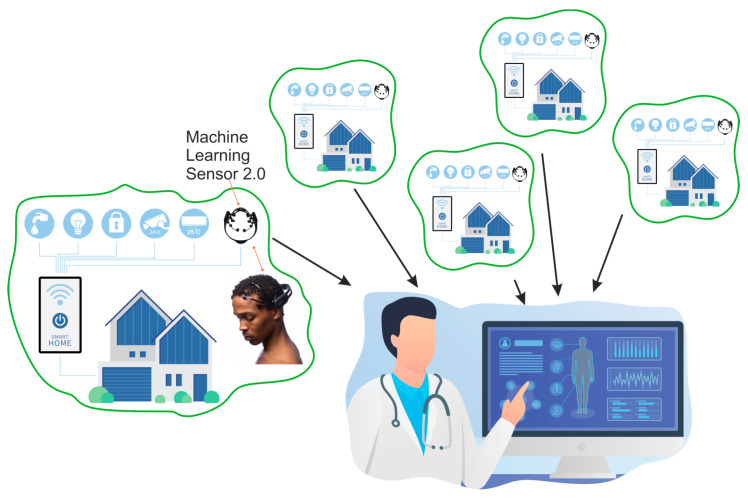
This study presents the concept of a computationally efficient machine learning (ML) model for diagnosing and monitoring Parkinson's disease (PD) using rest-state EEG signals (rs-EEG) from 20 PD subjects and 20 normal control (NC) subjects at a sampling rate of 128 Hz. Based on the comparative analysis of the effectiveness of entropy calculation methods, fuzzy entropy showed the best results in diagnosing and monitoring PD using rs-EEG, with classification accuracy () of ~99.9%. The most important frequency range of rs-EEG for PD-based diagnostics lies in the range of 0-4 Hz, and the most informative signals were mainly received from the right hemisphere of the head. It was also found that significantly decreased as the length of rs-EEG segments decreased from 1000 to 150 samples. Using a procedure for selecting the most informative features, it was possible to reduce the computational costs of classification by 11 times, while maintaining an ~99.9%. The proposed method can be used in the healthcare internet of things (H-IoT), where low-performance edge devices can implement ML sensors to enhance human resilience to PD.
本研究提出了一种使用 128 Hz 采样率的 20 名帕金森病 (PD) 患者和 20 名正常对照 (NC) 患者的静息态脑电图 (rs-EEG) 信号来诊断和监测 PD 的计算效率高的机器学习 (ML) 模型的概念。基于对熵计算方法有效性的比较分析,模糊熵在使用 rs-EEG 诊断和监测 PD 方面表现出最佳结果,分类准确率()约为 99.9%。rs-EEG 对 PD 诊断最重要的频率范围位于 0-4 Hz 之间,最具信息量的信号主要来自头部的右半球。还发现,随着 rs-EEG 段从 1000 个样本减少到 150 个样本,显著降低。通过选择最具信息量特征的程序,可以将分类的计算成本降低 11 倍,同时保持 99.9%左右的准确率。该方法可用于医疗保健物联网 (H-IoT),其中低性能边缘设备可以实现 ML 传感器,以增强人类对 PD 的适应能力。