Loisate Stacie, Mutembo Simon, Arambepola Rohan, Makungo Kabondo, Kabalo Elliot N, Sinyange Nyambe B, Kapata Nathan, Liwewe Mazyanga, Silumezi Andrew, Chongwe Gershom, Kostandova Natalya, Truelove Shaun, Wesolowski Amy
Department of Epidemiology, Johns Hopkins Bloomberg School of Public Health, Baltimore, Maryland, United States of America.
Department of International Health, Johns Hopkins Bloomberg School of Public Health, Baltimore, Maryland, United States of America.
PLOS Glob Public Health. 2023 Oct 31;3(10):e0000892. doi: 10.1371/journal.pgph.0000892. eCollection 2023.
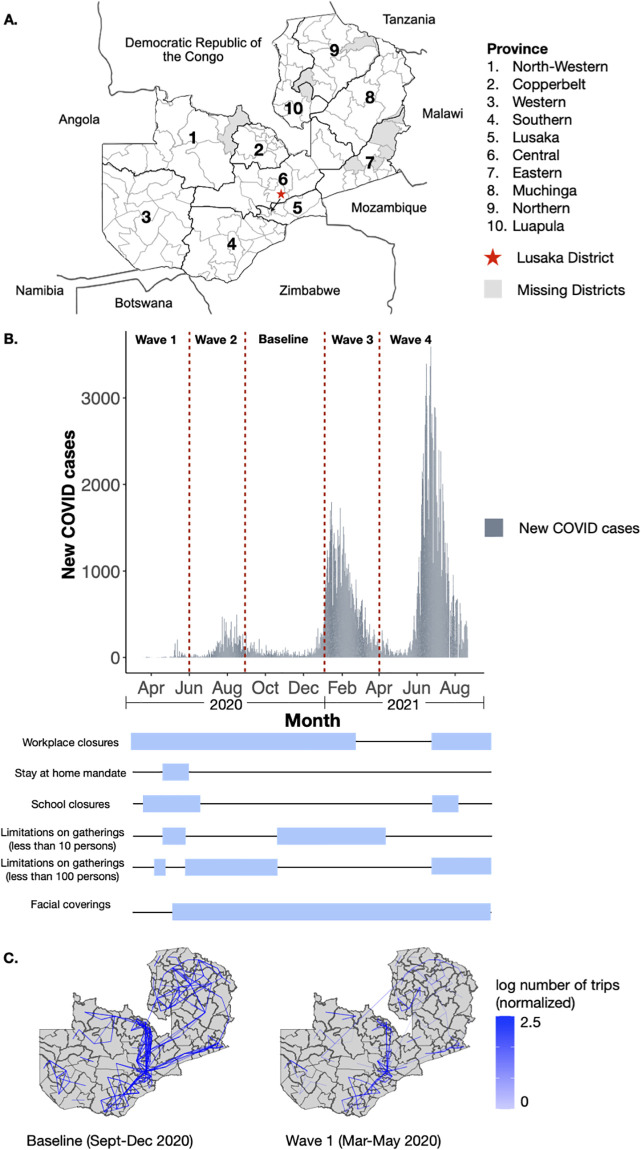
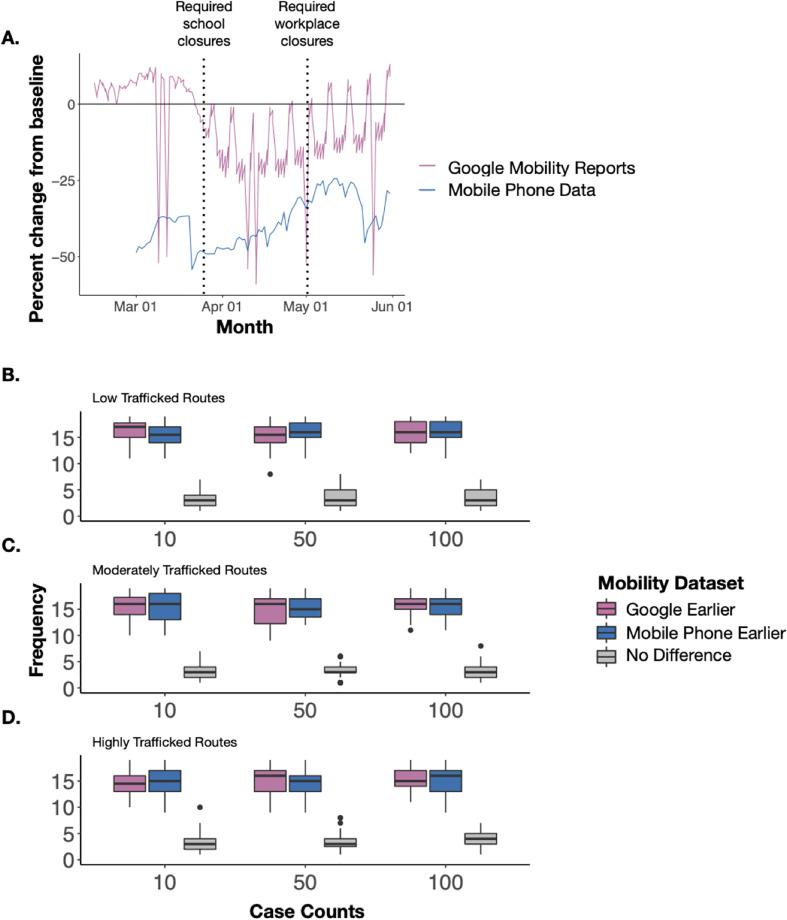
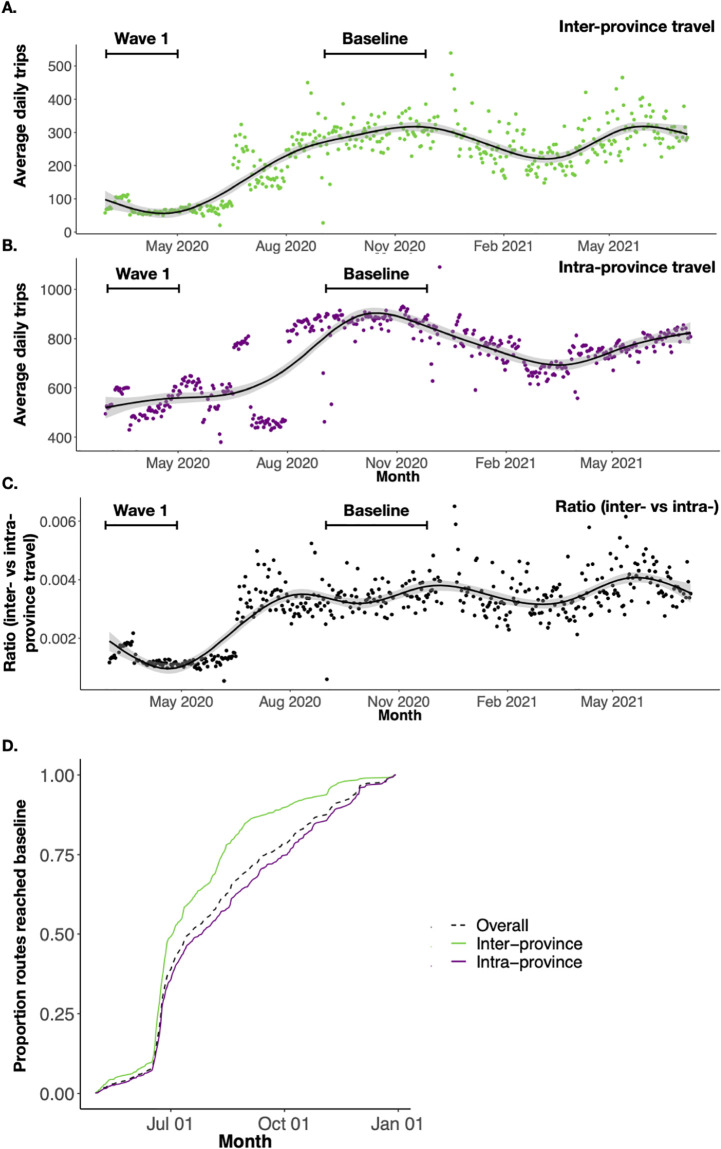
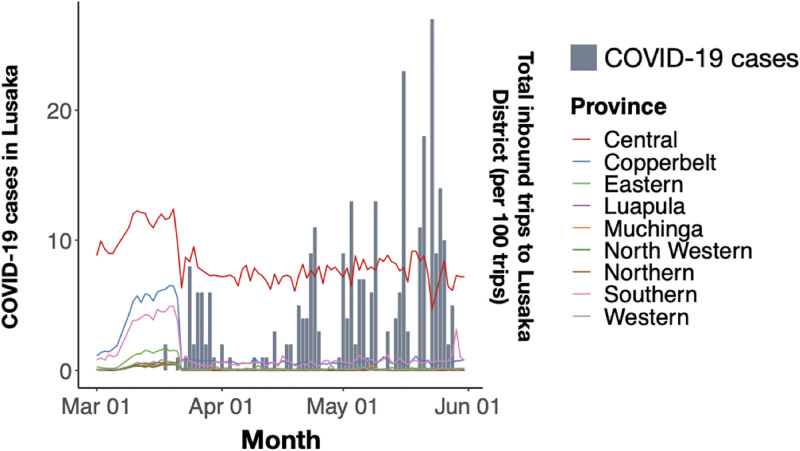
The COVID-19 pandemic has impacted many facets of human behavior, including human mobility partially driven by the implementation of non-pharmaceutical interventions (NPIs) such as stay at home orders, travel restrictions, and workplace and school closures. Given the importance of human mobility in the transmission of SARS-CoV-2, there have been an increase in analyses of mobility data to understand the COVID-19 pandemic to date. However, despite an abundance of these analyses, few have focused on Sub-Saharan Africa (SSA). Here, we use mobile phone calling data to provide a spatially refined analysis of sub-national human mobility patterns during the COVID-19 pandemic from March 2020-July 2021 in Zambia using transmission and mobility models. Overall, among highly trafficked intra-province routes, mobility decreased up to 52% during the time of the strictest NPIs (March-May 2020) compared to baseline. However, despite dips in mobility during the first wave of COVID-19 cases, mobility returned to baseline levels and did not drop again suggesting COVID-19 cases did not influence mobility in subsequent waves.
新冠疫情对人类行为的诸多方面产生了影响,包括人员流动,而这种流动部分是由居家令、旅行限制以及工作场所和学校关闭等非药物干预措施(NPIs)的实施所驱动的。鉴于人员流动在新冠病毒传播中的重要性,为了解新冠疫情,对流动数据的分析有所增加。然而,尽管有大量此类分析,但很少有研究关注撒哈拉以南非洲地区(SSA)。在此,我们使用手机通话数据,利用传播和流动模型,对赞比亚2020年3月至2021年7月新冠疫情期间的次国家层面人员流动模式进行空间精细化分析。总体而言,在省内交通繁忙的路线中,与基线相比,在最严格的非药物干预措施实施期间(2020年3月至5月),人员流动下降了52%。然而,尽管在新冠疫情第一波期间人员流动有所下降,但流动恢复到了基线水平,且未再次下降,这表明新冠疫情病例在后续波次中并未影响人员流动。