Cellular and Molecular Biology Graduate Group, Perelman School of Medicine, University of Pennsylvania, Philadelphia, PA, USA.
Department of Biochemistry and Molecular Biophysics, Perelman School of Medicine, University of Pennsylvania, Philadelphia, PA, USA.
Nat Commun. 2023 Nov 6;14(1):7130. doi: 10.1038/s41467-023-41811-8.
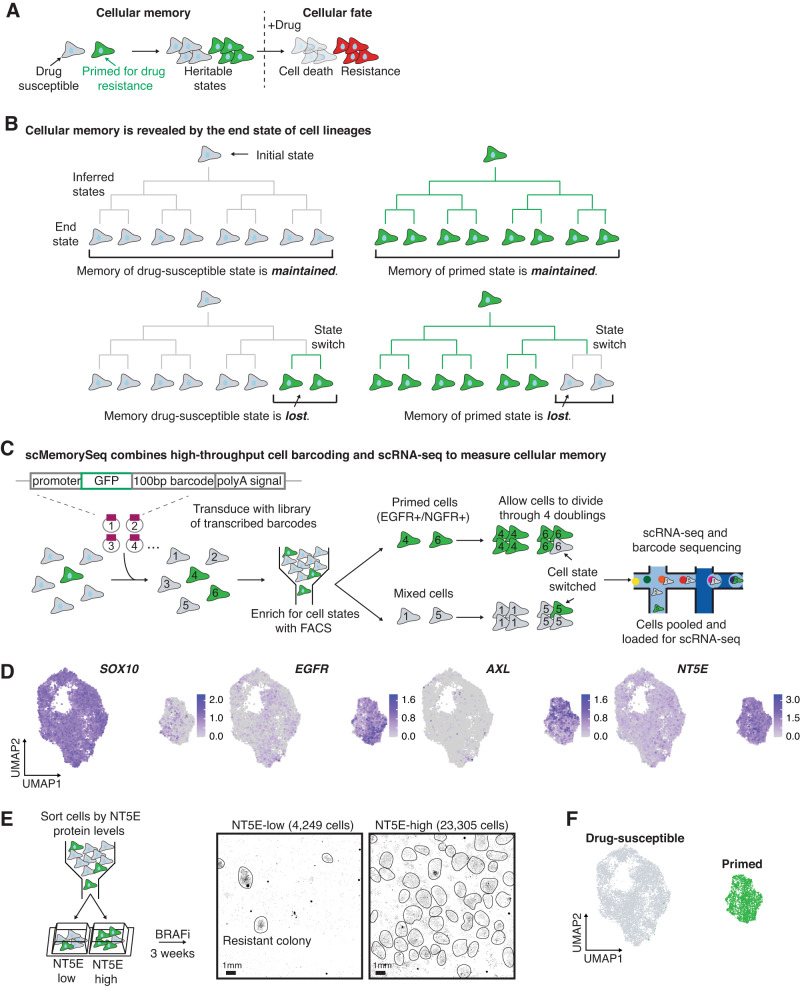
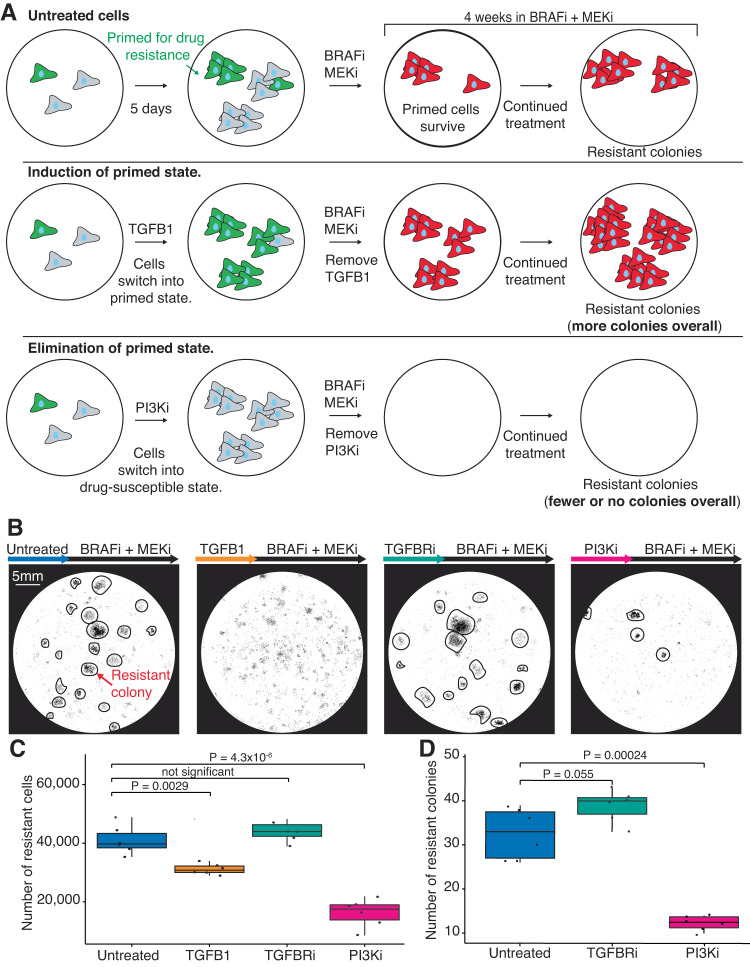
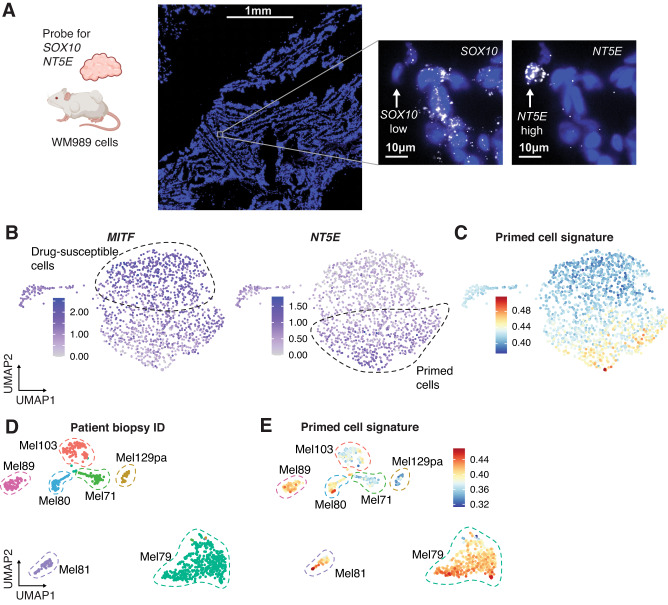
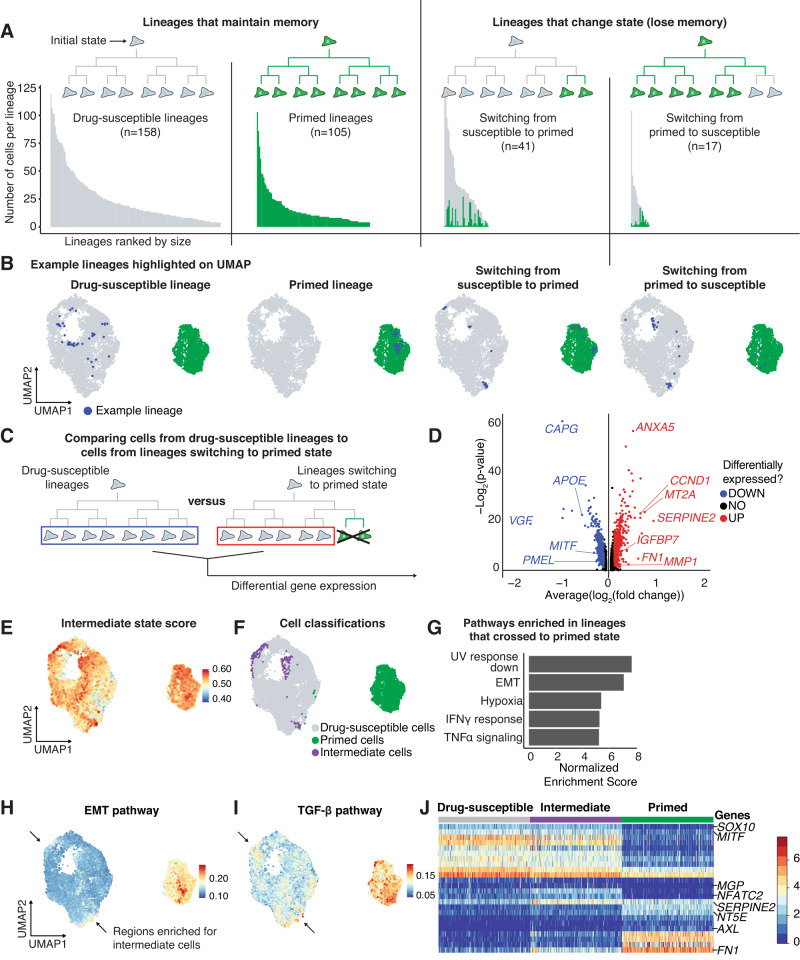
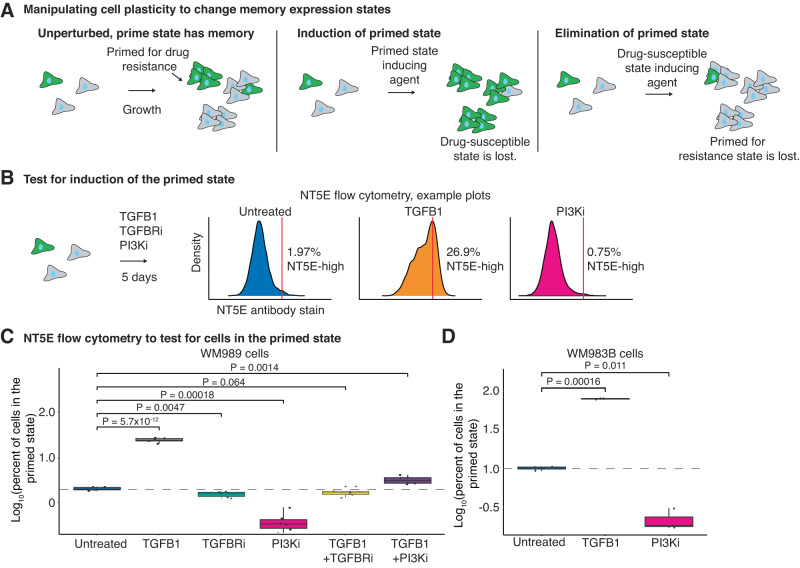
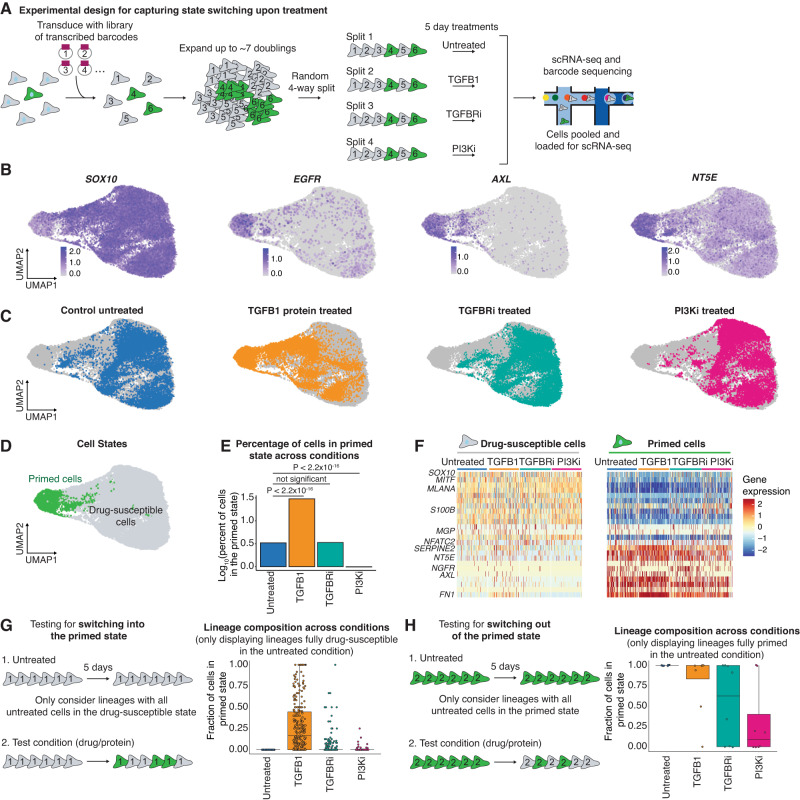
Gene expression states persist for varying lengths of time at the single-cell level, a phenomenon known as gene expression memory. When cells switch states, losing memory of their prior state, this transition can occur in the absence of genetic changes. However, we lack robust methods to find regulators of memory or track state switching. Here, we develop a lineage tracing-based technique to quantify memory and identify cells that switch states. Applied to melanoma cells without therapy, we quantify long-lived fluctuations in gene expression that are predictive of later resistance to targeted therapy. We also identify the PI3K and TGF-β pathways as state switching modulators. We propose a pretreatment model, first applying a PI3K inhibitor to modulate gene expression states, then applying targeted therapy, which leads to less resistance than targeted therapy alone. Together, we present a method for finding modulators of gene expression memory and their associated cell fates.
在单细胞水平上,基因表达状态会持续不同的时间长度,这种现象被称为基因表达记忆。当细胞切换状态,失去对先前状态的记忆时,这种转变可以在没有遗传变化的情况下发生。然而,我们缺乏强大的方法来寻找记忆的调节剂或跟踪状态切换。在这里,我们开发了一种基于谱系追踪的技术来量化记忆并识别状态切换的细胞。将其应用于未经治疗的黑色素瘤细胞,我们定量了基因表达的长寿命波动,这些波动可预测随后对靶向治疗的耐药性。我们还确定了 PI3K 和 TGF-β 途径是状态切换调节剂。我们提出了一种预处理模型,首先应用 PI3K 抑制剂来调节基因表达状态,然后应用靶向治疗,这比单独使用靶向治疗导致的耐药性更小。总之,我们提出了一种寻找基因表达记忆调节剂及其相关细胞命运的方法。