Department of Occupational Therapy, College of Medicine, National Cheng Kung University, No.1, University Road, Tainan City, 701, Taiwan.
Department of Psychiatry, National Cheng Kung University Hospital, College of Medicine, National Cheng Kung University, Tainan, Taiwan.
BMC Psychiatry. 2023 Nov 7;23(1):807. doi: 10.1186/s12888-023-05259-w.
Previous works reported people with schizophrenia experienced inferior hand functions which influence their daily participation and work efficiency. Sensorimotor capability is one of indispensable elements acting in a well-executed feed-forward and feedback control loop to contribute to hand performances. However, rare studies investigated contribution of sensorimotor ability to hand functions for people with schizophrenia. This study aimed to explore hand function in people with schizophrenia based on the perspective of the sensorimotor control capabilities of the hands.
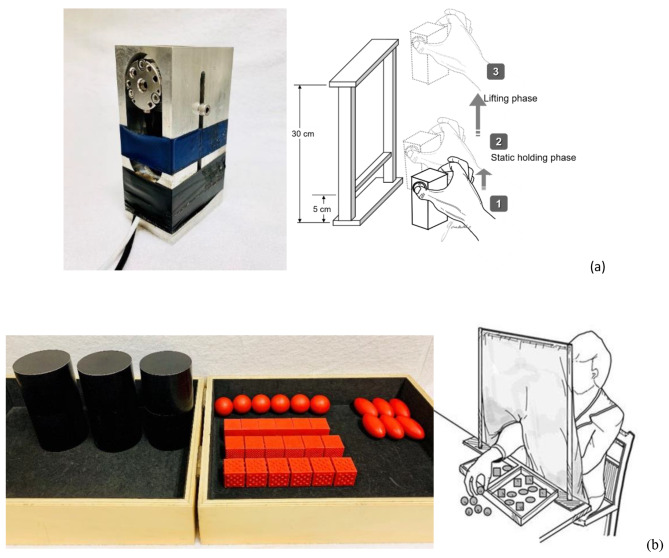
Twenty-seven people at the chronic stage of schizophrenia were enrolled. The following assessment tools were used: the Purdue Pegboard Test (PPT) and the VALPAR Component Work Sample-8 (VCWS 8) system for hand function; the Self-Reported Graphic version of the Personal and Social Performance (SRG-PSP) scale for functionality; and the Semmes-Weinstein Monofilaments (SWM), the pinch-holding-up-activity (PHUA) test and the Manual Tactile Test (MTT) for the sensory and sensorimotor parameters. The Clinical Global Impression-Severity (CGI-S) scale and the Extrapyramidal Symptom Rating Scale (ESRS) were used to grade the severity of the illness and the side-effects of the drugs. Spearman's rank correlation coefficient was used to analyze associations among hand function, functionality, and sensorimotor capabilities. A multiple linear regression analysis was used to identify the determinants of hand function.
The results indicated that both hand function and sensorimotor capability were worse in people with schizophrenia than in healthy people, with the exception of the sensory threshold measured with the SWM. Moreover, the sensorimotor abilities of the hands were associated with hand function. The results of the regression analysis showed that the MTT measure of stereognosis was a determinant of the PPT measure of the dominant hand function and of the performance on the VCWS 8, and that the ESRS and the MTT measure of barognosis were determinants of the performance on the assembly task of the PPT.
The findings suggested that sensorimotor capabilities, especially stereognosis and barognosis, are crucial determinants of hand function in people with schizophrenia. The results also revealed that the side effects of drugs and the duration of the illness directly affect hand function.
ClinicalTrials.gov , identifier NCT04941677, 28/06/2021.
先前的研究报告称,精神分裂症患者的手部功能较差,这影响了他们的日常参与和工作效率。感觉运动能力是执行良好的前馈和反馈控制回路的不可或缺的要素之一,有助于手部表现。然而,很少有研究调查感觉运动能力对精神分裂症患者手部功能的贡献。本研究旨在从手部感觉运动控制能力的角度探讨精神分裂症患者的手部功能。
共纳入 27 名慢性期精神分裂症患者。使用以下评估工具:普渡钉板测试(PPT)和 VALPAR 组件工作样本-8(VCWS 8)系统评估手部功能;自我报告图形版个人和社会表现(SRG-PSP)量表评估功能;Semmes-Weinstein 单丝(SWM)、夹捏保持活动(PHUA)测试和手动触觉测试(MTT)评估感觉和感觉运动参数。使用临床总体印象严重程度量表(CGI-S)和锥体外系症状评定量表(ESRS)评定疾病严重程度和药物的副作用。采用 Spearman 秩相关系数分析手部功能、功能和感觉运动能力之间的相关性。采用多元线性回归分析确定手部功能的决定因素。
结果表明,精神分裂症患者的手部功能和感觉运动能力均较健康人差,除 SWM 测量的感觉阈值外。此外,手部的感觉运动能力与手部功能相关。回归分析结果表明,MTT 测试的实体觉是 PPT 测试优势手功能和 VCWS 8 表现的决定因素,ESRS 和 MTT 测试的两点辨别觉是 PPT 测试装配任务表现的决定因素。
研究结果表明,感觉运动能力,尤其是实体觉和两点辨别觉,是精神分裂症患者手部功能的重要决定因素。研究结果还表明,药物的副作用和疾病的持续时间直接影响手部功能。
ClinicalTrials.gov ,标识符 NCT04941677,2021 年 6 月 28 日。