Exeins Health Initiative, Jakarta, Indonesia.
Menzies School of Health Research and Charles Darwin University, Darwin, Australia.
Sci Rep. 2023 Nov 13;13(1):19779. doi: 10.1038/s41598-023-46076-1.
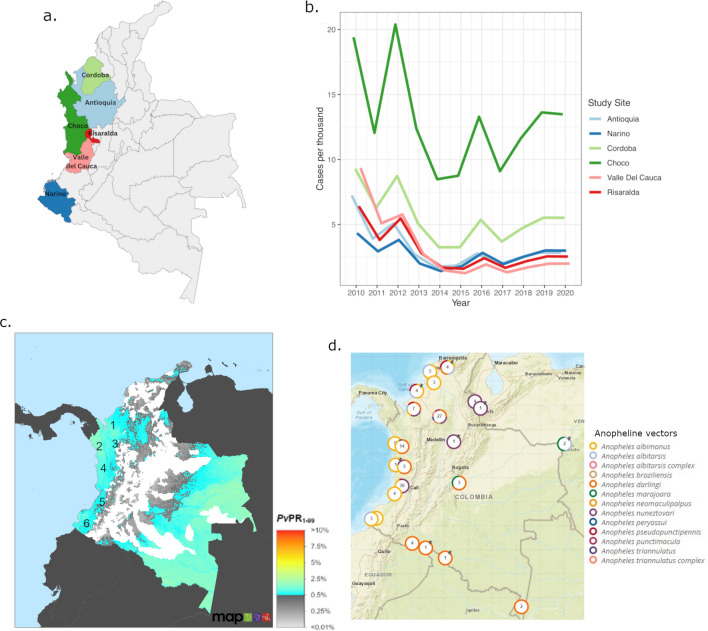
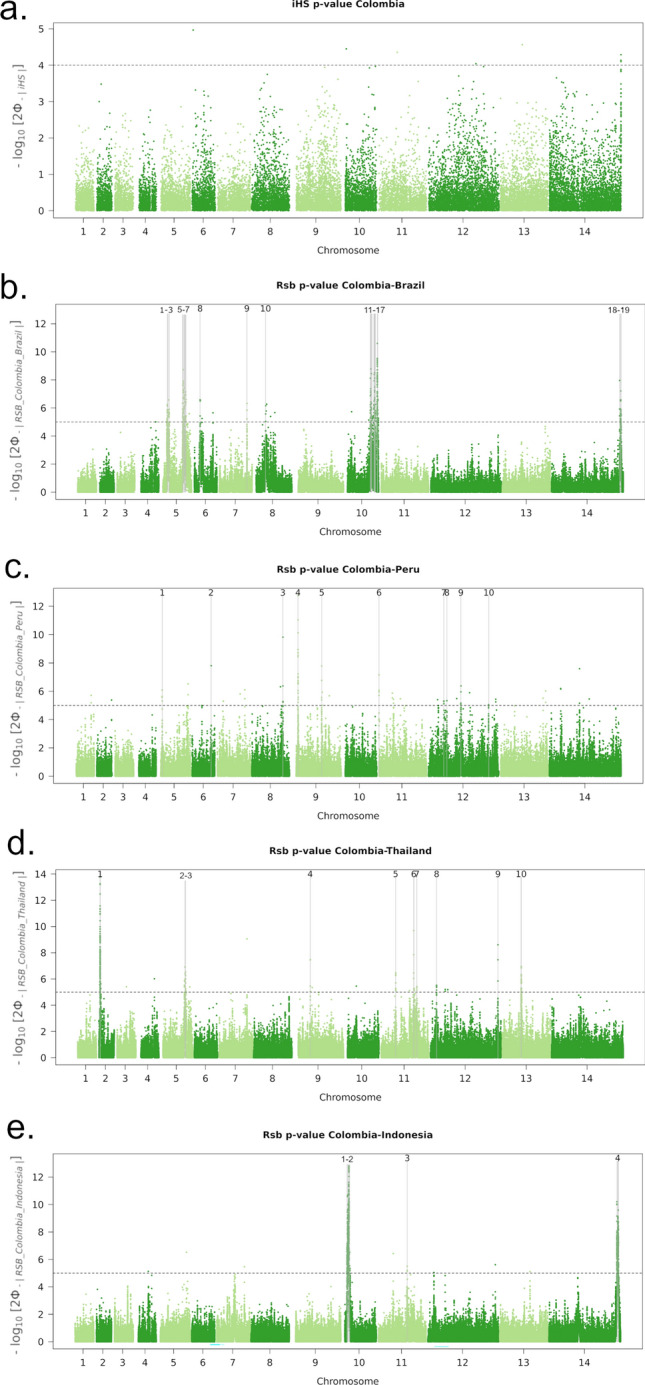
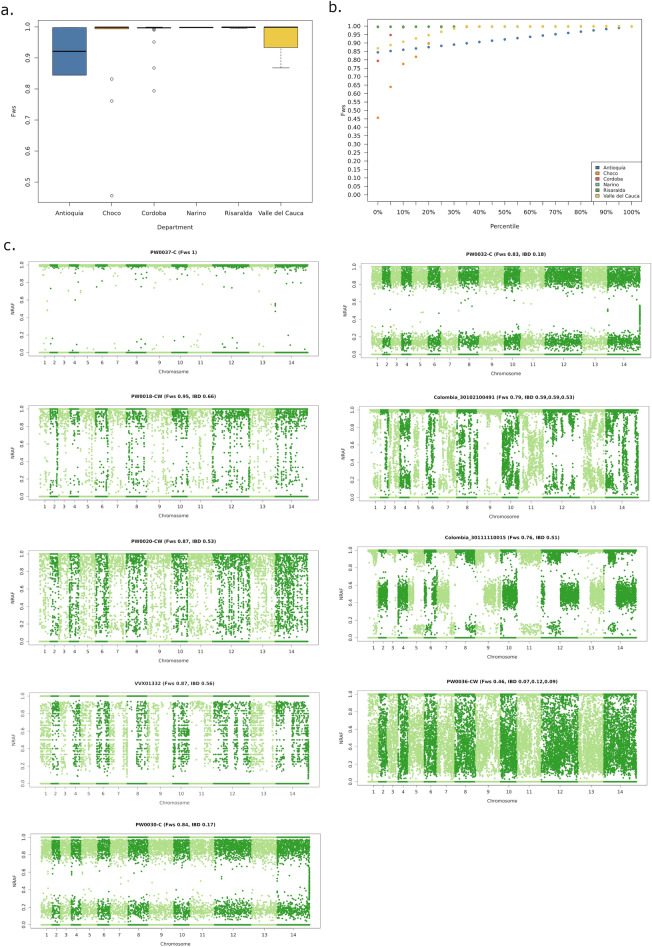
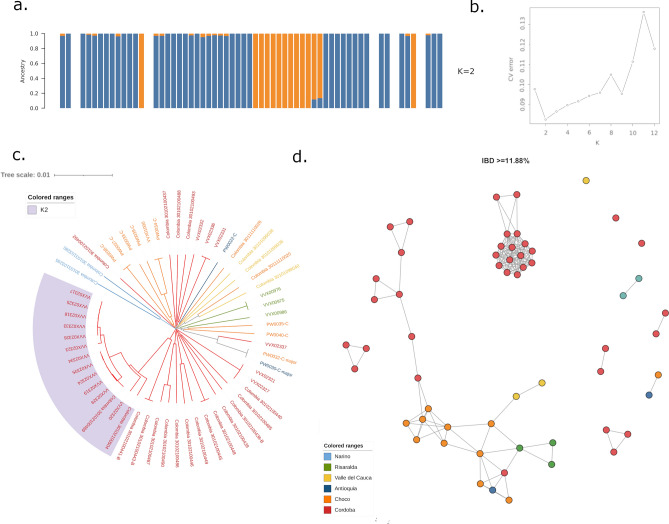
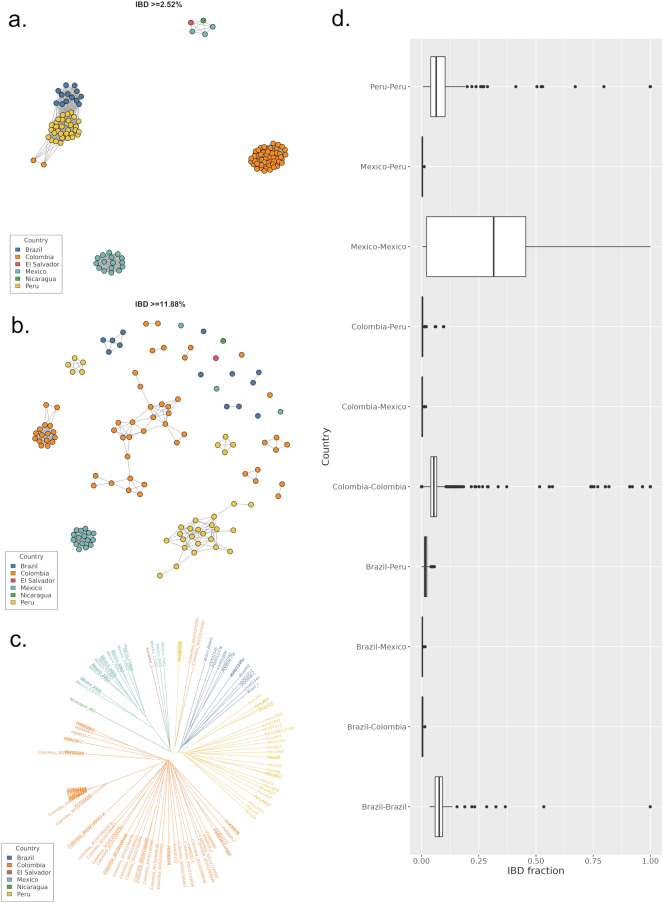
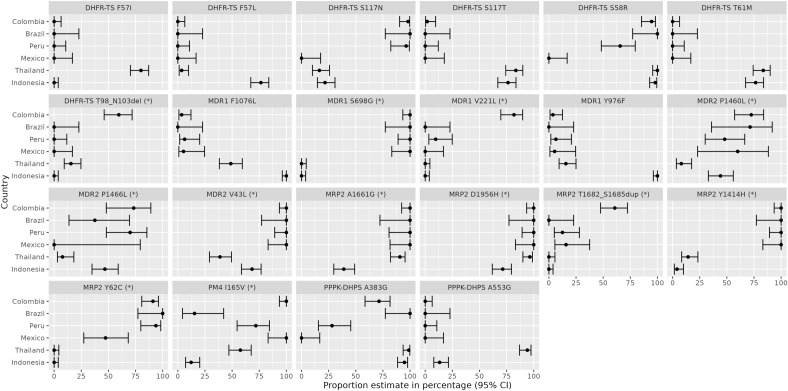
Colombia aims to eliminate malaria by 2030 but remains one of the highest burden countries in the Americas. Plasmodium vivax contributes half of all malaria cases, with its control challenged by relapsing parasitaemia, drug resistance and cross-border spread. Using 64 Colombian P. vivax genomes collected between 2013 and 2017, we explored diversity and selection in two major foci of transmission: Chocó and Córdoba. Open-access data from other countries were used for comparative assessment of drug resistance candidates and to assess cross-border spread. Across Colombia, polyclonal infections were infrequent (12%), and infection connectivity was relatively high (median IBD = 5%), consistent with low endemicity. Chocó exhibited a higher frequency of polyclonal infections (23%) than Córdoba (7%), although the difference was not significant (P = 0.300). Most Colombian infections carried double pvdhfr (95%) and single pvdhps (71%) mutants, but other drug resistance mutations were less prevalent (< 10%). There was no evidence of selection at the pvaat1 gene, whose P. falciparum orthologue has recently been implicated in chloroquine resistance. Global population comparisons identified other putative adaptations. Within the Americas, low-level connectivity was observed between Colombia and Peru, highlighting potential for cross-border spread. Our findings demonstrate the potential of molecular data to inform on infection spread and adaptation.
哥伦比亚计划到 2030 年消除疟疾,但仍是美洲疟疾负担最重的国家之一。间日疟原虫导致了一半的疟疾病例,其控制受到复发寄生虫血症、药物耐药性和跨境传播的挑战。利用 2013 年至 2017 年间收集的 64 株哥伦比亚间日疟原虫基因组,我们在两个主要传播中心:乔科和科尔多瓦探索了多样性和选择。来自其他国家的公开数据用于比较评估候选药物耐药性,并评估跨境传播。在整个哥伦比亚,多克隆感染较为罕见(12%),感染连通性相对较高(中位数 IBD=5%),与低流行度相一致。乔科的多克隆感染频率(23%)高于科尔多瓦(7%),尽管差异无统计学意义(P=0.300)。大多数哥伦比亚感染携带双 pvdhfr(95%)和单 pvdhps(71%)突变体,但其他药物耐药性突变较少(<10%)。在 pvaat1 基因没有发现选择的证据,该基因的恶性疟原虫直系同源物最近被认为与氯喹耐药有关。全球种群比较确定了其他可能的适应。在美洲内部,观察到哥伦比亚与秘鲁之间存在低水平的连通性,突显了跨境传播的潜力。我们的研究结果表明,分子数据有潜力提供感染传播和适应的信息。