School of Medicine, University of Electronic Science and Technology of China, Chengdu, 610054, China.
Department of Radiation Oncology, Radiation Oncology Key Laboratory of Sichuan Province, Sichuan Clinical Research Center for Cancer, Sichuan Cancer Center, Sichuan Cancer Hospital & Institute, Affiliated Cancer Hospital of University of Electronic Science and Technology of China, Chengdu, 610042, China.
Adv Sci (Weinh). 2023 Dec;10(36):e2302731. doi: 10.1002/advs.202302731. Epub 2023 Nov 13.
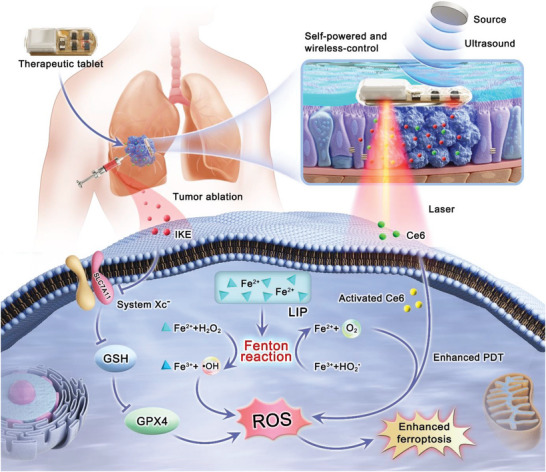
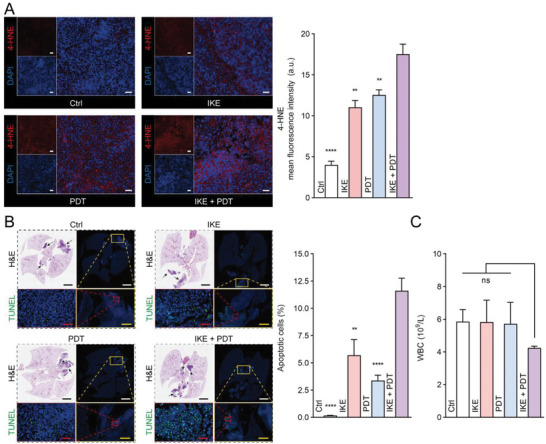
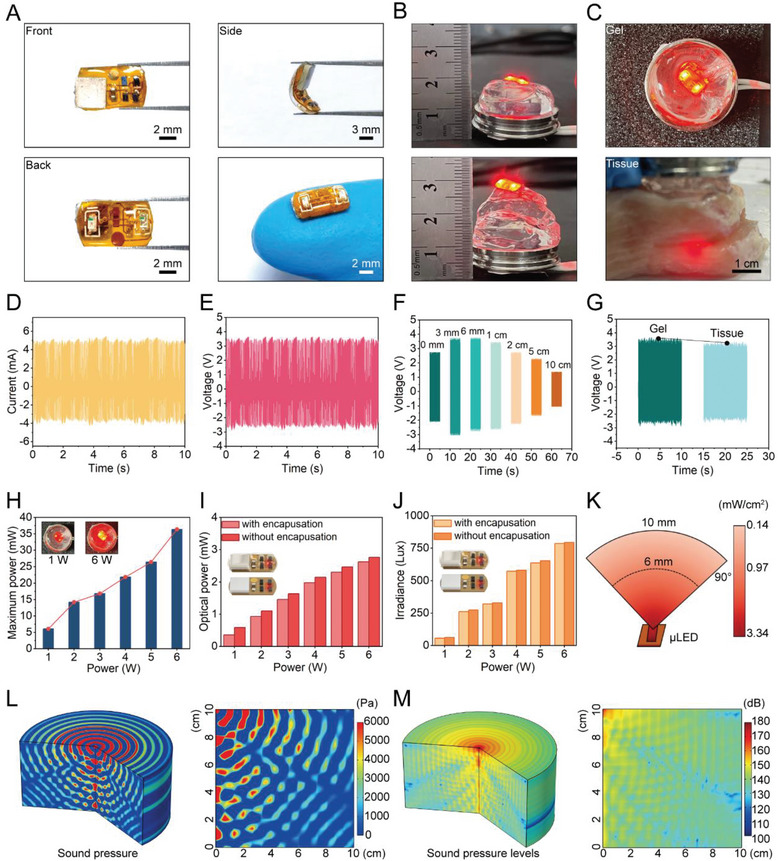
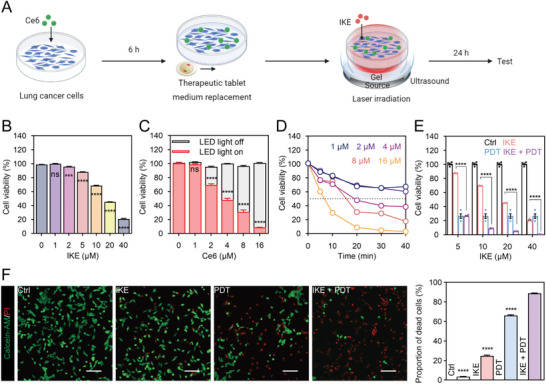
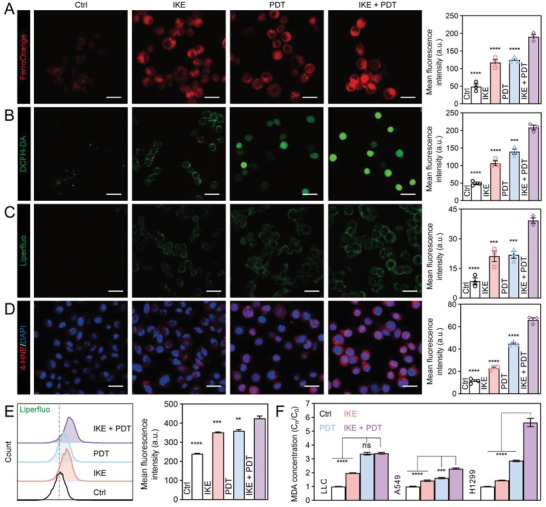
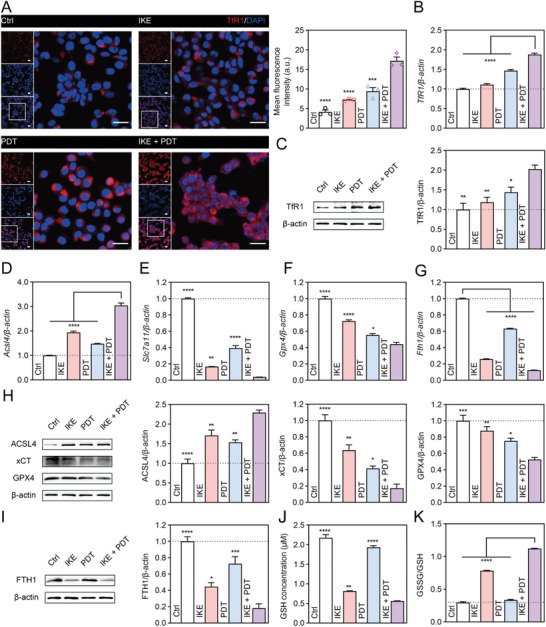
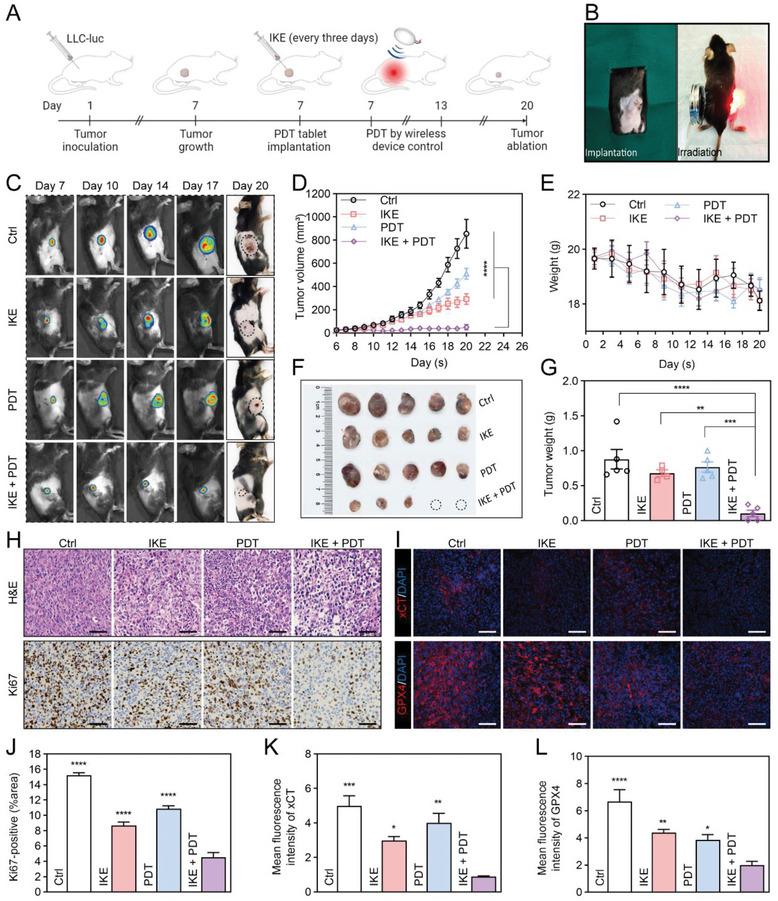
The effective and targeted treatment of resistant cancer cells presents a significant challenge. Targeting cell ferroptosis has shown remarkable efficacy against apoptosis-resistant tumors due to their elevated iron metabolism and oxidative stress levels. However, various obstacles have limited its effectiveness. To overcome these challenges and enhance ferroptosis in cancer cells, we have developed a self-powered photodynamic therapeutic tablet that integrates a ferroptosis inducer (FIN), imidazole ketone erastin (IKE). FINs augment the sensitivity of photodynamic therapy (PDT) by increasing oxidative stress and lipid peroxidation. Furthermore, they utilize the Fenton reaction to supplement oxygen, generating a greater amount of reactive oxygen species (ROS) during PDT. Additionally, PDT facilitates the release of iron ions from the labile iron pool (LIP), accelerating lipid peroxidation and inducing ferroptosis. In vitro and in vivo experiments have demonstrated a more than 85% tumor inhibition rate. This synergistic treatment approach not only addresses the limitations of inadequate penetration and tumor hypoxia associated with PDT but also reduces the required medication dosage. Its high efficiency and specificity towards targeted cells minimize adverse effects, presenting a novel approach to combat clinical resistance in cancer treatment.
有效且靶向的耐药癌细胞治疗是一个重大挑战。由于癌细胞中铁代谢和氧化应激水平升高,靶向细胞铁死亡对凋亡耐药肿瘤显示出显著疗效。然而,各种障碍限制了其有效性。为了克服这些挑战并增强癌细胞中的铁死亡,我们开发了一种自供电的光动力治疗片剂,该片剂集成了一种铁死亡诱导剂(FIN),即咪唑酮 erastin(IKE)。FIN 通过增加氧化应激和脂质过氧化来提高光动力疗法(PDT)的敏感性。此外,它们利用芬顿反应来补充氧气,在 PDT 过程中产生更多的活性氧(ROS)。此外,PDT 促进从不稳定铁池(LIP)中释放铁离子,加速脂质过氧化并诱导铁死亡。体外和体内实验均显示出超过 85%的肿瘤抑制率。这种协同治疗方法不仅解决了 PDT 相关的穿透不足和肿瘤缺氧的局限性,还降低了所需的药物剂量。它对靶向细胞的高效率和特异性最大限度地减少了不良反应,为克服癌症治疗中的临床耐药性提供了一种新方法。