Department of Pathology, Faculty of Medicine and Dentistry, Universitat de València, 46010 Valencia, Spain.
INCLIVA Biomedical Research Institute, 46010 Valencia, Spain.
Int J Mol Sci. 2023 Oct 28;24(21):15696. doi: 10.3390/ijms242115696.
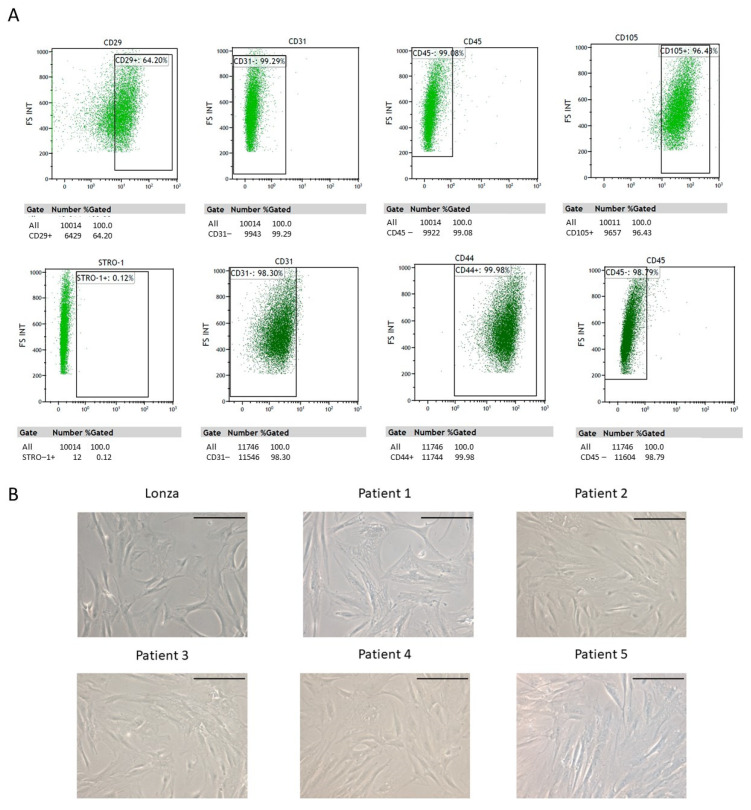
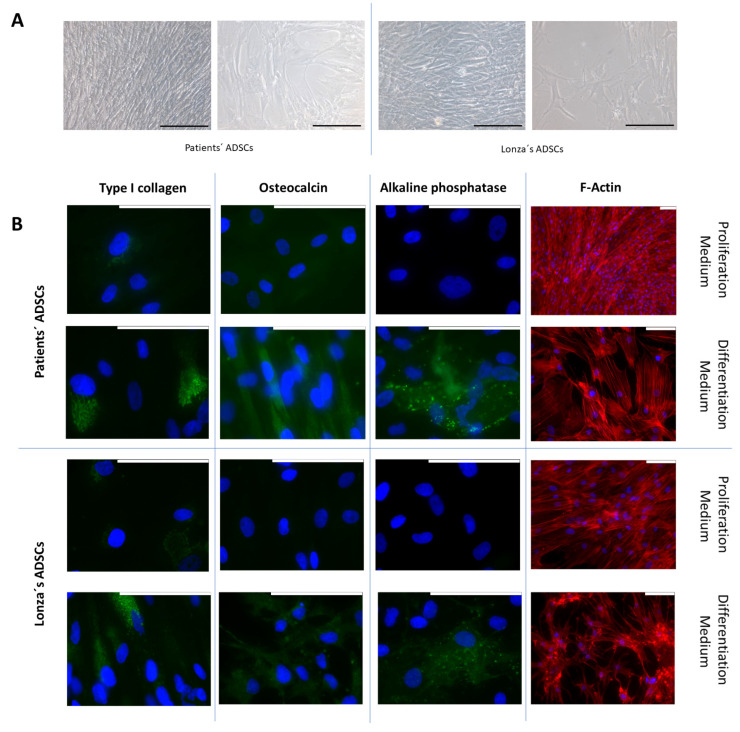
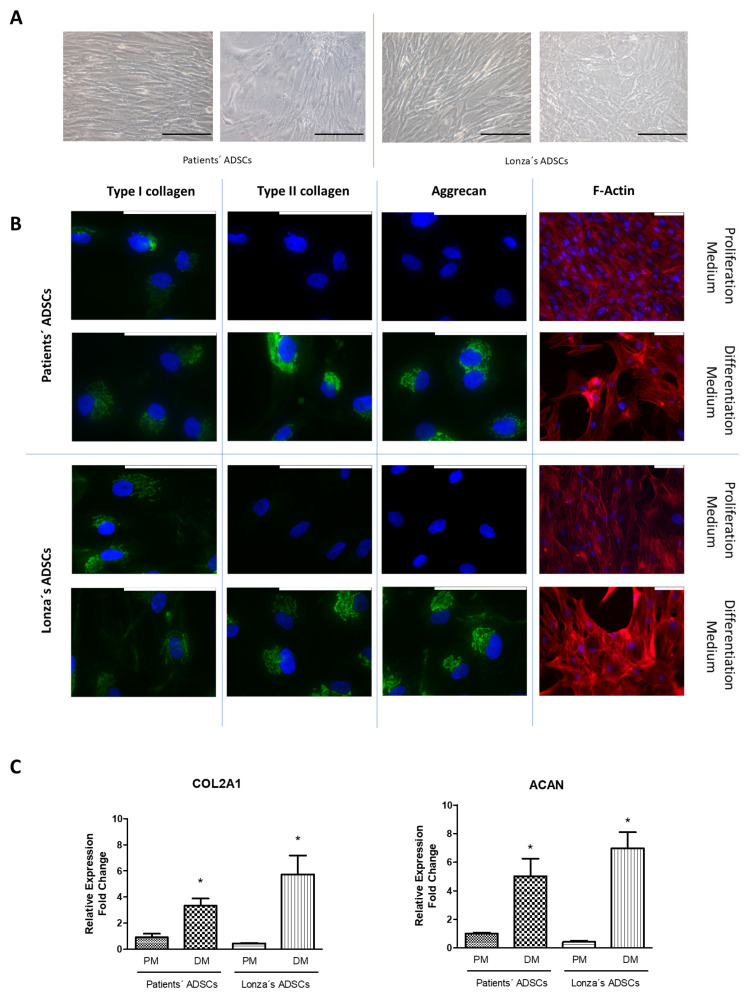
Advances in regenerative medicine have enabled the search for new solutions to current health problems in so far unexplored fields. Thus, we focused on cadaveric subcutaneous fat as a promising source of adipose-derived stem cells (ADSCs) that have potential to differentiate into different cell lines. With this aim, we isolated and characterized ADSCs from cadaveric samples with a postmortem interval ranging from 30 to 55 h and evaluated their ability to differentiate into chondrocytes or osteocytes. A commercial ADSC line was used as reference. Morphological and protein expression analyses were used to confirm the final stage of differentiation. Eight out of fourteen samples from patients were suitable to complete the whole protocol. Cadaveric ADSCs exhibited features of stem cells based upon several markers: CD29 (84.49 ± 14.07%), CD105 (94.38 ± 2.09%), and CD44 (99.77 ± 0.32%). The multiparametric assessment of differentiation confirmed the generation of stable lines of chondrocytes and osteocytes. In conclusion, we provide evidence supporting the feasibility of obtaining viable postmortem human subcutaneous fat ADSCs with potential application in tissue engineering and research fields.
再生医学的进展使得人们能够在迄今为止尚未探索的领域中寻找解决当前健康问题的新方法。因此,我们专注于尸体皮下脂肪作为一种有前途的脂肪来源,其中包含有向不同细胞系分化的潜能的脂肪来源干细胞(ADSCs)。为此,我们从死后间隔 30 至 55 小时的尸体样本中分离并鉴定 ADSC,并评估它们向软骨细胞或成骨细胞分化的能力。使用商业 ADSC 系作为参考。形态学和蛋白表达分析用于确认最终分化阶段。十四例患者样本中有八例适合完成整个方案。尸体 ADSC 基于多种标记物表现出干细胞的特征:CD29(84.49±14.07%)、CD105(94.38±2.09%)和 CD44(99.77±0.32%)。分化的多参数评估证实了稳定的软骨细胞和成骨细胞系的生成。总之,我们提供了证据支持获得具有潜在应用于组织工程和研究领域的可行性的死后人类皮下脂肪 ADSC。