Wong Ka-Kin, Hsu Hsueh-Chuan, Wu Shih-Ching, Ho Wen-Fu
Department of Chemical and Materials Engineering, National University of Kaohsiung, Kaohsiung 81148, Taiwan.
Department of Dental Technology and Materials Science, Central Taiwan University of Science and Technology, Taichung 40601, Taiwan.
Materials (Basel). 2023 Nov 5;16(21):7046. doi: 10.3390/ma16217046.
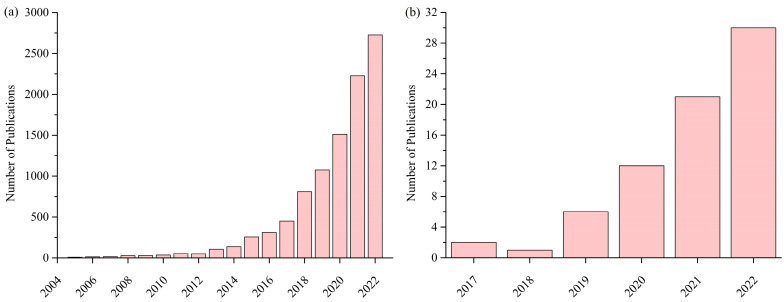
β-Ti alloys have long been investigated and applied in the biomedical field due to their exceptional mechanical properties, ductility, and corrosion resistance. Metastable β-Ti alloys have garnered interest in the realm of biomaterials owing to their notably low elastic modulus. Nevertheless, the inherent correlation between a low elastic modulus and relatively reduced strength persists, even in the case of metastable β-Ti alloys. Enhancing the strength of alloys contributes to improving their fatigue resistance, thereby preventing an implant material from failure in clinical usage. Recently, a series of biomedical high-entropy and medium-entropy alloys, composed of biocompatible elements such as Ti, Zr, Nb, Ta, and Mo, have been developed. Leveraging the contributions of the four core effects of high-entropy alloys, both biomedical high-entropy and medium-entropy alloys exhibit excellent mechanical strength, corrosion resistance, and biocompatibility, albeit accompanied by an elevated elastic modulus. To satisfy the demands of biomedical implants, researchers have sought to synthesize the strengths of high-entropy alloys and metastable β-Ti alloys, culminating in the development of metastable high-entropy/medium-entropy alloys that manifest both high strength and a low elastic modulus. Consequently, the design principles for new-generation biomedical medium-entropy alloys and conventional metastable β-Ti alloys can be converged. This review focuses on the design from β-Ti alloys to the novel metastable medium-entropy alloys for biomedical applications.
由于其优异的机械性能、延展性和耐腐蚀性,β钛合金长期以来一直在生物医学领域得到研究和应用。亚稳β钛合金因其显著较低的弹性模量而在生物材料领域引起了关注。然而,即使在亚稳β钛合金的情况下,低弹性模量与相对降低的强度之间的内在关联依然存在。提高合金的强度有助于改善其抗疲劳性,从而防止植入材料在临床使用中失效。最近,已经开发出一系列由Ti、Zr、Nb、Ta和Mo等生物相容性元素组成的生物医学高熵和中熵合金。利用高熵合金的四种核心效应的贡献,生物医学高熵和中熵合金都表现出优异的机械强度、耐腐蚀性和生物相容性,尽管伴随着弹性模量的升高。为了满足生物医学植入物的需求,研究人员试图综合高熵合金和亚稳β钛合金的优势,最终开发出兼具高强度和低弹性模量的亚稳高熵/中熵合金。因此,新一代生物医学中熵合金和传统亚稳β钛合金的设计原则可以趋同。本综述重点关注从β钛合金到用于生物医学应用的新型亚稳中熵合金的设计。