• 文献检索
  • 文档翻译
  • 深度研究
  • 学术资讯
  • Suppr Zotero 插件Zotero 插件
  • 邀请有礼
  • 套餐&价格
  • 历史记录
应用&插件
Suppr Zotero 插件Zotero 插件浏览器插件Mac 客户端Windows 客户端微信小程序
定价
高级版会员购买积分包购买API积分包
服务
文献检索文档翻译深度研究API 文档MCP 服务
关于我们
关于 Suppr公司介绍联系我们用户协议隐私条款
关注我们

Suppr 超能文献

核心技术专利:CN118964589B侵权必究
粤ICP备2023148730 号-1Suppr @ 2026

文献检索

告别复杂PubMed语法,用中文像聊天一样搜索,搜遍4000万医学文献。AI智能推荐,让科研检索更轻松。

立即免费搜索

文件翻译

保留排版,准确专业,支持PDF/Word/PPT等文件格式,支持 12+语言互译。

免费翻译文档

深度研究

AI帮你快速写综述,25分钟生成高质量综述,智能提取关键信息,辅助科研写作。

立即免费体验

趋近-回避强化学习作为焦虑相关回避的转化和计算模型。

Approach-avoidance reinforcement learning as a translational and computational model of anxiety-related avoidance.

机构信息

Institute of Cognitive Neuroscience, University College London, London, United Kingdom.

Research Department of Clinical, Educational and Health Psychology, University College London, London, United Kingdom.

出版信息

Elife. 2023 Nov 14;12:RP87720. doi: 10.7554/eLife.87720.

DOI:10.7554/eLife.87720
PMID:37963085
原文链接:https://pmc.ncbi.nlm.nih.gov/articles/PMC10645421/
Abstract

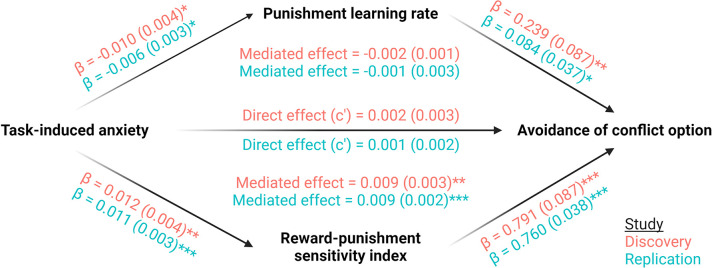
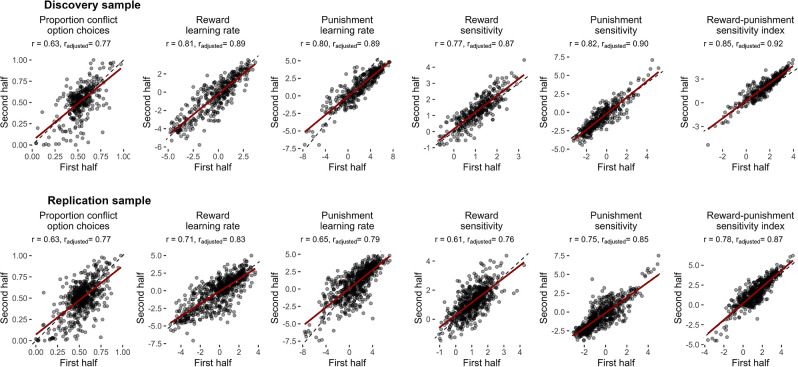
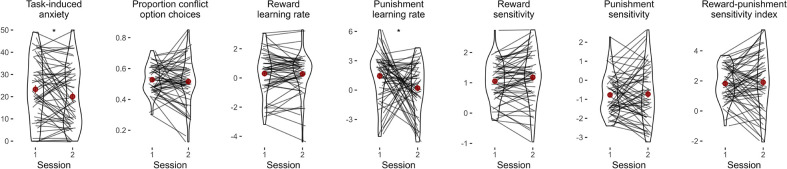
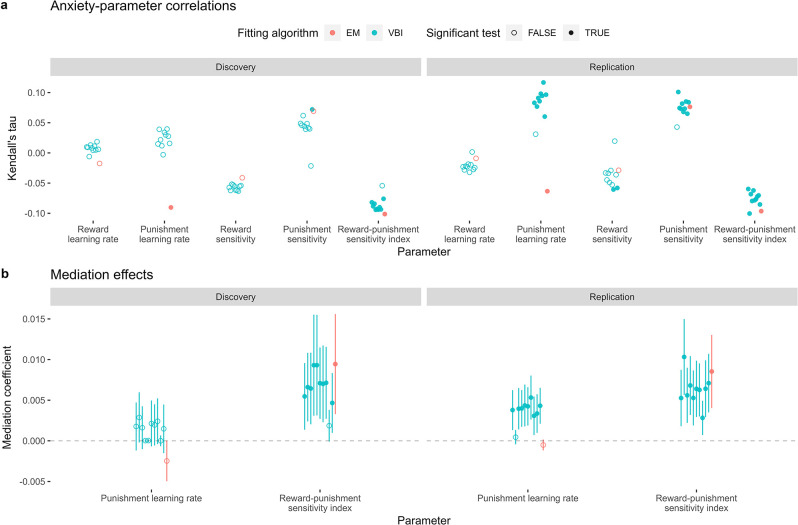
Although avoidance is a prevalent feature of anxiety-related psychopathology, differences in the measurement of avoidance between humans and non-human animals hinder our progress in its theoretical understanding and treatment. To address this, we developed a novel translational measure of anxiety-related avoidance in the form of an approach-avoidance reinforcement learning task, by adapting a paradigm from the non-human animal literature to study the same cognitive processes in human participants. We used computational modelling to probe the putative cognitive mechanisms underlying approach-avoidance behaviour in this task and investigated how they relate to subjective task-induced anxiety. In a large online study (n = 372), participants who experienced greater task-induced anxiety avoided choices associated with punishment, even when this resulted in lower overall reward. Computational modelling revealed that this effect was explained by greater individual sensitivities to punishment relative to rewards. We replicated these findings in an independent sample (n = 627) and we also found fair-to-excellent reliability of measures of task performance in a sub-sample retested 1 week later (n = 57). Our findings demonstrate the potential of approach-avoidance reinforcement learning tasks as translational and computational models of anxiety-related avoidance. Future studies should assess the predictive validity of this approach in clinical samples and experimental manipulations of anxiety.

摘要

虽然回避是与焦虑相关的精神病理学的一个普遍特征,但人类和非人类动物之间回避测量的差异阻碍了我们对其理论理解和治疗的进展。为了解决这个问题,我们开发了一种新的焦虑相关回避的翻译测量方法,以一种接近回避强化学习任务的形式,通过从非人类动物文献中改编一个范例来研究人类参与者中相同的认知过程。我们使用计算建模来探测该任务中接近回避行为的潜在认知机制,并研究它们与主观任务引起的焦虑之间的关系。在一项大型在线研究(n=372)中,与惩罚相关的回避选择与经历更大的任务引起的焦虑有关,即使这导致了更低的总体奖励。计算建模表明,这种效应是由相对于奖励而言更大的个体对惩罚的敏感性来解释的。我们在一个独立的样本(n=627)中复制了这些发现,并且我们还发现了在一周后重新测试的子样本中任务表现的测量值具有良好到优秀的可靠性(n=57)。我们的研究结果表明,接近回避强化学习任务具有作为焦虑相关回避的转化和计算模型的潜力。未来的研究应该评估这种方法在临床样本和焦虑的实验操作中的预测有效性。
https://cdn.ncbi.nlm.nih.gov/pmc/blobs/bb31/10645421/4dc77e014889/elife-87720-app11-fig1.jpg
https://cdn.ncbi.nlm.nih.gov/pmc/blobs/bb31/10645421/16ca61b7ab97/elife-87720-fig1.jpg
https://cdn.ncbi.nlm.nih.gov/pmc/blobs/bb31/10645421/c2752c6cf946/elife-87720-fig2.jpg
https://cdn.ncbi.nlm.nih.gov/pmc/blobs/bb31/10645421/448e1b5d29e3/elife-87720-fig3.jpg
https://cdn.ncbi.nlm.nih.gov/pmc/blobs/bb31/10645421/f9439c4a2036/elife-87720-fig4.jpg
https://cdn.ncbi.nlm.nih.gov/pmc/blobs/bb31/10645421/fbadc817a0cd/elife-87720-app2-fig1.jpg
https://cdn.ncbi.nlm.nih.gov/pmc/blobs/bb31/10645421/aaca9d75563d/elife-87720-app2-fig2.jpg
https://cdn.ncbi.nlm.nih.gov/pmc/blobs/bb31/10645421/b4e4ced6c9b7/elife-87720-app3-fig1.jpg
https://cdn.ncbi.nlm.nih.gov/pmc/blobs/bb31/10645421/08d9b0b6ce8a/elife-87720-app4-fig1.jpg
https://cdn.ncbi.nlm.nih.gov/pmc/blobs/bb31/10645421/88be1007d883/elife-87720-app5-fig1.jpg
https://cdn.ncbi.nlm.nih.gov/pmc/blobs/bb31/10645421/d64f9c34c6bb/elife-87720-app6-fig1.jpg
https://cdn.ncbi.nlm.nih.gov/pmc/blobs/bb31/10645421/f463ade9c61c/elife-87720-app7-fig1.jpg
https://cdn.ncbi.nlm.nih.gov/pmc/blobs/bb31/10645421/dae3e697c425/elife-87720-app8-fig1.jpg
https://cdn.ncbi.nlm.nih.gov/pmc/blobs/bb31/10645421/86cb9555dfc8/elife-87720-app8-fig2.jpg
https://cdn.ncbi.nlm.nih.gov/pmc/blobs/bb31/10645421/3a241b8cc7f5/elife-87720-app9-fig1.jpg
https://cdn.ncbi.nlm.nih.gov/pmc/blobs/bb31/10645421/9d962aacb7ba/elife-87720-app9-fig2.jpg
https://cdn.ncbi.nlm.nih.gov/pmc/blobs/bb31/10645421/b4320ffc7ed9/elife-87720-app9-fig3.jpg
https://cdn.ncbi.nlm.nih.gov/pmc/blobs/bb31/10645421/0d769789091b/elife-87720-app9-fig4.jpg
https://cdn.ncbi.nlm.nih.gov/pmc/blobs/bb31/10645421/4cafcaa0e955/elife-87720-app9-fig5.jpg
https://cdn.ncbi.nlm.nih.gov/pmc/blobs/bb31/10645421/4dc77e014889/elife-87720-app11-fig1.jpg
https://cdn.ncbi.nlm.nih.gov/pmc/blobs/bb31/10645421/16ca61b7ab97/elife-87720-fig1.jpg
https://cdn.ncbi.nlm.nih.gov/pmc/blobs/bb31/10645421/c2752c6cf946/elife-87720-fig2.jpg
https://cdn.ncbi.nlm.nih.gov/pmc/blobs/bb31/10645421/448e1b5d29e3/elife-87720-fig3.jpg
https://cdn.ncbi.nlm.nih.gov/pmc/blobs/bb31/10645421/f9439c4a2036/elife-87720-fig4.jpg
https://cdn.ncbi.nlm.nih.gov/pmc/blobs/bb31/10645421/fbadc817a0cd/elife-87720-app2-fig1.jpg
https://cdn.ncbi.nlm.nih.gov/pmc/blobs/bb31/10645421/aaca9d75563d/elife-87720-app2-fig2.jpg
https://cdn.ncbi.nlm.nih.gov/pmc/blobs/bb31/10645421/b4e4ced6c9b7/elife-87720-app3-fig1.jpg
https://cdn.ncbi.nlm.nih.gov/pmc/blobs/bb31/10645421/08d9b0b6ce8a/elife-87720-app4-fig1.jpg
https://cdn.ncbi.nlm.nih.gov/pmc/blobs/bb31/10645421/88be1007d883/elife-87720-app5-fig1.jpg
https://cdn.ncbi.nlm.nih.gov/pmc/blobs/bb31/10645421/d64f9c34c6bb/elife-87720-app6-fig1.jpg
https://cdn.ncbi.nlm.nih.gov/pmc/blobs/bb31/10645421/f463ade9c61c/elife-87720-app7-fig1.jpg
https://cdn.ncbi.nlm.nih.gov/pmc/blobs/bb31/10645421/dae3e697c425/elife-87720-app8-fig1.jpg
https://cdn.ncbi.nlm.nih.gov/pmc/blobs/bb31/10645421/86cb9555dfc8/elife-87720-app8-fig2.jpg
https://cdn.ncbi.nlm.nih.gov/pmc/blobs/bb31/10645421/3a241b8cc7f5/elife-87720-app9-fig1.jpg
https://cdn.ncbi.nlm.nih.gov/pmc/blobs/bb31/10645421/9d962aacb7ba/elife-87720-app9-fig2.jpg
https://cdn.ncbi.nlm.nih.gov/pmc/blobs/bb31/10645421/b4320ffc7ed9/elife-87720-app9-fig3.jpg
https://cdn.ncbi.nlm.nih.gov/pmc/blobs/bb31/10645421/0d769789091b/elife-87720-app9-fig4.jpg
https://cdn.ncbi.nlm.nih.gov/pmc/blobs/bb31/10645421/4cafcaa0e955/elife-87720-app9-fig5.jpg
https://cdn.ncbi.nlm.nih.gov/pmc/blobs/bb31/10645421/4dc77e014889/elife-87720-app11-fig1.jpg

相似文献

1
Approach-avoidance reinforcement learning as a translational and computational model of anxiety-related avoidance.趋近-回避强化学习作为焦虑相关回避的转化和计算模型。
Elife. 2023 Nov 14;12:RP87720. doi: 10.7554/eLife.87720.
2
Testing the role of reward and punishment sensitivity in avoidance behavior: a computational modeling approach.测试奖惩敏感性在回避行为中的作用:一种计算建模方法。
Behav Brain Res. 2015 Apr 15;283:121-38. doi: 10.1016/j.bbr.2015.01.033. Epub 2015 Jan 29.
3
Dissociable feedback valence effects on frontal midline theta during reward gain versus threat avoidance learning.在奖励获得与威胁规避学习过程中,可分离的反馈效价对额中线θ波的影响。
Psychophysiology. 2023 May;60(5):e14235. doi: 10.1111/psyp.14235. Epub 2022 Dec 18.
4
Humans perseverate on punishment avoidance goals in multigoal reinforcement learning.在多目标强化学习中,人类执着于避免惩罚的目标。
Elife. 2022 Feb 24;11:e74402. doi: 10.7554/eLife.74402.
5
Hemispheric Asymmetries in Striatal Reward Responses Relate to Approach-Avoidance Learning and Encoding of Positive-Negative Prediction Errors in Dopaminergic Midbrain Regions.纹状体奖赏反应中的半球不对称与多巴胺能中脑区域的趋近-回避学习及正负预测误差的编码有关。
J Neurosci. 2015 Oct 28;35(43):14491-500. doi: 10.1523/JNEUROSCI.1859-15.2015.
6
A reverse translational approach to quantify approach-avoidance conflict in humans.一种用于量化人类趋近-回避冲突的反向转化方法。
Behav Brain Res. 2011 Dec 1;225(2):455-63. doi: 10.1016/j.bbr.2011.08.003. Epub 2011 Aug 6.
7
Reward and punishment learning deficits among bipolar disorder subtypes.双相障碍亚型的奖惩学习缺陷。
J Affect Disord. 2023 Nov 1;340:694-702. doi: 10.1016/j.jad.2023.08.075. Epub 2023 Aug 15.
8
Animal to human translational paradigms relevant for approach avoidance conflict decision making.与趋近-回避冲突决策相关的动物到人类的转化范式。
Behav Res Ther. 2017 Sep;96:14-29. doi: 10.1016/j.brat.2017.04.010. Epub 2017 Apr 24.
9
The Neural Correlates of Individual Differences in Reinforcement Learning during Pain Avoidance and Reward Seeking.在疼痛回避和奖励寻求过程中强化学习个体差异的神经关联。
eNeuro. 2024 Feb 27;11(2). doi: 10.1523/ENEURO.0437-23.2024. Print 2024 Feb.
10
Linking Individual Learning Styles to Approach-Avoidance Motivational Traits and Computational Aspects of Reinforcement Learning.将个体学习风格与趋避动机特质及强化学习的计算方面联系起来。
PLoS One. 2016 Nov 16;11(11):e0166675. doi: 10.1371/journal.pone.0166675. eCollection 2016.

引用本文的文献

1
How working memory and reinforcement learning interact when avoiding punishment and pursuing reward concurrently.当同时避免惩罚和追求奖励时,工作记忆与强化学习是如何相互作用的。
J Exp Psychol Gen. 2025 Sep 1. doi: 10.1037/xge0001817.
2
Trait anxiety is associated with reduced reward-related replay at rest.特质焦虑与静息时与奖励相关的重演减少有关。
Nat Commun. 2025 Aug 26;16(1):7975. doi: 10.1038/s41467-025-63281-w.
3
Overcoming Automatic Behavioral Tendencies in Approach-Avoidance Conflict Decisions.在趋避冲突决策中克服自动行为倾向

本文引用的文献

1
Quantifying aberrant approach-avoidance conflict in psychopathology: A review of computational approaches.量化精神病理学中的异常趋近-回避冲突:计算方法研究综述。
Neurosci Biobehav Rev. 2023 Apr;147:105103. doi: 10.1016/j.neubiorev.2023.105103. Epub 2023 Feb 17.
2
Identifying Transdiagnostic Mechanisms in Mental Health Using Computational Factor Modeling.使用计算因子建模识别心理健康中的跨诊断机制。
Biol Psychiatry. 2023 Apr 15;93(8):690-703. doi: 10.1016/j.biopsych.2022.09.034. Epub 2022 Oct 10.
3
The interpretation of computational model parameters depends on the context.
Psychophysiology. 2025 Jul;62(7):e70101. doi: 10.1111/psyp.70101.
4
A novel approach to anxiety level prediction using small sets of judgment and survey variables.一种使用少量判断和调查变量预测焦虑水平的新方法。
Npj Ment Health Res. 2024 Jun 18;3(1):29. doi: 10.1038/s44184-024-00074-x.
5
Does the reliability of computational models truly improve with hierarchical modeling? Some recommendations and considerations for the assessment of model parameter reliability : Reliability of computational model parameters.计算模型的可靠性真的会通过分层建模得到提高吗?关于评估模型参数可靠性的一些建议和考量:计算模型参数的可靠性。
Psychon Bull Rev. 2024 Dec;31(6):2465-2486. doi: 10.3758/s13423-024-02490-8. Epub 2024 May 8.
计算模型参数的解释取决于上下文。
Elife. 2022 Nov 4;11:e75474. doi: 10.7554/eLife.75474.
4
Reinforcement Learning in Patients With Mood and Anxiety Disorders vs Control Individuals: A Systematic Review and Meta-analysis.心境和焦虑障碍患者与对照个体的强化学习:系统评价和荟萃分析。
JAMA Psychiatry. 2022 Apr 1;79(4):313-322. doi: 10.1001/jamapsychiatry.2022.0051.
5
Humans perseverate on punishment avoidance goals in multigoal reinforcement learning.在多目标强化学习中,人类执着于避免惩罚的目标。
Elife. 2022 Feb 24;11:e74402. doi: 10.7554/eLife.74402.
6
Sufficient reliability of the behavioral and computational readouts of a probabilistic reversal learning task.概率反转学习任务的行为和计算读数具有足够的可靠性。
Behav Res Methods. 2022 Dec;54(6):2993-3014. doi: 10.3758/s13428-021-01739-7. Epub 2022 Feb 15.
7
Computational validity: using computation to translate behaviours across species.计算有效性:利用计算在物种间转换行为。
Philos Trans R Soc Lond B Biol Sci. 2022 Feb 14;377(1844):20200525. doi: 10.1098/rstb.2020.0525. Epub 2021 Dec 27.
8
Cross-species anxiety tests in psychiatry: pitfalls and promises.跨物种焦虑测试在精神病学中的应用:陷阱与前景。
Mol Psychiatry. 2022 Jan;27(1):154-163. doi: 10.1038/s41380-021-01299-4. Epub 2021 Sep 24.
9
Reliability of web-based affective auditory stimulus presentation.基于网络的情感听觉刺激呈现的可靠性。
Behav Res Methods. 2022 Feb;54(1):378-392. doi: 10.3758/s13428-021-01643-0. Epub 2021 Jul 8.
10
Punishment insensitivity in humans is due to failures in instrumental contingency learning.人类的惩罚不敏感性是由于工具性关联学习的失败。
Elife. 2021 Jun 4;10:e69594. doi: 10.7554/eLife.69594.