Chen Lin, Wang Yong, Huang Juan, Hu Binbin, Huang Wei
Department of Neurology, The Second Affiliated Hospital of Nanchang University, Nanchang, China.
Department of Oncology, The First Affiliated Hospital of Nanchang University, Nanchang, China.
Front Genet. 2022 Jul 22;13:914645. doi: 10.3389/fgene.2022.914645. eCollection 2022.
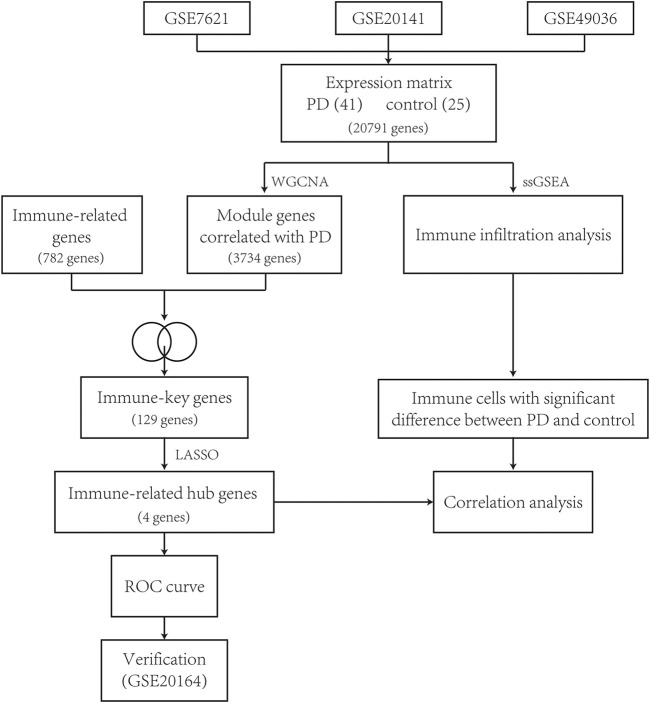
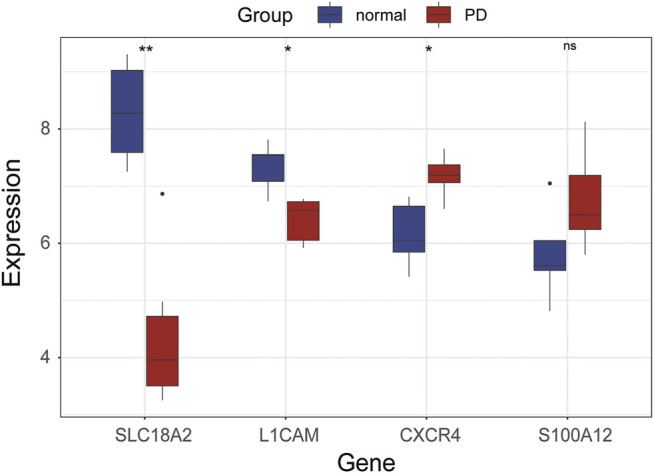
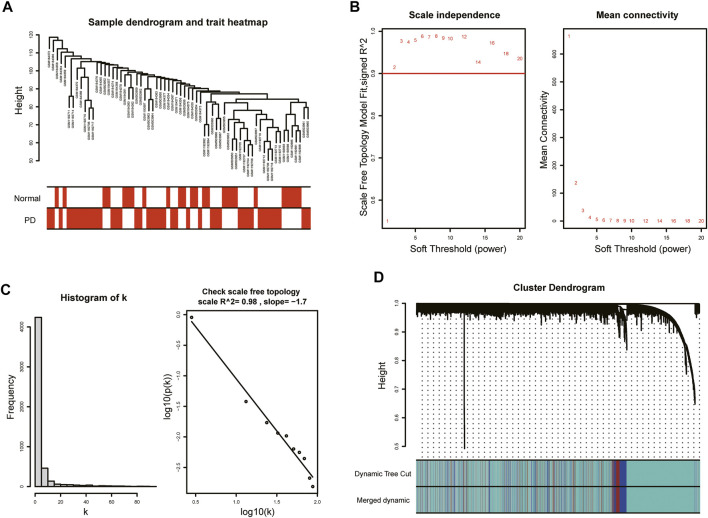
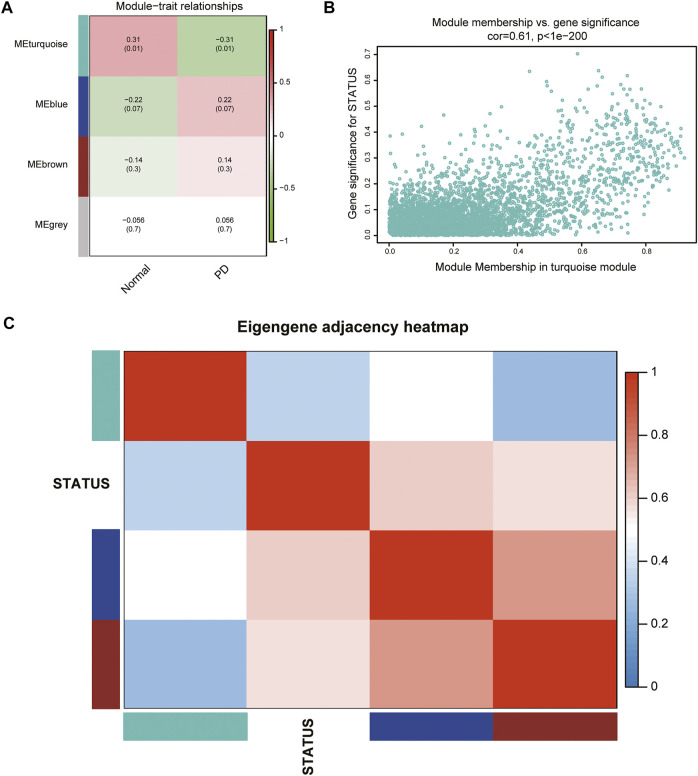
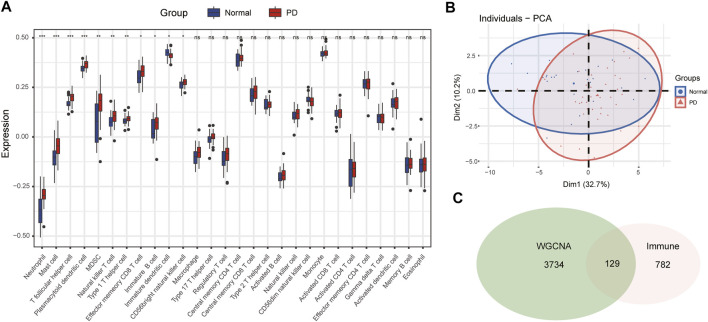
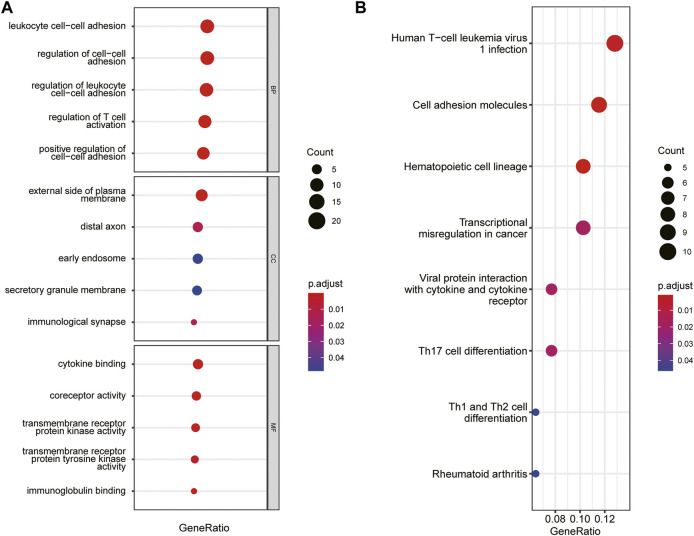
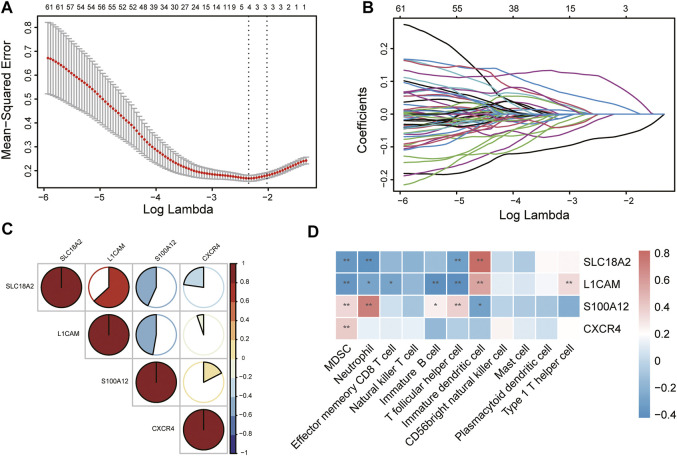
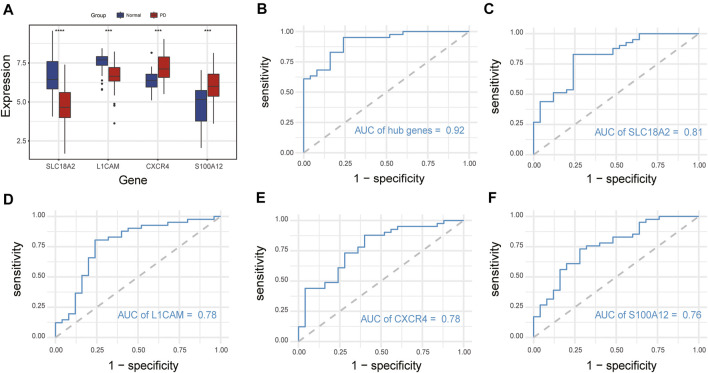
Parkinson's disease (PD) is a common, age-related, and progressive neurodegenerative disease. Growing evidence indicates that immune dysfunction plays an essential role in the pathogenic process of PD. The objective of this study was to explore potential immune-related hub genes and immune infiltration patterns of PD. The microarray expression data of human postmortem substantia nigra samples were downloaded from GSE7621, GSE20141, and GSE49036. Key module genes were screened weighted gene coexpression network analysis, and immune-related genes were intersected to obtain immune-key genes. Functional enrichment analysis was performed on immune-key genes of PD. In addition to, immune infiltration analysis was applied by a single-sample gene set enrichment analysis algorithm to detect differential immune cell types in the substantia nigra between PD samples and control samples. Least absolute shrinkage and selection operator analysis was performed to further identify immune-related hub genes for PD. Receiver operating characteristic curve analysis of the immune-related hub genes was used to differentiate PD patients from healthy controls. Correlations between immune-related hub genes and differential immune cell types were assessed. Our findings identified four hub genes (, , , and ) and seven immune cell types (neutrophils, T follicular helper cells, myeloid-derived suppressor cells, type 1 helper cells, immature B cells, immature dendritic cells, and CD56 bright natural killer cells). The area under the curve (AUC) value of the four-gene-combined model was 0.92. The AUC values of each immune-related hub gene (, , , and ) were 0.81, 0.78, 0.78, and 0.76, respectively. In conclusion, , , , and were identified as being associated with the pathogenesis of PD and should be further researched.
帕金森病(PD)是一种常见的、与年龄相关的进行性神经退行性疾病。越来越多的证据表明,免疫功能障碍在PD的发病过程中起着至关重要的作用。本研究的目的是探索PD潜在的免疫相关枢纽基因和免疫浸润模式。从GSE7621、GSE20141和GSE49036下载人类死后黑质样本的微阵列表达数据。通过加权基因共表达网络分析筛选关键模块基因,并与免疫相关基因进行交集分析以获得免疫关键基因。对PD的免疫关键基因进行功能富集分析。此外,采用单样本基因集富集分析算法进行免疫浸润分析,以检测PD样本和对照样本之间黑质中差异免疫细胞类型。进行最小绝对收缩和选择算子分析以进一步鉴定PD的免疫相关枢纽基因。使用免疫相关枢纽基因的受试者工作特征曲线分析来区分PD患者和健康对照。评估免疫相关枢纽基因与差异免疫细胞类型之间的相关性。我们的研究结果确定了四个枢纽基因(、、和)和七种免疫细胞类型(中性粒细胞、T滤泡辅助细胞、髓系来源的抑制细胞、1型辅助细胞、未成熟B细胞、未成熟树突状细胞和CD56明亮自然杀伤细胞)。四基因组合模型的曲线下面积(AUC)值为0.92。每个免疫相关枢纽基因(、、和)的AUC值分别为0.81、0.78、0.78和0.76。总之,、、和被确定与PD的发病机制相关,应进一步研究。