Developmental Biology, Institute of Biology I, Faculty of Biology, University of Freiburg, 79104, Freiburg, Germany.
Max Planck Institute for Medical Research, 69120, Heidelberg, Germany.
Nat Commun. 2023 Nov 23;14(1):7592. doi: 10.1038/s41467-023-43255-6.
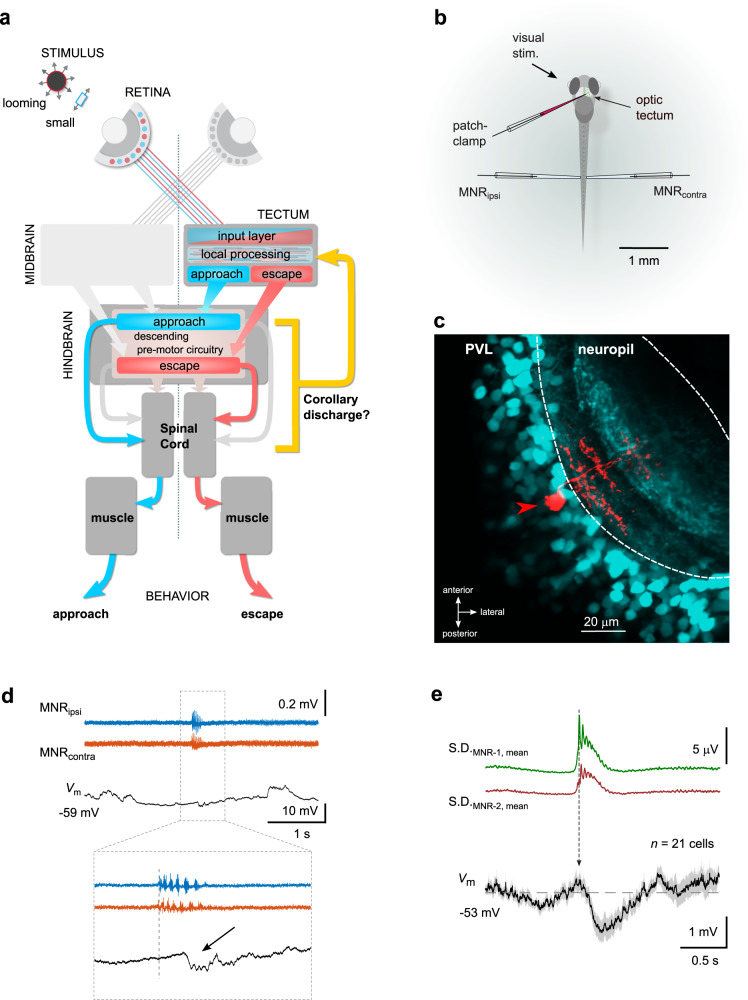
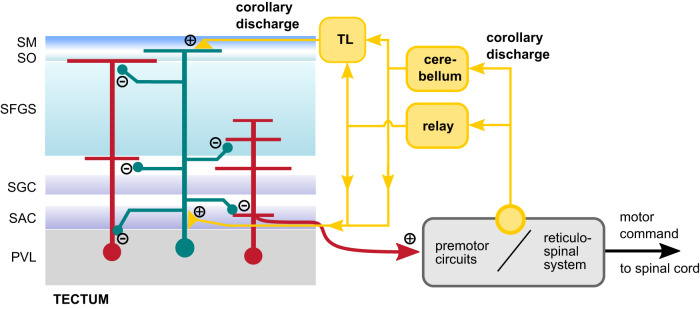
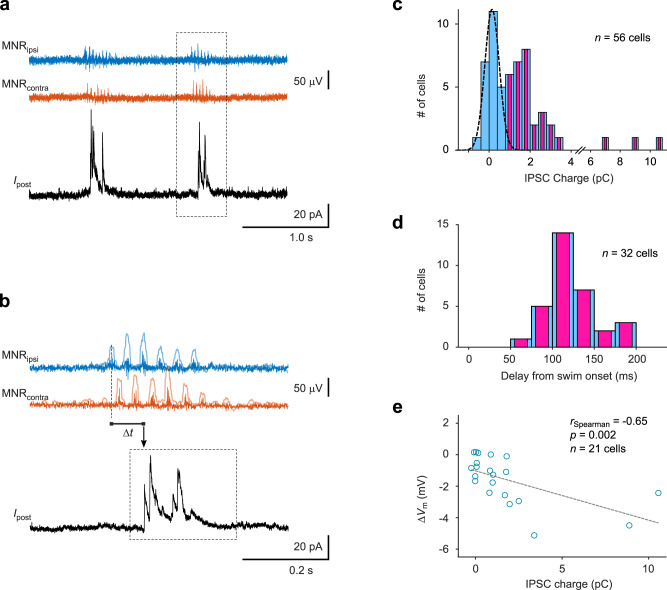
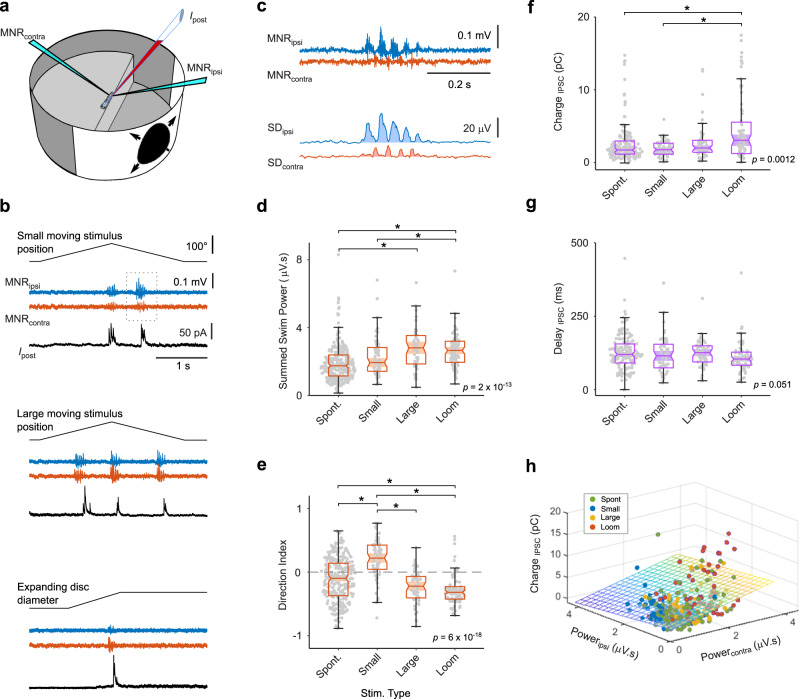
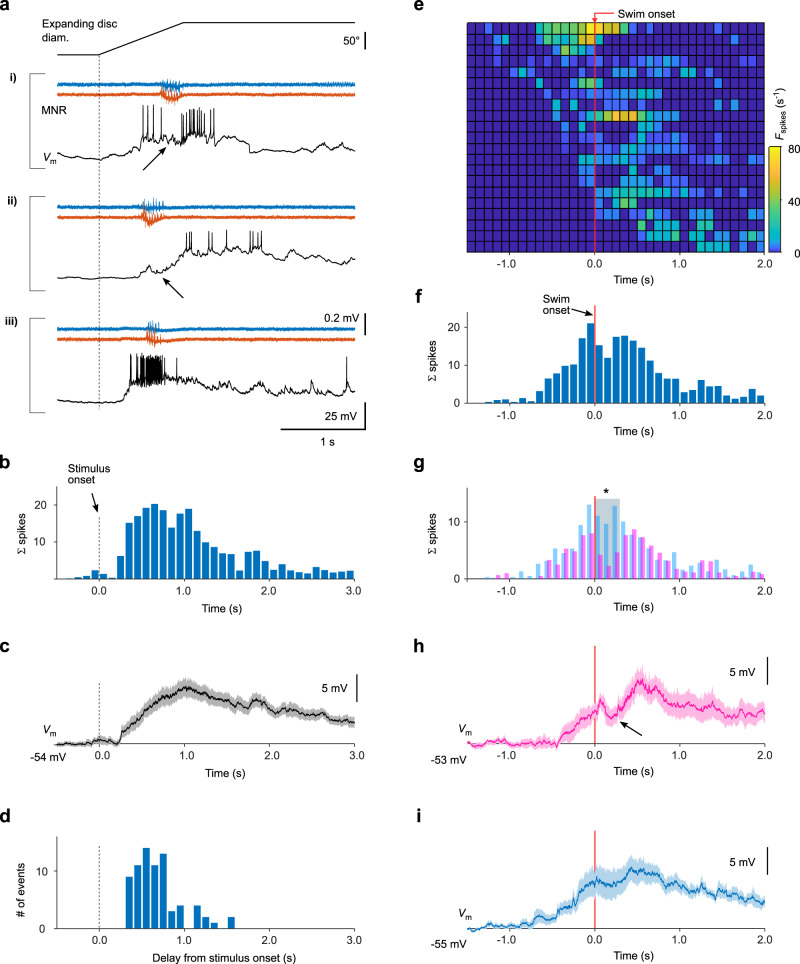
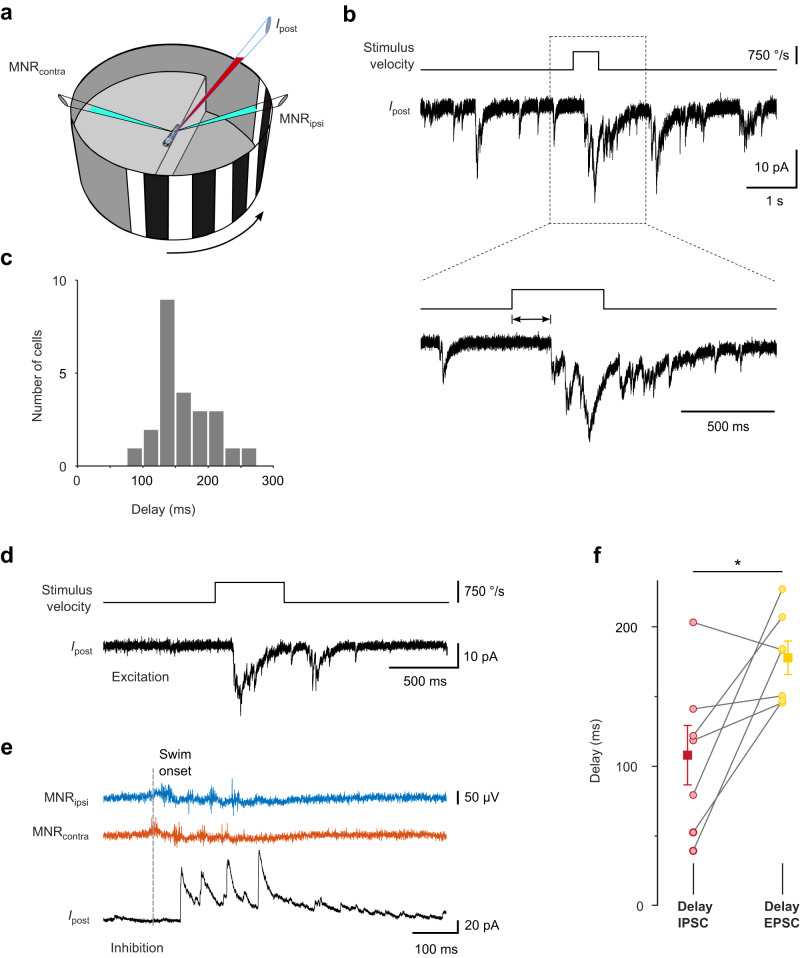
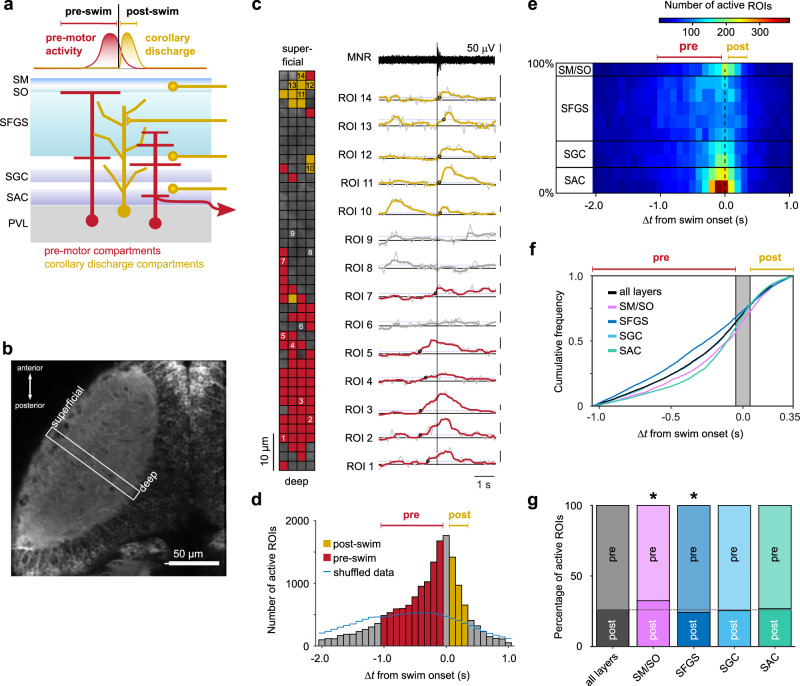
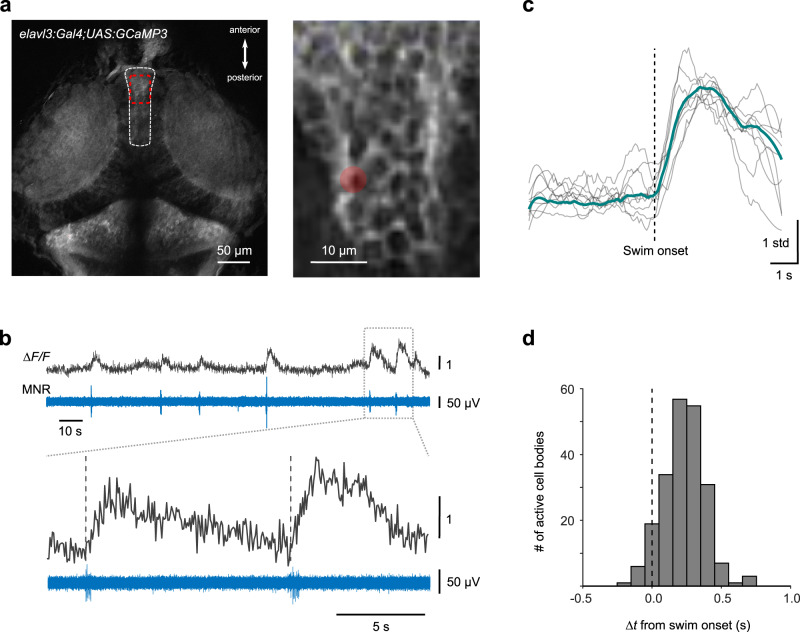
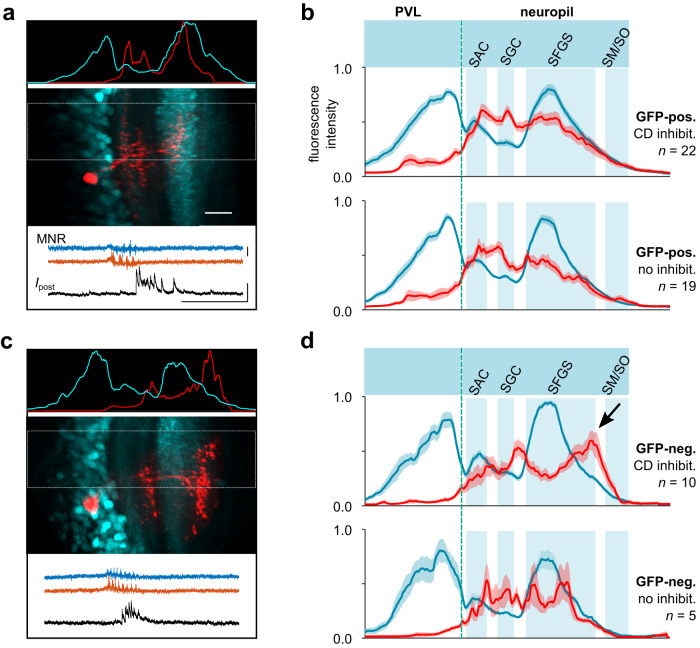
In motor control, the brain not only sends motor commands to the periphery, but also generates concurrent internal signals known as corollary discharge (CD) that influence sensory information processing around the time of movement. CD signals are important for identifying sensory input arising from self-motion and to compensate for it, but the underlying mechanisms remain unclear. Using whole-cell patch clamp recordings from neurons in the zebrafish optic tectum, we discovered an inhibitory synaptic signal, temporally locked to spontaneous and visually driven locomotion. This motor-related inhibition was appropriately timed to counteract visually driven excitatory input arising from the fish's own motion, and transiently suppressed tectal spiking activity. High-resolution calcium imaging revealed localized motor-related signals in the tectal neuropil and the upstream torus longitudinalis, suggesting that CD enters the tectum via this pathway. Together, our results show how visual processing is suppressed during self-motion by motor-related phasic inhibition. This may help explain perceptual saccadic suppression observed in many species.
在运动控制中,大脑不仅向周围发送运动指令,还会产生称为伴随放电(CD)的并发内部信号,这些信号会影响运动时周围的感觉信息处理。CD 信号对于识别源自自身运动的感觉输入以及进行补偿非常重要,但潜在的机制仍不清楚。通过对斑马鱼视顶盖神经元进行全细胞膜片钳记录,我们发现了一种与自发性和视觉驱动运动同步的抑制性突触信号。这种与运动相关的抑制作用适时抵消了源自鱼类自身运动的视觉驱动兴奋输入,并短暂抑制了顶盖神经元的放电活动。高分辨率钙成像揭示了顶盖神经毡和上游的纵长体中的局部运动相关信号,表明 CD 通过这条途径进入顶盖。总之,我们的研究结果表明,运动相关的相位抑制如何在自身运动期间抑制视觉处理。这可能有助于解释在许多物种中观察到的知觉扫视抑制。