Department of Developmental Cell Biology, Key Laboratory of Medical Cell Biology, Ministry of Education, China Medical University, Shenyang, Liaoning, 110122, P. R. China.
Department of Thoracic Surgery, Shengjing Hospital of China Medical University, Shenyang, Liaoning, 110004, P. R. China.
J Exp Clin Cancer Res. 2023 Nov 23;42(1):315. doi: 10.1186/s13046-023-02877-w.
Image-based screening improves the detection of early-stage lung adenocarcinoma (LUAD)but also highlights the issue of high false-positive diagnoses, which puts patients at a risk of unnecessary over-treatment. Therefore, more precise discrimination criteria are required to ensure that patients with early-stage LUAD receive appropriate treatments.
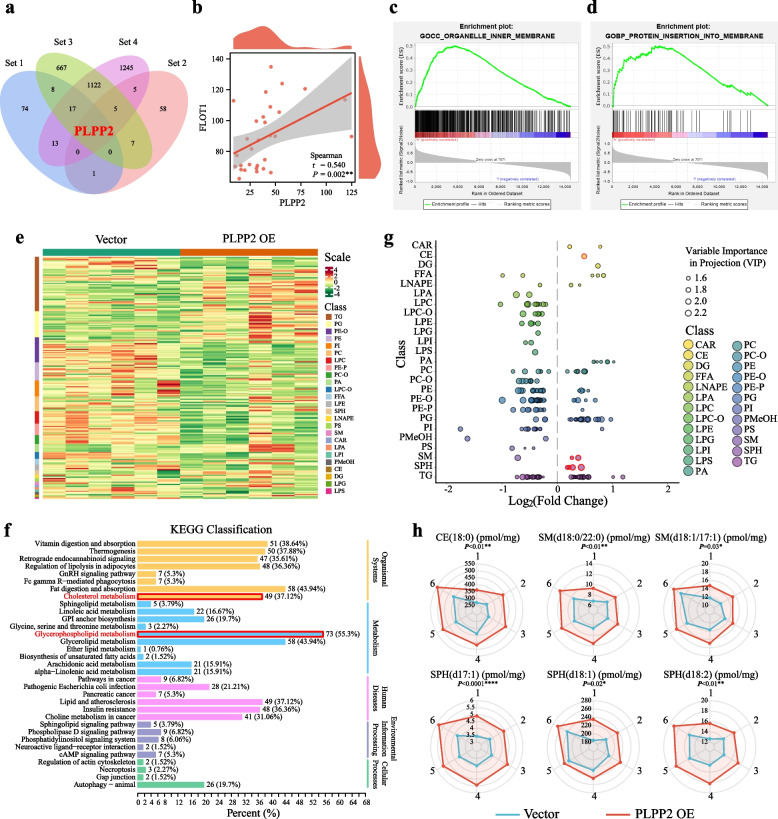
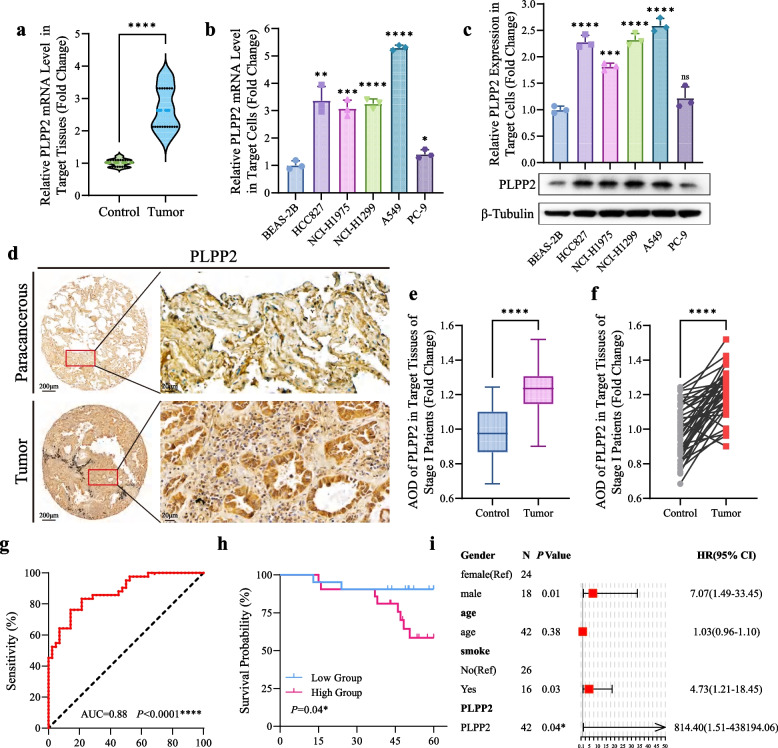
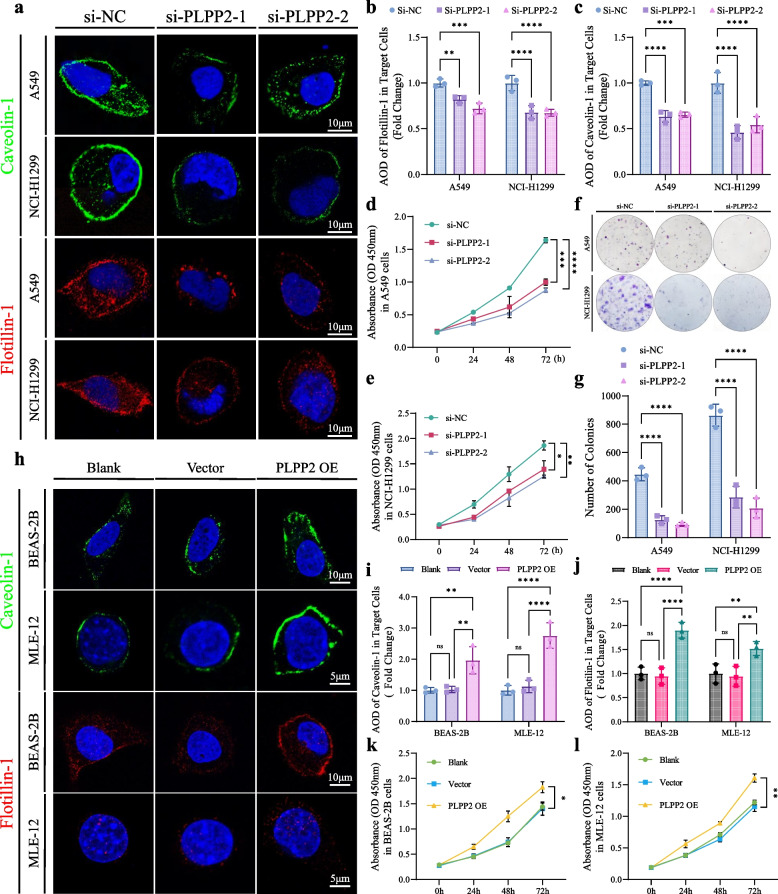
We integrated 158 early-stage LUAD cases from 2 independent cohorts, including 30 matched resected specimens with complete radiological and pathological information, and 128 retrospective pathological pair-samples with partial follow-up data. This integration allowed us to conduct a correlation analysis between clinical phenotype and transcriptome landscape. Immunohistochemistry was performed using tissue microarrays to examine the expression of phospholipid phosphatase 2 (PLPP2) and lipid-raft markers. Lipidomics analysis was used to determine the changes of lipid components in PLPP2-overexpressed cells. To assess the effects of PLPP2 on the malignant phenotypes of LUAD cells, we conducted mice tumor-bearing experiments and in vitro cellular experiments by knocking down PLPP2 and inhibiting lipid raft synthesis with MβCD, respectively.
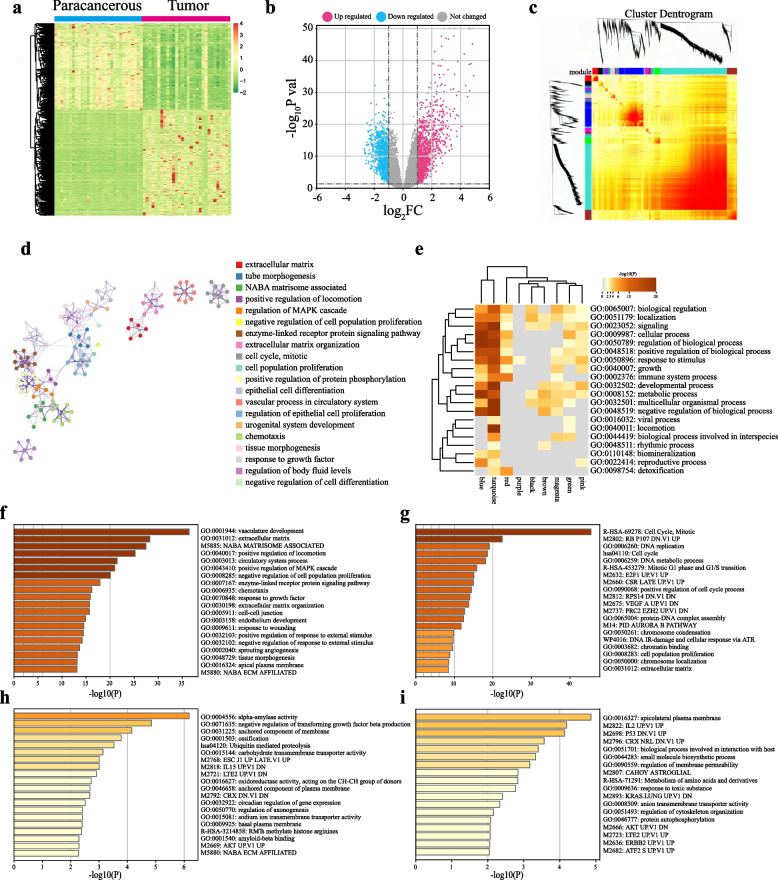
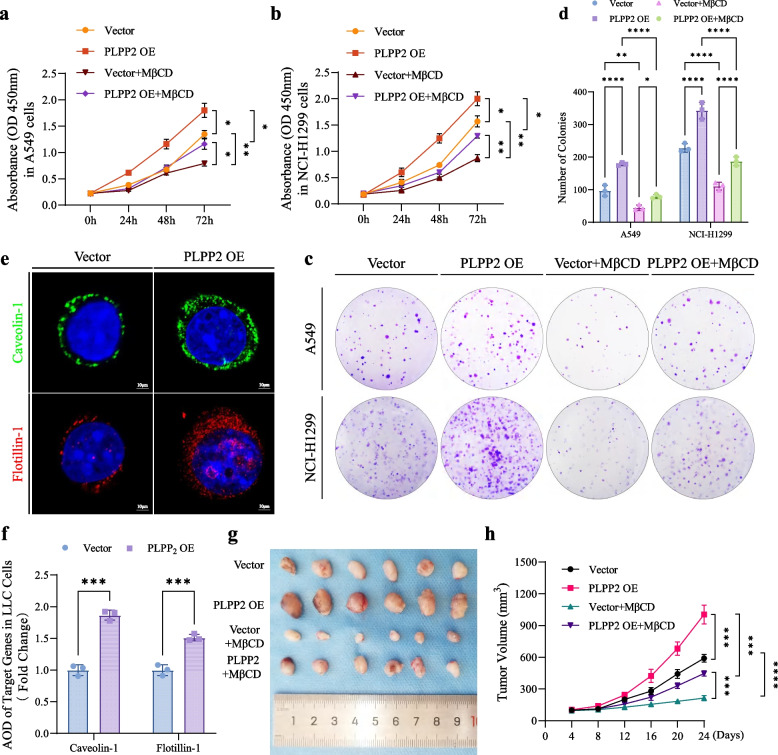
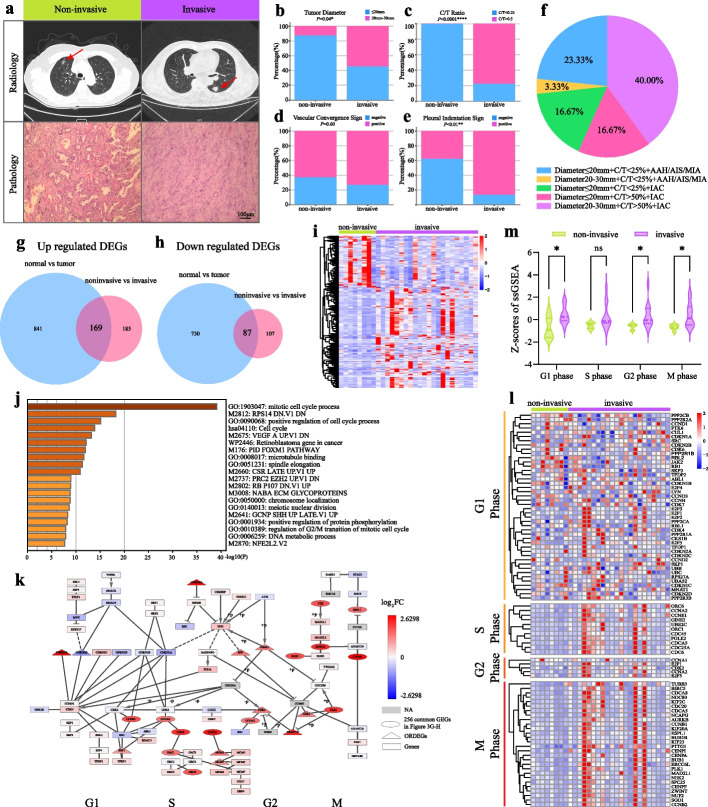
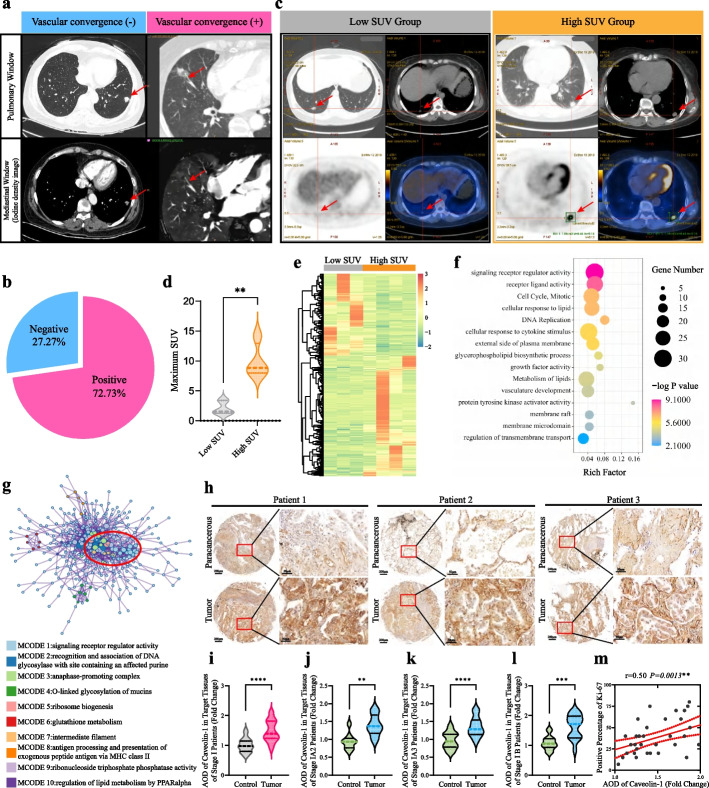
Bioinformatics analysis indicated that the co-occurrence of lipid raft formation and rapid cell proliferation might exhibit synergistic effects in driving oncogenesis from lung preneoplasia to adenocarcinoma. The enhanced activation of the cell cycle promoted the transition from non-invasive to invasive status in early-stage LUAD, which was related to an increase in lipid rafts within LUAD cells. PLPP2 participated in lipid raft formation by altering the component contents of lipid rafts, such as esters, sphingomyelin, and sphingosine. Furthermore, elevated PLPP2 levels were identified as an independent prognostic risk factor for LUAD patients. Further results from in vivo and in vitro experiments confirmed that PLPP2 could induce excessive cell proliferation by enhancing lipid raft formation in LUAD cells.
Our study has revealed the characteristics of gene expression profiles in early-stage LUAD patients with the different radiological and pathological subtypes, as well as deciphered transcriptomic evolution trajectory from preneoplasia to invasive LUAD. Furthermore, it suggests that PLPP2-mediated lipid raft synthesis may be a significant biological event in the initiation of early-stage LUAD, offering a potential target for more precise diagnosis and therapy in clinical settings.
基于影像的筛查提高了早期肺腺癌 (LUAD) 的检出率,但也凸显了假阳性诊断率高的问题,使患者面临过度治疗的风险。因此,需要更精确的鉴别标准,以确保早期 LUAD 患者得到适当的治疗。
我们整合了来自两个独立队列的 158 例早期 LUAD 病例,包括 30 例具有完整影像学和病理学信息的匹配切除标本和 128 例具有部分随访数据的回顾性病理配对样本。这种整合使我们能够在临床表型和转录组图谱之间进行相关性分析。使用组织微阵列进行免疫组织化学染色,以检测磷脂磷酸酶 2 (PLPP2) 和脂筏标记物的表达。脂质组学分析用于确定 PLPP2 过表达细胞中脂质成分的变化。为了评估 PLPP2 对 LUAD 细胞恶性表型的影响,我们分别通过敲低 PLPP2 和用 MβCD 抑制脂筏合成,在小鼠肿瘤荷瘤实验和体外细胞实验中进行了研究。
生物信息学分析表明,脂筏形成和细胞快速增殖的共同发生可能在推动肺前瘤变向腺癌癌变的过程中产生协同作用。细胞周期的增强激活促进了早期 LUAD 从不浸润状态向浸润状态的转变,这与 LUAD 细胞内脂筏的增加有关。PLPP2 通过改变脂筏的成分含量,如酯、神经鞘磷脂和神经酰胺,参与脂筏的形成。此外,升高的 PLPP2 水平被确定为 LUAD 患者的独立预后风险因素。体内和体外实验的进一步结果证实,PLPP2 可通过增强 LUAD 细胞中的脂筏形成来诱导过度细胞增殖。
本研究揭示了不同影像学和病理学亚型的早期 LUAD 患者的基因表达谱特征,并解析了从癌前病变到侵袭性 LUAD 的转录组进化轨迹。此外,它表明 PLPP2 介导的脂筏合成可能是早期 LUAD 起始的一个重要生物学事件,为临床中更精确的诊断和治疗提供了潜在靶点。