Department of Burn Surgery, the First Affiliated Hospital, Naval Medical University, Shanghai, 200433, P. R. China.
Department of Biomedical Engineering, Columbia University, New York, NY, 10027, USA.
Adv Sci (Weinh). 2024 Jan;11(1):e2305273. doi: 10.1002/advs.202305273. Epub 2023 Nov 23.
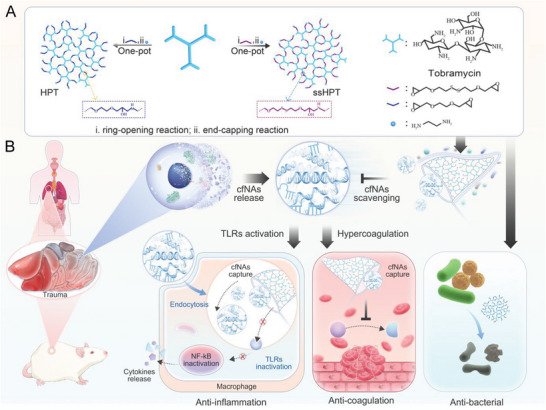
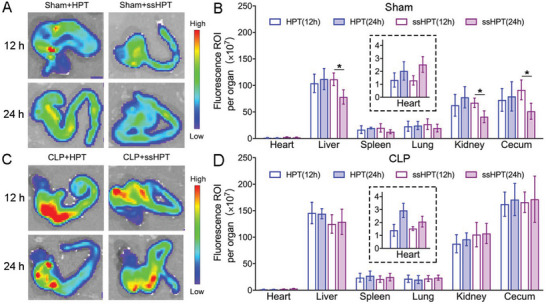
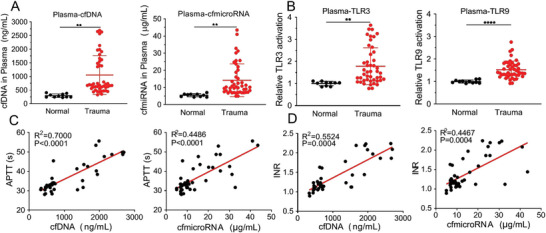
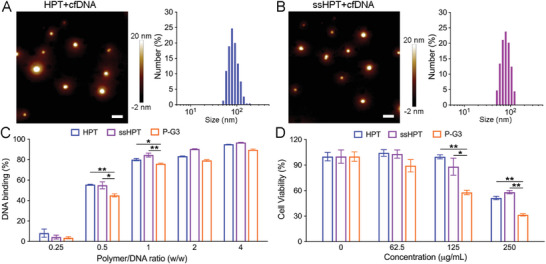
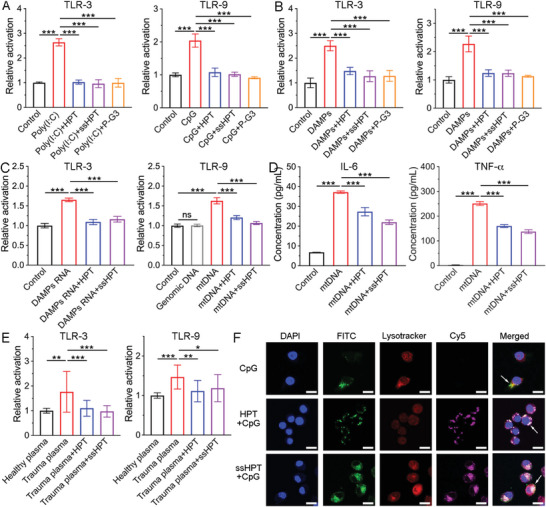
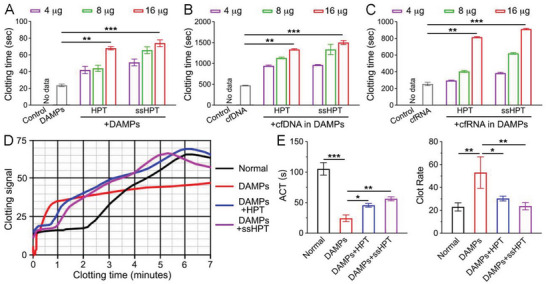
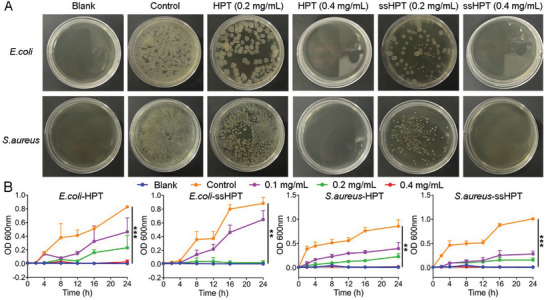
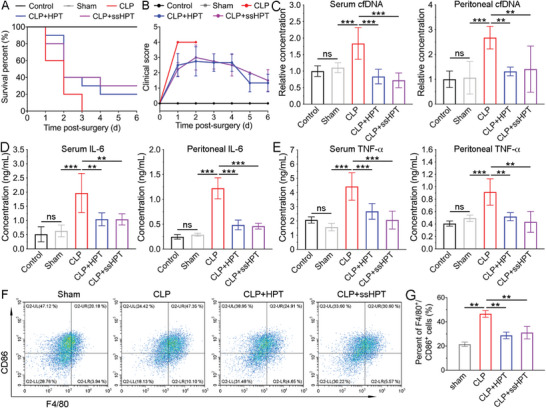
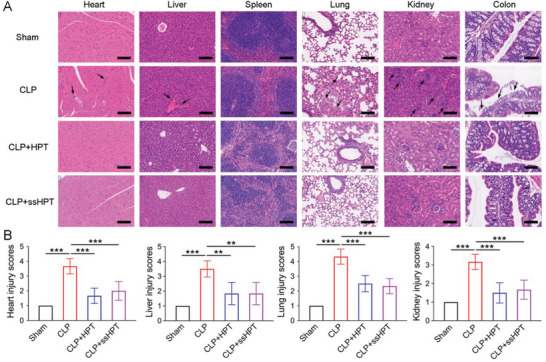
Trauma and its associated complications, including dysregulated inflammatory responses, severe infection, and disseminated intravascular coagulation (DIC), continue to pose lethal threats worldwide. Following injury, cell-free nucleic acids (cfNAs), categorized as damage-associated molecular patterns (DAMPs), are released from dying or dead cells, triggering local and systemic inflammatory responses and coagulation abnormalities that worsen disease progression. Harnessing cfNA scavenging strategies with biomaterials has emerged as a promising approach for treating posttrauma systemic inflammation. In this study, the effectiveness of cationic hyperbranched polyaminoglycosides derived from tobramycin (HPT) and disulfide-included HPT (ss-HPT) in scavenging cfNAs to mitigate posttrauma inflammation and hypercoagulation is investigated. Both cationic polymers demonstrate the ability to suppress DAMP-induced toll-like receptor (TLR) activation, inflammatory cytokine secretion, and hypercoagulation by efficiently scavenging cfNAs. Additionally, HPT and ss-HPT exhibit potent antibacterial efficacy attributed to the presence of tobramycin in their chemical composition. Furthermore, HPT and ss-HPT exhibit favorable modulatory effects on inflammation and therapeutic outcomes in a cecal ligation puncture (CLP) mouse abdominal trauma model. Notably, in vivo studies reveal that ss-HPT displayed high accumulation and retention in injured organs of traumatized mice while maintaining a higher biodegradation rate in healthy mice, contrasting with findings for HPT. Thus, functionalized ss-HPT, a bioreducible polyaminoglycoside, holds promise as an effective option to enhance therapeutic outcomes for trauma patients by alleviating posttrauma inflammation and coagulation complications.
创伤及其相关并发症,包括失调的炎症反应、严重感染和弥散性血管内凝血 (DIC),仍然在全球范围内构成致命威胁。在受伤后,细胞外游离核酸 (cfNAs) 作为损伤相关分子模式 (DAMPs) 从死亡或濒死细胞中释放出来,引发局部和全身炎症反应以及凝血异常,从而使疾病恶化。利用生物材料来清除 cfNA 的策略已经成为治疗创伤后全身炎症的一种有前途的方法。在这项研究中,研究了来源于妥布霉素的阳离子超支化聚氨基葡糖苷 (HPT) 和含二硫键的 HPT (ss-HPT) 清除 cfNAs 以减轻创伤后炎症和高凝状态的有效性。这两种阳离子聚合物都具有通过有效清除 cfNAs 来抑制 DAMP 诱导的 TLR 激活、炎症细胞因子分泌和高凝状态的能力。此外,由于其化学组成中含有妥布霉素,HPT 和 ss-HPT 还具有强大的抗菌功效。此外,HPT 和 ss-HPT 在盲肠结扎穿孔 (CLP) 小鼠腹部创伤模型中对炎症和治疗结果具有良好的调节作用。值得注意的是,体内研究表明,ss-HPT 在创伤小鼠受伤器官中的积累和保留较高,而在健康小鼠中保持较高的生物降解率,这与 HPT 的情况形成对比。因此,功能化的 ss-HPT,一种可还原的聚氨基葡糖苷,有望成为一种有效的选择,通过减轻创伤后炎症和凝血并发症来提高创伤患者的治疗效果。