Department of Health Information, Prasanna School of Public Health, Manipal Academy of Higher Education, Manipal, India.
Department of Nephrology, Kasturba Medical College, Manipal Academy of Higher Education, Manipal, India.
Curr Nutr Rep. 2023 Dec;12(4):617-634. doi: 10.1007/s13668-023-00506-8. Epub 2023 Nov 24.
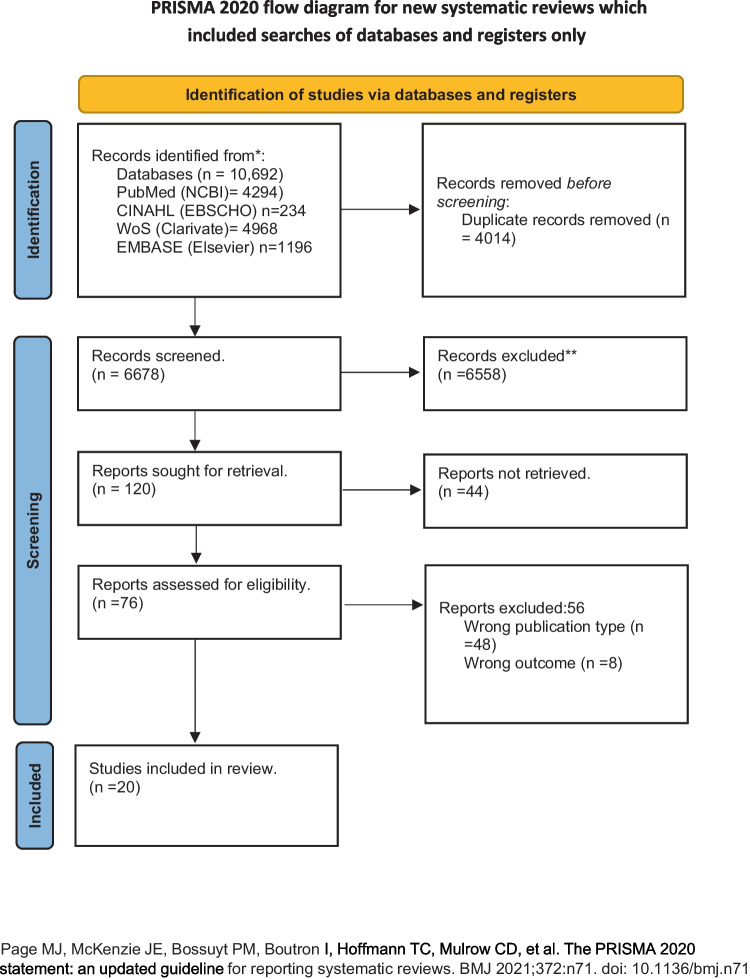
Human milk is the best source of nutrients for all infants. When a mother's own milk is unavailable, the World Health Organization suggests using donor human milk for premature neonates with or without medical complications. Exploring the barriers and facilitators for breast milk donation and its acceptability is essential for developing this intervention. A scoping review was conducted based on a methodological framework developed by Arksey and O'Malley (Int J Soc Res Methodol 8:19-32, 2005). A search was conducted in PubMed (NCBI), CINAHL (EBSCO), and Web of Science (Elsevier). A two-stage sequential screening process was adopted. Data extraction was done using a piloted data extraction form.
We included 20 articles for narrative synthesis. Barriers and facilitators for donating and accepting breast milk were categorized under six themes: individual, family, community, workplace, health system, and policy-related. The common individual barriers were time requirements for BMD, personal dislike of the process, lack of knowledge, insufficient milk, negative opinions, and lack of information. Family stigma, negative rumors, less educated family members, and illness of a family member were identified as family-related barriers. Community-related barriers include cultural or religious unacceptable practices, societal taboos, and distance to milk banks. The major barriers identified in relation to the health system were lack of practical and psychological support, lack of information, storing and transportation issues, lack of knowledge among HCWs, and logistical challenges of creating a milk lab. The common work-related barriers were the lack of adequate time, philosophical objections, and incomprehension at returning to work. Policy-related barriers identified include the need for hygiene requirements, donation costs, and lack of standardized guidelines. Making the donation process faster, providing pick-up services for donors, and community education and male partner engagement regarding breast milk donation could help to boost the acceptability of breast milk donation.
母乳是所有婴儿的最佳营养来源。当母亲自身的母乳无法提供时,世界卫生组织建议对有或没有医疗并发症的早产儿使用捐赠人母乳。探索母乳捐赠的障碍和促进因素及其可接受性对于开发这种干预措施至关重要。本研究采用 Arksey 和 O'Malley(Int J Soc Res Methodol 8:19-32, 2005)制定的方法框架进行了范围综述。在 PubMed(NCBI)、CINAHL(EBSCO)和 Web of Science(Elsevier)中进行了搜索。采用两阶段顺序筛选过程。使用经过试验的数据提取表格进行数据提取。
我们纳入了 20 篇用于叙述性综合的文章。捐赠和接受母乳的障碍和促进因素分为六个主题:个人、家庭、社区、工作场所、卫生系统和政策相关。常见的个人障碍包括 BMD 的时间要求、个人对过程的不喜欢、缺乏知识、奶量不足、负面意见和缺乏信息。家庭耻辱感、负面谣言、受教育程度较低的家庭成员和家庭成员患病被认为是家庭相关的障碍。与社区相关的障碍包括文化或宗教不可接受的做法、社会禁忌和离母乳库的距离。与卫生系统相关的主要障碍包括缺乏实际和心理支持、缺乏信息、储存和运输问题、卫生保健工作者缺乏知识以及创建奶库的后勤挑战。常见的工作相关障碍包括缺乏足够的时间、哲学上的反对意见以及重返工作岗位时的不理解。确定的政策相关障碍包括需要卫生要求、捐赠成本和缺乏标准化指南。使捐赠过程更快、为捐赠者提供接送服务以及对社区进行母乳喂养教育和男性伴侣参与,可以有助于提高母乳喂养的可接受性。