Coyago-Cruz Elena, Moya Melany, Méndez Gabriela, Villacís Michael, Rojas-Silva Patricio, Corell Mireia, Mapelli-Brahm Paula, Vicario Isabel M, Meléndez-Martínez Antonio J
Carrera de Ingeniería en Biotecnología de los Recursos Naturales, Universidad Politécnica Salesiana, Sede Quito, Campus El Girón, Av. 12 de Octubre N2422 y Wilson, Quito 170143, Ecuador.
Facultad de Ciencias Médicas, Carrera de Obstetricia, Universidad Central del Ecuador, Iquique, Luis Sodiro N14-121, Quito 170146, Ecuador.
Foods. 2023 Nov 8;12(22):4066. doi: 10.3390/foods12224066.
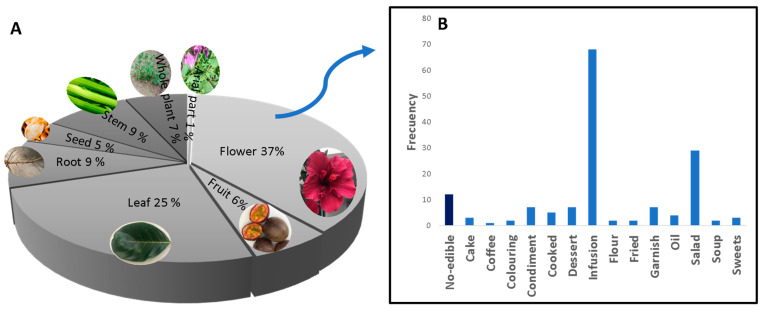
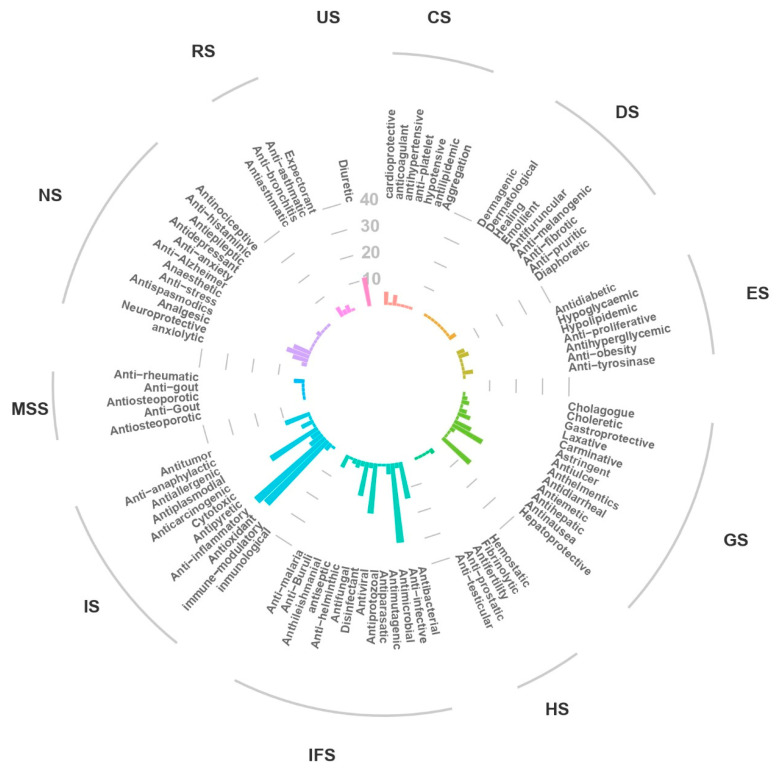
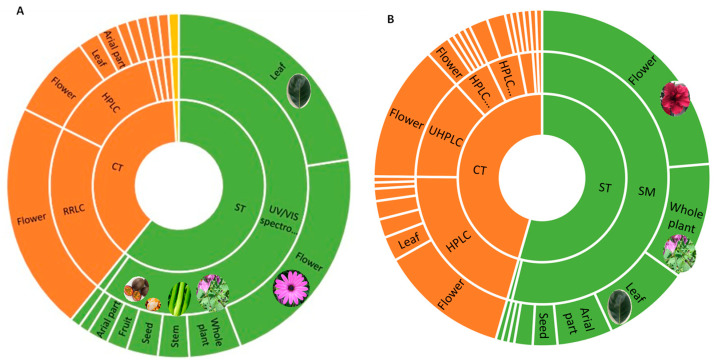
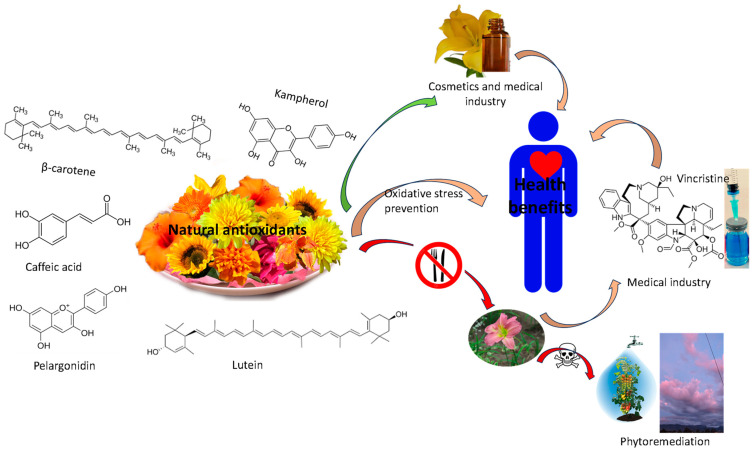
Flowers have played a significant role in society, focusing on their aesthetic value rather than their food potential. This study's goal was to look into flowering plants for everything from health benefits to other possible applications. This review presents detailed information on 119 species of flowers with agri-food and health relevance. Data were collected on their family, species, common name, commonly used plant part, bioremediation applications, main chemical compounds, medicinal and gastronomic uses, and concentration of bioactive compounds such as carotenoids and phenolic compounds. In this respect, 87% of the floral species studied contain some toxic compounds, sometimes making them inedible, but specific molecules from these species have been used in medicine. Seventy-six percent can be consumed in low doses by infusion. In addition, 97% of the species studied are reported to have medicinal uses (32% immune system), and 63% could be used in the bioremediation of contaminated environments. Significantly, more than 50% of the species were only analysed for total concentrations of carotenoids and phenolic compounds, indicating a significant gap in identifying specific molecules of these bioactive compounds. These potential sources of bioactive compounds could transform the health and nutraceutical industries, offering innovative approaches to combat oxidative stress and promote optimal well-being.
花朵在社会中发挥了重要作用,人们更关注其美学价值而非食用潜力。本研究的目的是探究开花植物在健康益处及其他可能应用方面的情况。这篇综述提供了119种与农业食品和健康相关的花卉的详细信息。收集了它们的科、种、通用名、常用植物部位、生物修复应用、主要化学成分、药用和烹饪用途,以及类胡萝卜素和酚类化合物等生物活性化合物的浓度。在这方面,所研究的花卉物种中有87%含有一些有毒化合物,有时使其不可食用,但这些物种中的特定分子已被用于医学。76%的花卉可以通过冲泡低剂量食用。此外,据报道,所研究的物种中有97%具有药用价值(32%对免疫系统有作用),63%可用于受污染环境的生物修复。值得注意的是,超过50%的物种仅分析了类胡萝卜素和酚类化合物的总浓度,这表明在确定这些生物活性化合物的特定分子方面存在显著差距。这些生物活性化合物的潜在来源可能会改变健康和营养保健品行业,提供对抗氧化应激和促进最佳健康状态的创新方法。