Minwuyelet Awoke, Yewhalaw Delenasaw, Aschale Yibeltal, Sciarretta Andrea, Atenafu Getnet
Department of Biology, College of Natural and Computational Science, Debre Markos University, Debre Markos, Ethiopia.
Tropical and Infectious Diseases Research Center, Jimma University, Jimma, Ethiopia.
J Trop Med. 2025 Jun 9;2025:2420073. doi: 10.1155/jotm/2420073. eCollection 2025.
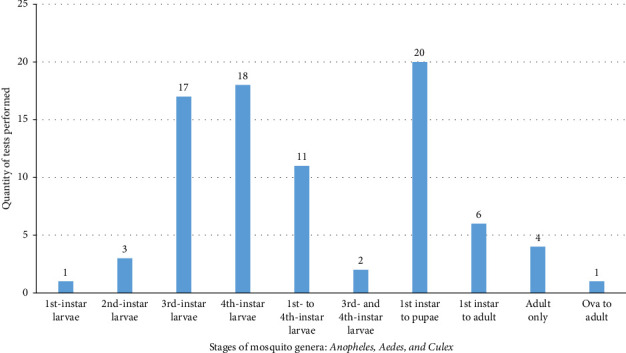
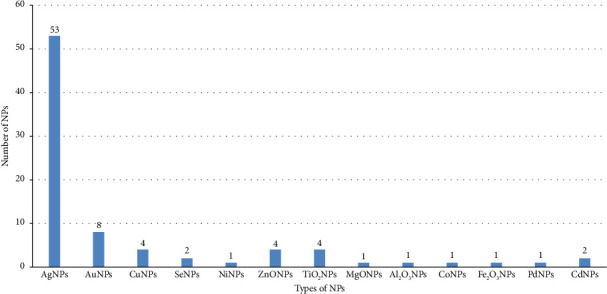
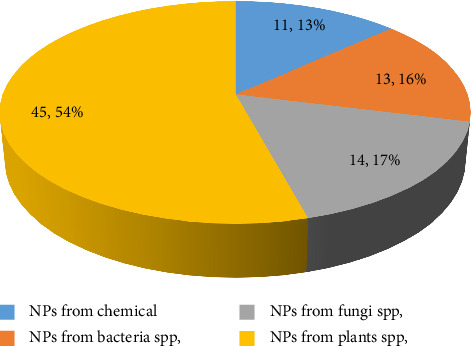
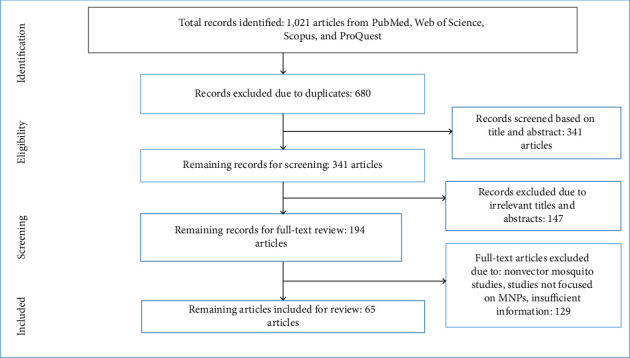
Mosquito-borne diseases, such as malaria, filariasis, dengue, chikungunya, Zika, and other viral infections, pose significant public health challenges worldwide. For many years, chemical insecticides were used in the form of indoor residual spraying (IRS) and insecticide-treated nets (ITNs). However, these methods have encountered several limitations such as the development of resistance, environmental impact, and nontarget effects. In recent years, metal-based nanoparticles (MNPs) have emerged as a promising alternative in the fight against mosquito vectors. This systematic review aimed to explore the potential application of MNPs in combating medically significant vectors. Global databases such as PubMed, Scopus, Web of Science, and ProQuest were used to search for relevant articles published from 2011 to 2021. The data search was conducted between July 30 and August 15, 2022. Keywords such as "Metal-based nanoparticles," "Nanoparticles toxicity," "Mosquito control," "Larvicidal," "Nanomaterials in mosquito control," and "biosynthesized" were used both individually and in combination to find pertinent studies. Only original articles published in English that offered comprehensive information on the effects of biosynthesized MNPs on mosquitoes were included in the study. These articles were selected based on the presence of key details such as the type and source of nanoparticles (NPs), size range (1-100 nm), and the mosquito larval species tested, exposure duration, and corresponding lethal concentration (LC) levels. Studies lacking sufficient data or with unavailable full texts were excluded from the analysis. The quality of each original article was evaluated using a standardized quality assessment tool adapted from the Joanna Briggs Institute (JBI) Critical Appraisal Checklist. Data were extracted from texts, tables, and figures of the included articles, and their validity was assessed using standardized tools. A total of 65 articles were included, covering laboratory and field findings on NPs such as silver (Ag), gold (Au), palladium (Pd), cobalt (Co), titanium dioxide (TiO), nickel (Ni), copper (Cu), cadmium (Cd), selenium (Se), zinc (Zn), magnesium oxide (MgO), iron and iron oxide (Fe and FeO), and aluminum oxide (AlO). Among these, AgNPs and CuNPs were the most extensively tested and found effective against various larval instars, pupae, and adults of , . , , . , , and . , with satisfactory 50% and 90% LC values. The study highlighted the promising potential of MNPs as effective agents for controlling mosquito vectors, particularly at various developmental stages of , , and species. Most studies focused on AgNPs and AuNPs, with some attention given to other MNPs. Notably, NPs synthesized from plant extracts such as and microorganisms demonstrated strong larvicidal activity, especially against , , and larvae. Efficacy varied across developmental stages, with first-, third-, and fourth-instar larvae being most susceptible. These findings underscore the potential of MNPs as an environmentally friendly alternative to conventional mosquito control methods. MNPs, especially Ag and AuNPs, are effective larvicides targeting the early developmental stages of mosquitoes. These NPs, derived from plants and microorganisms, demonstrate an environmentally friendly, cost-effective insecticidal effect and could serve as alternatives to chemical insecticides. However, further research is needed to optimize their synthesis, application, and scalability for large-scale use. Additionally, the varying efficacy of different mosquito species and life stages requires a more targeted, species-specific use of NPs, along with ongoing environmental assessments to ensure their long-term safety and effectiveness.
疟疾、丝虫病、登革热、基孔肯雅热、寨卡病毒病以及其他病毒感染等蚊媒疾病,在全球范围内构成了重大的公共卫生挑战。多年来,化学杀虫剂一直以室内滞留喷洒(IRS)和经杀虫剂处理的蚊帐(ITN)的形式使用。然而,这些方法存在一些局限性,如抗药性的产生、环境影响和非靶标效应。近年来,金属基纳米颗粒(MNP)已成为对抗蚊媒的一种有前景的替代方法。本系统综述旨在探讨MNP在对抗具有医学重要性的病媒方面的潜在应用。使用PubMed、Scopus、Web of Science和ProQuest等全球数据库搜索2011年至2021年发表的相关文章。数据检索于2022年7月30日至8月15日进行。“金属基纳米颗粒”“纳米颗粒毒性”“蚊虫控制”“杀幼虫剂”“蚊虫控制中的纳米材料”和“生物合成”等关键词单独或组合使用,以查找相关研究。本研究仅纳入以英文发表的、提供了关于生物合成MNP对蚊子影响的全面信息的原创文章。这些文章是根据关键细节的存在来选择的,如纳米颗粒(NP)的类型和来源、尺寸范围(1 - 100纳米)、所测试的蚊虫幼虫种类、暴露持续时间以及相应的致死浓度(LC)水平。缺乏足够数据或没有全文的研究被排除在分析之外。使用从乔安娜·布里格斯研究所(JBI)批判性评价清单改编的标准化质量评估工具对每篇原创文章的质量进行评估。从纳入文章的文本、表格和图表中提取数据,并使用标准化工具评估其有效性。总共纳入了65篇文章,涵盖了关于银(Ag)、金(Au)、钯(Pd)、钴(Co)、二氧化钛(TiO)、镍(Ni)、铜(Cu)、镉(Cd)、硒(Se)、锌(Zn)、氧化镁(MgO)、铁和氧化铁(Fe和FeO)以及氧化铝(AlO)等NP的实验室和现场研究结果。其中,AgNP和CuNP的测试最为广泛,并且发现对多种幼虫龄期、蛹和成虫有效,其50%和90%的LC值令人满意。该研究强调了MNP作为控制蚊媒的有效剂的潜在前景,特别是在多种蚊虫物种的不同发育阶段。大多数研究集中在AgNP和AuNP上,也有一些对其他MNP的关注。值得注意的是,从植物提取物和微生物合成的NP表现出很强的杀幼虫活性,尤其是对特定蚊虫的幼虫。不同发育阶段的效果各不相同,一龄、三龄和四龄幼虫最为敏感。这些发现强调了MNP作为传统蚊虫控制方法的一种环境友好替代方法的潜力。MNP,尤其是AgNP和AuNP,是针对蚊子早期发育阶段的有效杀幼虫剂。这些源自植物和微生物的NP表现出环境友好、成本效益高的杀虫效果,并且可以作为化学杀虫剂的替代品。然而,需要进一步研究以优化它们的合成、应用和扩大规模以供大规模使用。此外,不同蚊虫物种和生命阶段的效果差异需要更有针对性、针对特定物种使用NP,同时持续进行环境评估以确保它们的长期安全性和有效性。