Sun Yat-Sen University Cancer CenterState Key Laboratory of Oncology in South ChinaCollaborative Innovation Center for Cancer Medicine, Guangdong Key Laboratory of Nasopharyngeal Carcinoma Diagnosis and Therapy, Guangzhou, China.
Department of Nasopharyngeal Carcinoma, Sun Yat-Sen University Cancer Center, 651 Dongfeng Road East, Guangzhou, 510060, China.
BMC Med. 2023 Nov 27;21(1):464. doi: 10.1186/s12916-023-03164-3.
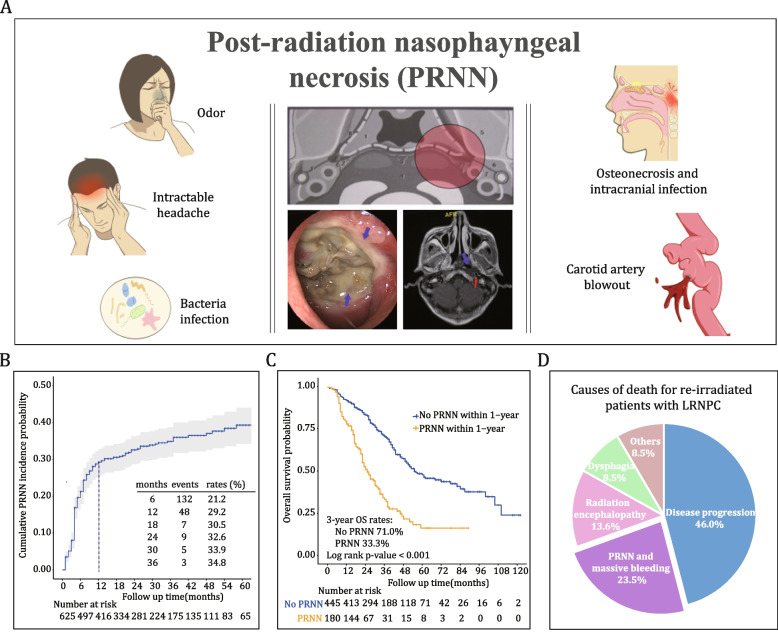
Post-radiation nasopharyngeal necrosis (PRNN) is a severe adverse event following re-radiotherapy for patients with locally recurrent nasopharyngeal carcinoma (LRNPC) and associated with decreased survival. Biological heterogeneity in recurrent tumors contributes to the different risks of PRNN. Radiomics can be used to mine high-throughput non-invasive image features to predict clinical outcomes and capture underlying biological functions. We aimed to develop a radiogenomic signature for the pre-treatment prediction of PRNN to guide re-radiotherapy in patients with LRNPC.
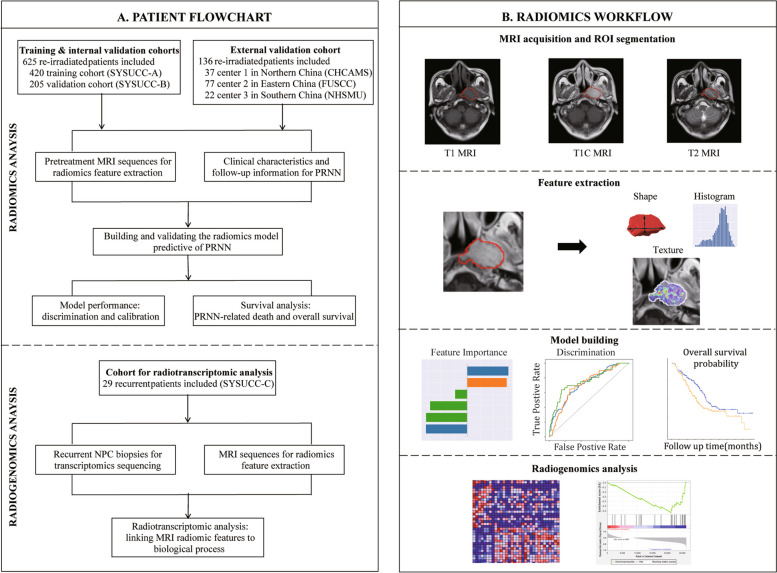
This multicenter study included 761 re-irradiated patients with LRNPC at four centers in NPC endemic area and divided them into training, internal validation, and external validation cohorts. We built a machine learning (random forest) radiomic signature based on the pre-treatment multiparametric magnetic resonance images for predicting PRNN following re-radiotherapy. We comprehensively assessed the performance of the radiomic signature. Transcriptomic sequencing and gene set enrichment analyses were conducted to identify the associated biological processes.
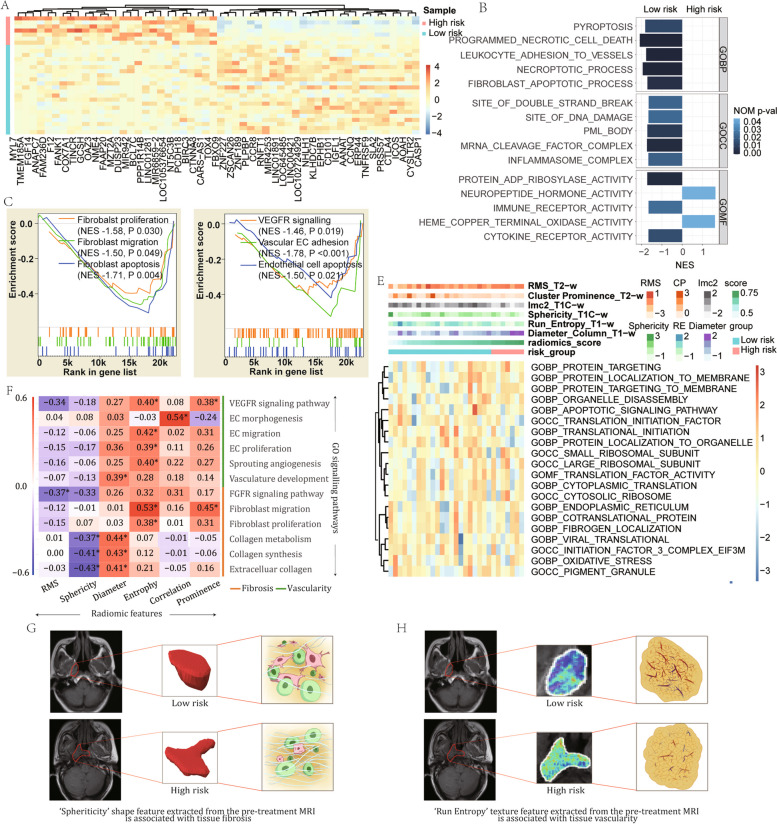
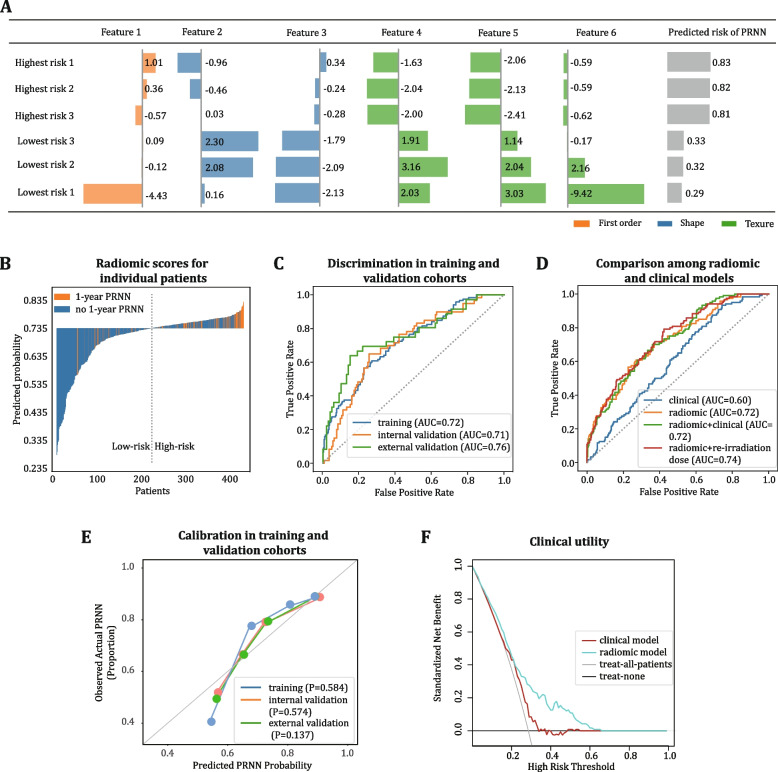
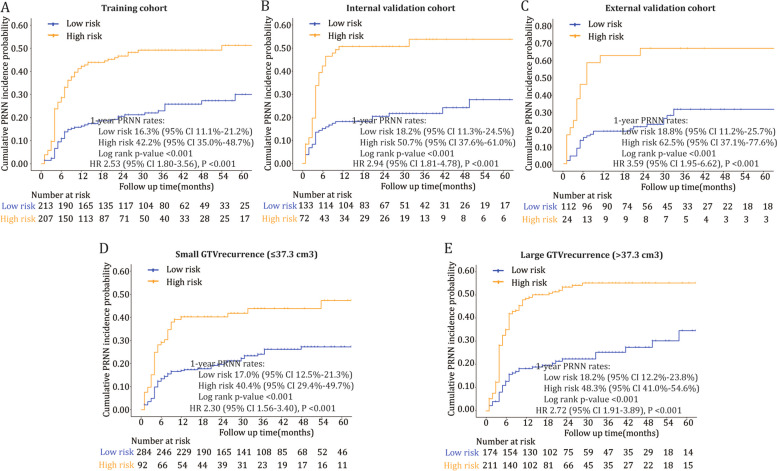
The radiomic signature showed discrimination of 1-year PRNN in the training, internal validation, and external validation cohorts (area under the curve (AUC) 0.713-0.756). Stratified by a cutoff score of 0.735, patients with high-risk signature had higher incidences of PRNN than patients with low-risk signature (1-year PRNN rates 42.2-62.5% vs. 16.3-18.8%, P < 0.001). The signature significantly outperformed the clinical model (P < 0.05) and was generalizable across different centers, imaging parameters, and patient subgroups. The radiomic signature had prognostic value concerning its correlation with PRNN-related deaths (hazard ratio (HR) 3.07-6.75, P < 0.001) and all causes of deaths (HR 1.53-2.30, P < 0.01). Radiogenomics analyses revealed associations between the radiomic signature and signaling pathways involved in tissue fibrosis and vascularity.
We present a radiomic signature for the individualized risk assessment of PRNN following re-radiotherapy, which may serve as a noninvasive radio-biomarker of radiation injury-associated processes and a useful clinical tool to personalize treatment recommendations for patients with LANPC.
放射性鼻咽坏死(PRNN)是局部复发性鼻咽癌(LRNPC)患者再放疗后的一种严重不良事件,与生存率降低有关。复发性肿瘤的生物学异质性导致 PRNN 的风险不同。放射组学可用于挖掘高通量的无创图像特征,以预测临床结局并捕获潜在的生物学功能。我们旨在为复发性鼻咽癌的治疗前预测建立放射基因组学特征,以指导 LRNPC 患者的再放疗。
本研究纳入了来自鼻咽癌高发地区四个中心的 761 例接受再放疗的 LRNPC 患者,将其分为训练组、内部验证组和外部验证组。我们基于治疗前多参数磁共振成像建立了一种机器学习(随机森林)放射组学特征,用于预测再放疗后 PRNN 的发生。我们全面评估了放射组学特征的性能。进行了转录组测序和基因集富集分析,以确定相关的生物学过程。
放射组学特征在训练组、内部验证组和外部验证组中均能区分 1 年 PRNN(曲线下面积(AUC)0.713-0.756)。以 0.735 为截断值,高危特征患者的 PRNN 发生率高于低危特征患者(1 年 PRNN 率为 42.2%-62.5%比 16.3%-18.8%,P<0.001)。该特征明显优于临床模型(P<0.05),且在不同中心、成像参数和患者亚组中具有通用性。放射组学特征与与 PRNN 相关死亡(风险比(HR)3.07-6.75,P<0.001)和所有原因死亡(HR 1.53-2.30,P<0.01)相关,具有预后价值。放射基因组学分析显示,放射组学特征与涉及组织纤维化和血管生成的信号通路之间存在关联。
我们提出了一种用于再放疗后 PRNN 个体化风险评估的放射组学特征,它可能成为与辐射损伤相关过程的无创放射生物标志物,并且是为 LNPC 患者制定治疗建议的有用临床工具。