Fraser R, Heslop V R, Murray F E, Day W A
Br J Exp Pathol. 1986 Dec;67(6):783-91.
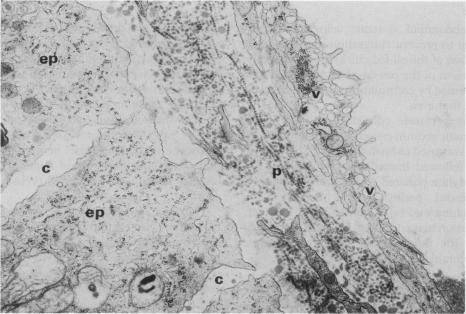
Dietary fat is transported in the chicken by portomicrons; these large lipoproteins enter the portal blood of the small intestinal villi. We have shown by electron microscopy that avian portomicrons resemble mammalian chylomicrons in size, but their mode of transport differs. Portomicrons enter the intestinal blood vessels through endothelial intracytoplasmic vesicles, whereas chylomicrons enter the intestinal lymphatics through gaps between endothelial cells. We have also shown that the sinusoidal endothelium of the chicken liver, like that of the mammal, is fenestrated. Because the fenestrae are relatively few in number, the endothelium is less porous in the chicken than in the rat. We postulate that this prevents the hepatocytes from being swamped by dietary fat, but makes the chicken susceptible to diet-induced atherosclerosis.
膳食脂肪在鸡体内通过乳糜微粒运输;这些大脂蛋白进入小肠绒毛的门静脉血。我们通过电子显微镜观察发现,禽类乳糜微粒在大小上类似于哺乳动物的乳糜微粒,但它们的运输方式不同。乳糜微粒通过内皮细胞质内小泡进入肠血管,而乳糜微粒则通过内皮细胞之间的间隙进入肠淋巴管。我们还发现,鸡肝脏的窦状内皮,与哺乳动物的一样,是有窗孔的。由于窗孔数量相对较少,鸡的内皮比大鼠的内皮孔隙少。我们推测,这可防止肝细胞被膳食脂肪淹没,但使鸡易患饮食诱导的动脉粥样硬化。