Key Laboratory of Animal Genetics, Breeding and Reproduction of Shaanxi Province, College of Animal Science and Technology, Northwest A&F University, Yangling, 712100, China.
National Institute for Biotechnology and Genetic Engineering, Faisalabad, 38000, Pakistan.
Nat Commun. 2023 Nov 28;14(1):7803. doi: 10.1038/s41467-023-43626-z.
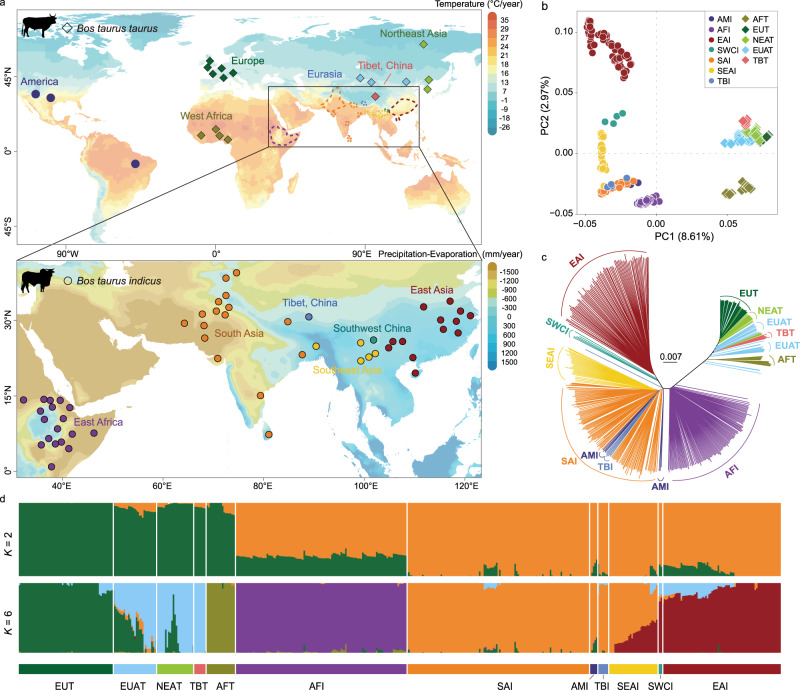
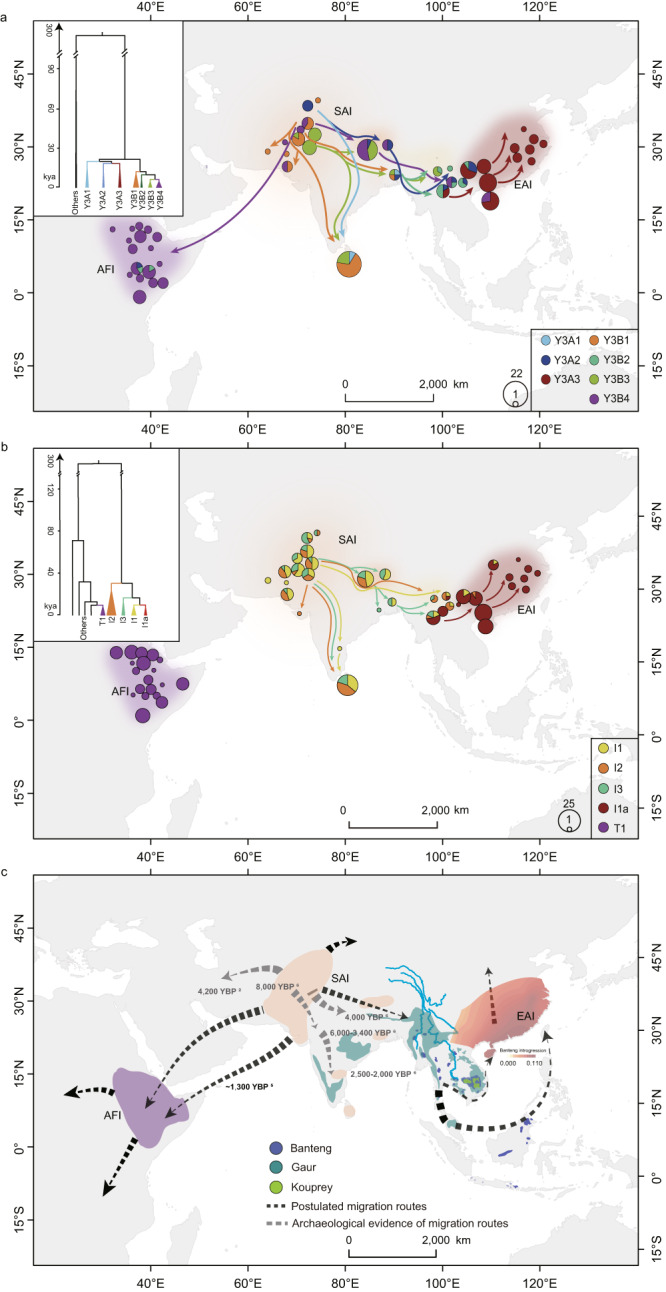
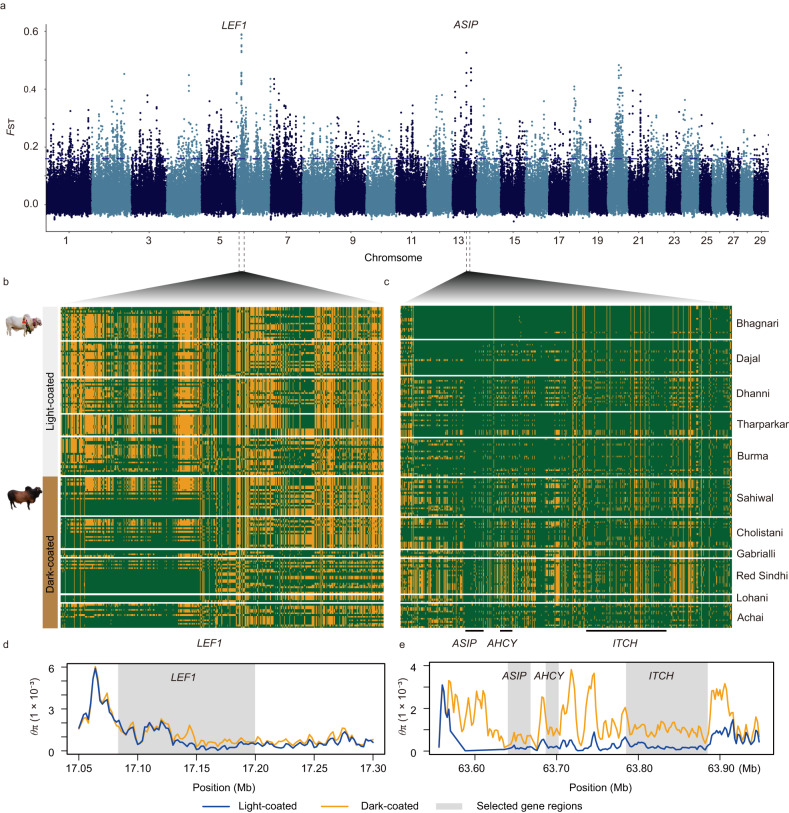
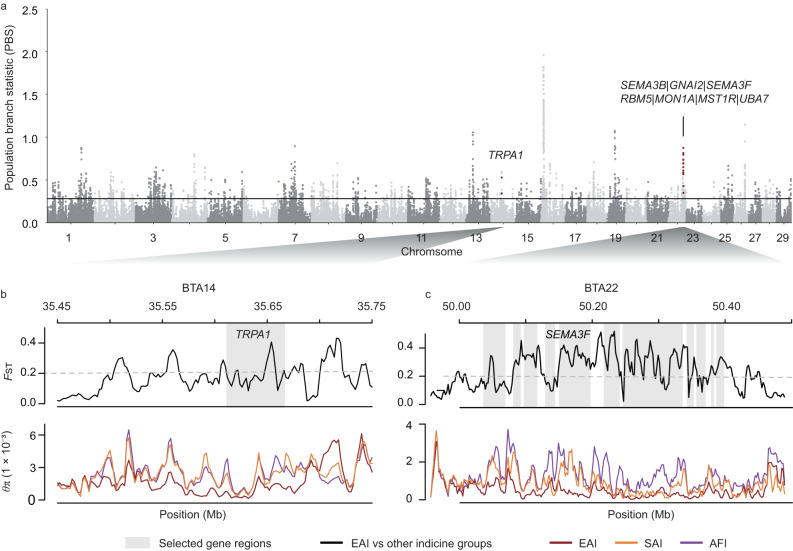
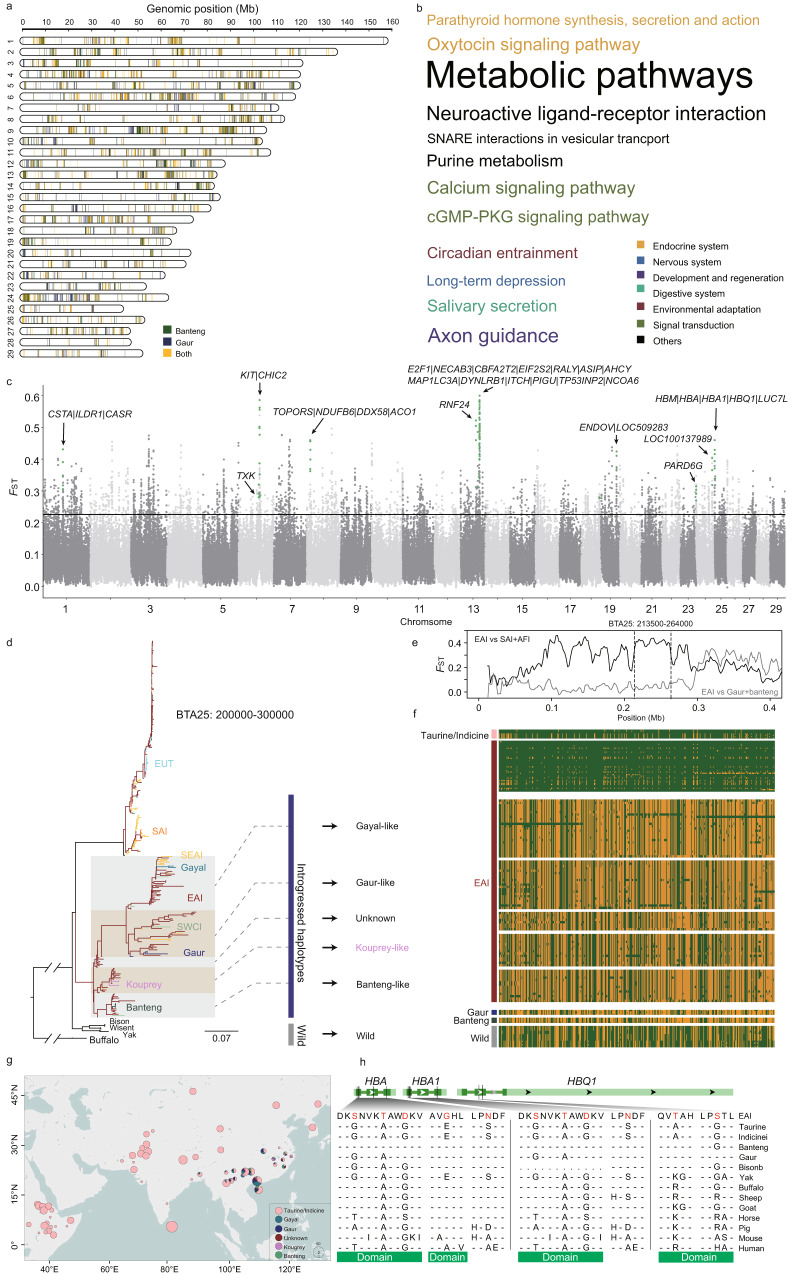
Indicine cattle, also referred to as zebu (Bos taurus indicus), play a central role in pastoral communities across a wide range of agro-ecosystems, from extremely hot semiarid regions to hot humid tropical regions. However, their adaptive genetic changes following their dispersal into East Asia from the Indian subcontinent have remained poorly documented. Here, we characterize their global genetic diversity using high-quality whole-genome sequencing data from 354 indicine cattle of 57 breeds/populations, including major indicine phylogeographic groups worldwide. We reveal their probable migration into East Asia was along a coastal route rather than inland routes and we detected introgression from other bovine species. Genomic regions carrying morphology-, immune-, and heat-tolerance-related genes underwent divergent selection according to Asian agro-ecologies. We identify distinct sets of loci that contain promising candidate variants for adaptation to hot semi-arid and hot humid tropical ecosystems. Our results indicate that the rapid and successful adaptation of East Asian indicine cattle to hot humid environments was promoted by localized introgression from banteng and/or gaur. Our findings provide insights into the history and environmental adaptation of indicine cattle.
印度野牛,也被称为瘤牛(Bos taurus indicus),在从印度次大陆扩散到东亚的过程中,它们在从极度炎热的半干旱地区到炎热潮湿的热带地区的广泛农业生态系统中的牧民社区中发挥着核心作用。然而,它们在适应遗传变化方面的记录却很少。在这里,我们使用来自 354 头 57 个品种/群体的印度野牛的高质量全基因组测序数据来描述它们的全球遗传多样性,这些品种/群体包括全球主要的印度野牛谱系群体。我们揭示了它们可能是沿着沿海路线而不是内陆路线进入东亚的,并且我们检测到了来自其他牛种的基因渗入。携带形态、免疫和耐热相关基因的基因组区域根据亚洲农业生态系统发生了分歧选择。我们确定了包含有希望的候选变体的不同基因座集,这些变体可以适应炎热的半干旱和炎热潮湿的热带生态系统。我们的研究结果表明,亚洲印度野牛对湿热环境的快速成功适应是由从野水牛和/或白肢野牛的局部基因渗入所推动的。我们的研究结果为印度野牛的历史和环境适应提供了新的见解。