Department of Psychiatry, University of Helsinki and Helsinki University Hospital, P.O. Box 22, Helsinki, FI-00014, Finland.
BMC Psychiatry. 2023 Nov 28;23(1):888. doi: 10.1186/s12888-023-05390-8.
Despite numerous national depression care guidelines (DCGs), suboptimal antidepressant treatment may occur. We examined DCG concordance and depression treatment outcomes in psychiatric settings.
We evaluated treatment received and outcomes of 128 psychiatric out- and inpatients participating in the PEGAD (Pharmacoepidemiology and Pharmacogenetics of Antidepressant Treatment for Depressive Disorders) study at baseline, two weeks, and eight weeks using interviews and questionnaires. Inclusion criteria were ICD-10 diagnosis of a depressive disorder, a Patient Health Questionnaire-9 symptom (PHQ-9) score ≥ 10, and a new antidepressant prescribed. The primary outcome of the study was within-individual change in PHQ-9 scores.
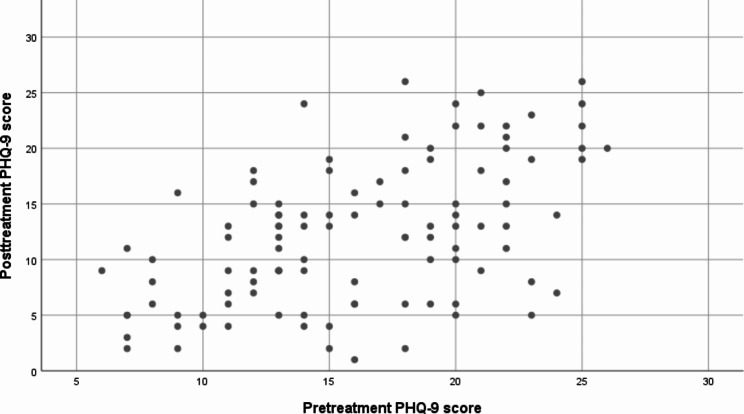
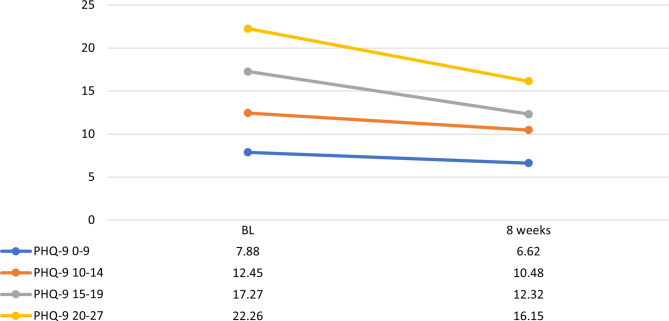
At baseline, patients had predominately recurrent (83%) and in 19% treatment-resistant depression (TRD). The median preceding duration of the current episode was 6.5 months. At eight weeks, 85% of the patients (n = 107) used a DCG-concordant antidepressant dose. However, due to the scarcity of antidepressant combinations and augmentations, fewer TRD than non-TRD patients (25% vs. 84%, p < 0.005) received adequate antidepressant treatment. Additionally, one-third of the patients received inadequate follow-up. Overall, only 53% received treatment compatible with DCG recommendations for adequate pharmacotherapy and follow-up. The mean decline in PHQ-9 scores (-3.8 ± SD 5.7) was significant (p < 0.0005). Nearly 40% of the patients reached a subthreshold level of depression (PHQ-9 < 10), predicted by a lower baseline PHQ-9 score, recurrent depression, and female sex. However, 45% experienced no significant clinical improvement (PHQ-9 score reduction < 20%).
Our findings suggest that inadequate treatment continues to occur in psychiatric care settings, particularly for TRD patients.
尽管有许多国家的抑郁护理指南(DCGs),但抗抑郁药的治疗可能并不理想。我们研究了精神科环境中 DCG 的一致性和抑郁治疗结果。
我们使用访谈和问卷评估了参加 PEGAD(抗抑郁治疗对抑郁障碍的药物流行病学和药物遗传学)研究的 128 名精神科门诊和住院患者在基线、两周和八周时的治疗情况和治疗结果。研究的主要结果是个体内 PHQ-9 评分的变化。
在基线时,患者主要患有复发性(83%)和 19%的治疗抵抗性抑郁(TRD)。当前发作的中位数前期持续时间为 6.5 个月。八周时,85%的患者(n=107)使用了与 DCG 一致的抗抑郁药剂量。然而,由于抗抑郁药联合用药和增效剂的稀缺,接受足够抗抑郁治疗的 TRD 患者少于非 TRD 患者(25%对 84%,p<0.005)。此外,三分之一的患者接受了不足的随访。总体而言,只有 53%的患者接受了与 DCG 建议的充分药物治疗和随访相符的治疗。PHQ-9 评分的平均下降(-3.8±5.7)有统计学意义(p<0.0005)。近 40%的患者达到了抑郁的亚阈值水平(PHQ-9<10),这与基线 PHQ-9 评分较低、复发性抑郁和女性性别有关。然而,45%的患者没有明显的临床改善(PHQ-9 评分下降<20%)。
我们的发现表明,在精神科护理环境中,治疗不足的情况仍然存在,特别是对于 TRD 患者。