Institute of Ecology and Earth Sciences, University of Tartu, Tartu 50409, Estonia.
Department of Biology, Philipps-University, Marburg 35032, Germany.
Sci Adv. 2023 Dec;9(48):eadj8016. doi: 10.1126/sciadv.adj8016. Epub 2023 Nov 29.
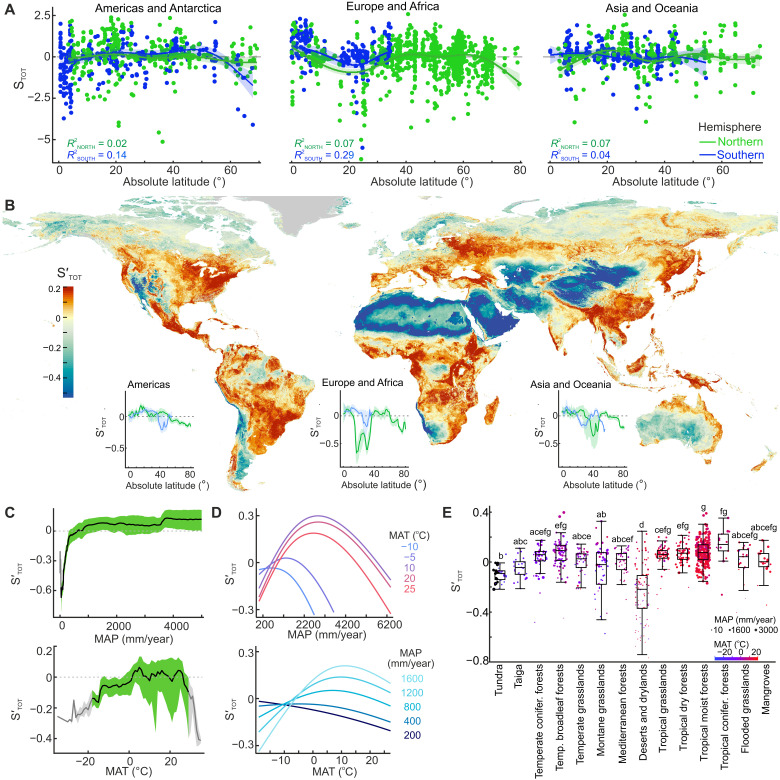
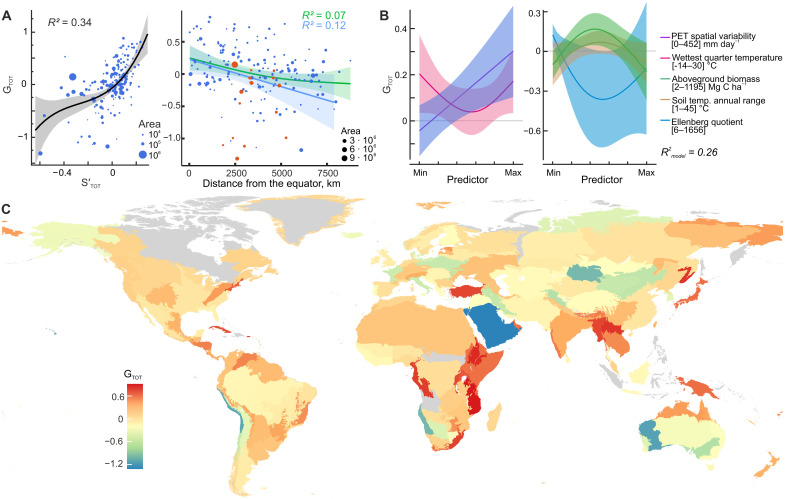
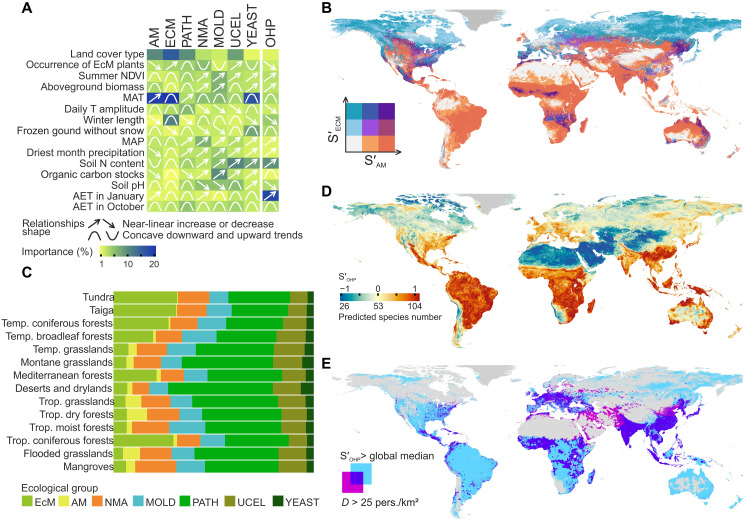
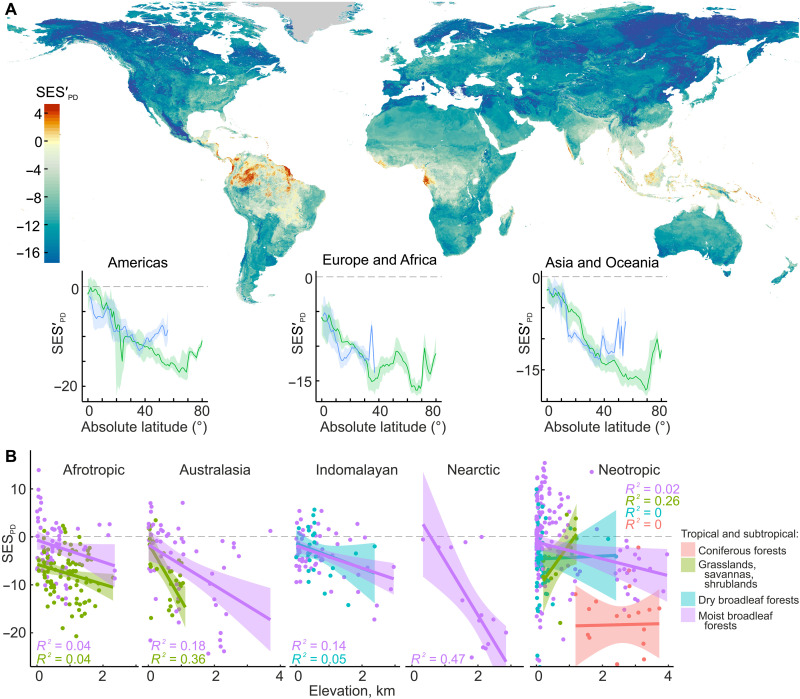
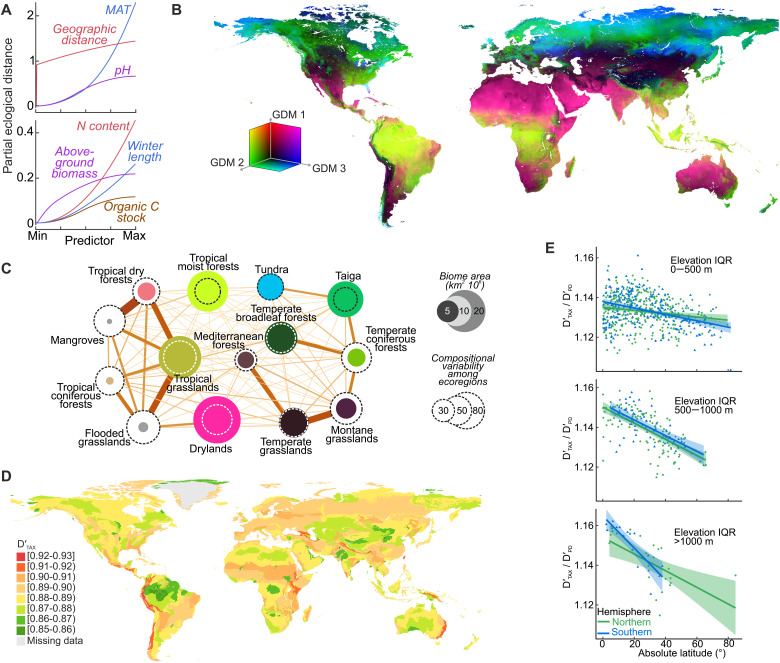
How the multiple facets of soil fungal diversity vary worldwide remains virtually unknown, hindering the management of this essential species-rich group. By sequencing high-resolution DNA markers in over 4000 topsoil samples from natural and human-altered ecosystems across all continents, we illustrate the distributions and drivers of different levels of taxonomic and phylogenetic diversity of fungi and their ecological groups. We show the impact of precipitation and temperature interactions on local fungal species richness (alpha diversity) across different climates. Our findings reveal how temperature drives fungal compositional turnover (beta diversity) and phylogenetic diversity, linking them with regional species richness (gamma diversity). We integrate fungi into the principles of global biodiversity distribution and present detailed maps for biodiversity conservation and modeling of global ecological processes.
土壤真菌多样性的多个方面在全球范围内是如何变化的,目前几乎还不得而知,这阻碍了对这个重要的物种丰富群体的管理。通过对来自各大洲自然和人为改变的生态系统的 4000 多个表土样本中的高分辨率 DNA 标记进行测序,我们说明了真菌及其生态群落在不同分类和系统发育多样性水平上的分布和驱动因素。我们展示了降水和温度相互作用对不同气候下本地真菌物种丰富度(α多样性)的影响。我们的研究结果揭示了温度如何驱动真菌组成的更替(β多样性)和系统发育多样性,并将它们与区域物种丰富度(γ多样性)联系起来。我们将真菌纳入全球生物多样性分布的原则中,并提供了有关生物多样性保护和全球生态过程建模的详细地图。